NH property taxes not only among highest in country, but vary widely from town to town
New report shows the state's disproportionate reliance on property taxes, among the highest in the nation
New Hampshire has no sales or income tax, something Republican Gov. Kelly Ayotte and her cohorts in the GOP-majority Legislature love to emphasize.
But New Hampshire also has, compared to other states, a disproportionate reliance on property taxes, among the highest in the country, something GOP policymakers don’t advertise.
And because there is little state funding that trickles down to municipalities, “property taxes play an outsized role in funding local services, leading to wide variation in tax rates and tax bills across communities,” according to a new analysis from the New Hampshire Fiscal Policy Institute (NHFPI).
WalletHub on March 31 cited New Hampshire as having among the lowest tax burden in the United States — 49th out of 50, with Alaska as having the lowest and Hawaii as having the highest.
Ayotte was quick to jump on the news, issuing a media statement that day, saying: “I’m proud that New Hampshire once again has one of the lowest tax burdens in the country. We’re the envy of New England and the nation because we’re smart about our spending and focused on keeping more money in Granite Staters’ pockets. We’re going to keep holding the line against new taxes so we can protect our New Hampshire Advantage.”
Per the WalletHub report, the Granite State has the lowest total sales and excise tax burden and the eighth lowest individual income tax burden.
But the report also says the state’s property tax burden is among the highest in the country — third highest, in fact, behind Vermont and New Jersey.
This notion of outsized property taxes here was underscored by the NHFPI’s newest report, issued April 9, that shows how much of a burden they are on homeowners, but that the property taxes can vary widely from community to community, even for residential properties of similar value.
It found property taxes on a $500,000 home can vary by nearly $17,000 across New Hampshire communities, from about $1,300 to more than $18,000 depending on location.
And there’s an over reliance on property taxes here, compared to the rest of the country, according to the report.
To that point, according to the NHFPI’s findings:
“Property tax bills in New Hampshire can vary widely depending on where a home is located, even when the homes themselves have similar values and may be just across a municipal border from each other,” said the study’s author, Phil Sletten, research director at NHFPI.
“Because New Hampshire provides relatively little state aid while communities still face significant funding needs, property taxes play an outsized role in funding local services, leading to wide variation in tax rates and tax bills across communities,” he added.
While there isn’t much trickle down from the state to communities, the property tax burden trickles down to property owners, particularly those on the lower end of the earnings scale.
“New Hampshire’s reliance on local property taxes has implications for Granite Staters, as property taxes typically result in a higher effective tax rate for residents with lower, middle and upper-middle incomes than for those with the highest incomes,” said Sletten.
And the higher proportion of property taxes has also had an effect on home affordability.
“Property taxes typically increase the cost of housing. They raise the cost of owning a home through direct taxation, and rents increase when costs are passed through from homeowners to renters,” said Sletten.
The NHFPI study went to great lengths to show just how disparate property taxes can be from one location to another.
The study includes an interactive map that shows how homes assessed at $250,000, $500,000 and $750,000 are taxed differently, based on 2025 rates.
For example, for a home worth $500,000, the property tax bill is $7,970 in Franconia, $10,400 in Boscawen, $5,650 in Stoddard and $11,990 in Amherst.
A home assessed for $750,000 in Berlin has a property tax of $25,200. The bill in Exeter for that home is $14,070, in Croydon it’s $6,735, and in Tamworth it’s $11,085.
The lowest annual tax on that hypothetical $500,000 house? That would be $1,310 in Hart’s Location. The absolute lowest, only because it is an unincorporated community administered by the county, is $225 in Chandler’s Purchase in Coos County.
“New Hampshire’s reliance on property taxes as currently structured has consequences for residents, particularly those with lower and moderate incomes and in communities with relatively low levels of property wealth compared to public service needs,” said Sletten.
The NHFPI also raises the specter of the long-running public policy dispute in the state of how public education is funded through the property tax.
The report does not take a side in the dispute over whether the state’s reliance on the statewide education property tax (SWEPT) is constitutional or not. While the New Hampshire Supreme Court upheld the constitutionality of the SWEPT mechanism itself in June 2025, the justices acknowledged that the state’s total funding for education is inadequate, leading to continued litigation over funding formulas and local tax burdens.
At the heart of the issue is that “property-poor” towns must set much higher local tax rates than “property-rich” towns to fund the same level of education.
By percentile, according to the NHFPI analysis, Wolfeboro, Bartlett and Newbury have the most taxable property value per person; Durham, Marlborough and Unity have the least.
How does that translate in terms of property taxes?
Wolfeboro, because it is property rich, can tax that $500,000 home for $4,180. The SWEPT assessment is $1.07 per $1,000 of assessed valuation, and its local education tax rate is $3.37 per $1,000.
Durham is property poor largely because it lacks a substantial commercial property tax base and because the University of New Hampshire property there is untaxed. Its tax on the $500,000 home is $9,435, the SWEPT rate is $1.06 per $1,000, and its local education rate is $10.79 per $1,000.
NHFPI says, essentially, that property taxes are the only major tax revenue option available to local governments in New Hampshire. For every $10 raised in various taxes, $6 comes from property taxes, 61%, according to NHFPI.
According to the Institute’s data, that’s the highest ratio in the country in which the average is 27%, based on fiscal year 2022, including all tax and non-tax revenue. New Hampshire’s property taxes as a percentage of local government revenue exceeds Connecticut (60%), New Jersey (56%), Maine (51%) and Rhode Island (50%).
“Disproportionately using property tax revenues to fund services, and having a higher likelihood of those dollars remaining only at the local level relative to other states, may result in communities with less wealth facing persistent limitations on their abilities to invest in themselves and their people,” said Sletten.
In a separate report released this week, national property data curator ATTOM said in 2025 New Hampshire had the 6th highest effective real estate tax rate in the country.
The effective tax rate used by ATTOM shows the average annual property tax expressed as a percentage of the average estimated market value of homes in each geographic area.
Nationwide, the effective tax rate for single-family homes in 2025 was 0.9%, up from 0.86% in 2024 and the highest since 2020, when the national effective tax rate was 1.1%.
New Hampshire’s rate, according to ATTOM, was 1.29%, sixth behind Illinois (1.84%), New Jersey (1.58%), Vermont (1.4%), Connecticut (1.36%), and Ohio (1.32%).
New report shows the state's disproportionate reliance on property taxes, among the highest in the nation
Single-family and condominium alternatives, such as manufactured homes and accessory dwellings units (ADUs), could go a long way toward helping ease New Hampshire’s housing crisis. But those options can have some obstacles, according to participants in a forum.
Efforts are underway in Manchester to fashion a version of the iconic board game "Monopoly" into a Who's Who and What's What of New Hampshire's largest city.
Nine months after the office that handles disputes over access to public records was vacated, the state has yet to staff it.

On February 26, 2026, the Department of Labor’s Wage and Hour Division released a new notice of proposed rulemaking that would significantly revise the test used under the Fair Labor Standards Act (FLSA) for determining independent contractor status, marking the third major change to the federal independent contractor rule in less than five years.

Gov. Kelly Ayotte suggests leasing surplus state land for residential development to help curb New Hampshire's housing shortage and attract more workers to the state.
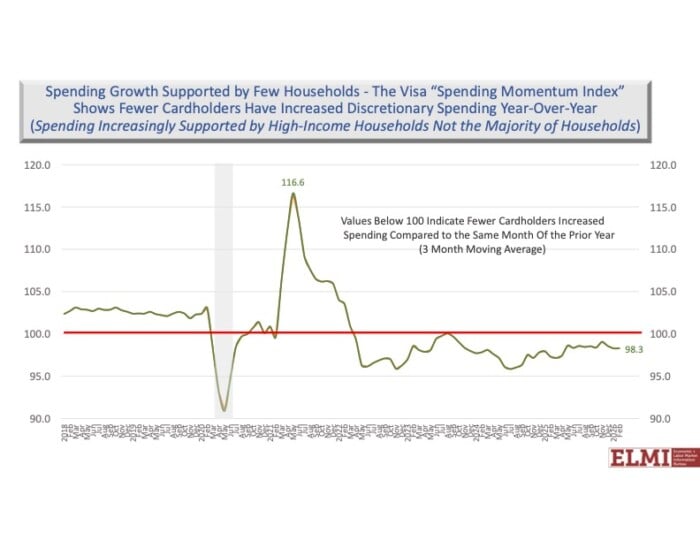
A key New Hampshire economist has trimmed down to 2.2% his forecast for the growth in the state's economy this for 2026, citing lackluster consumer confidence and the uncertainty of the U.S. war against Iran.

POLICY By: Kevin Cavanaugh To be a family who isn’t struggling in today’s economy, a lot has to be going right. You need steady work, an income that stretches far enough, reliable child care — or the flexibility to provide…
Christopher Ellms Jr. received a 4-1 vote from the executive council on Wednesday, March 4, to become the next chair of the state’s Public Utilities Commission.