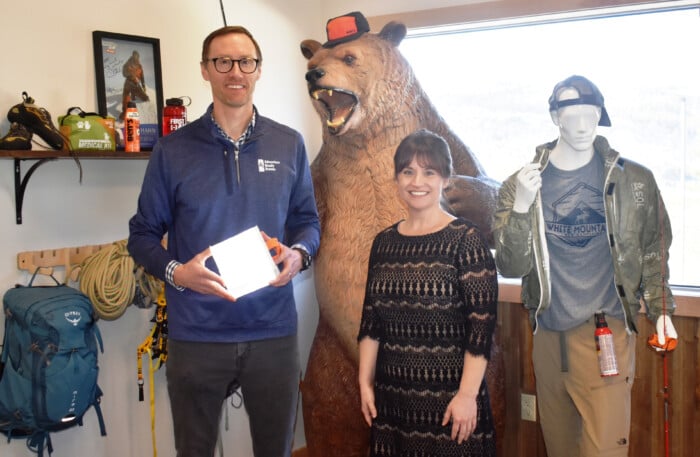
Littleton company aims for a big bite of the outdoor business
Adventure Ready Brands makes health and safety products at North Country industrial park
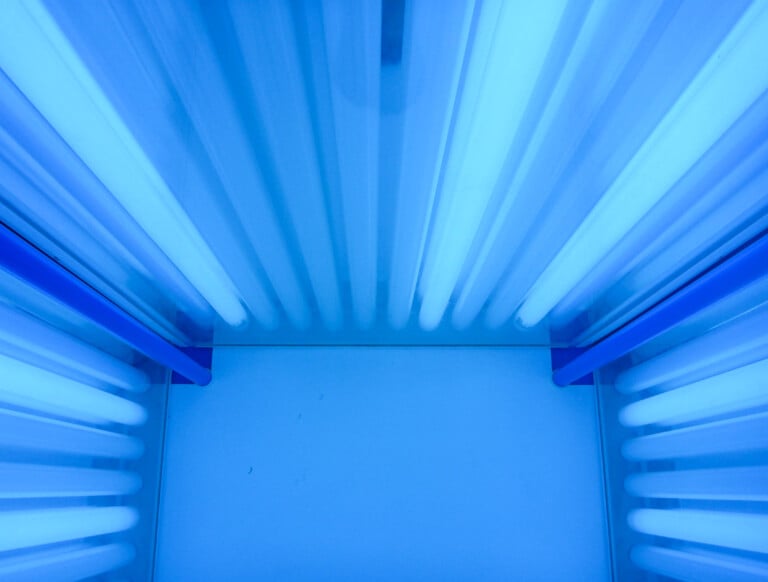

A young woman uses Narrowband Ultraviolet B (NB-UVB) light therapy, which a New Hampshire company, Cytokind, is advancing in the treatment of multiple sclerosis (MS) and other autoimmune disorders. (Courtesy photo)
Stepping outside on a bright sunny day almost always elevates a body’s feel-good endorphins and produces a healthy boost of vitamin D production. Now, a New Hampshire company is advancing that science to help manage the symptoms of multiple sclerosis (MS), long COVID and other autoimmune disorders.
“You absorb the light, you calm your immune system, and you heal from the inside out,” said John MacMahon, CEO of Cytokind, an Intervale-based medical device company that concentrates on home and clinical phototherapy machines.
The machines, produced by Phothera out of Ohio, emit Narrowband Ultraviolet B (NB-UVB) light most commonly used in the treatment of certain skin conditions such as psoriasis, eczema and vitiligo.
A growing body of evidence also shows, according to MacMahon, that NB-UVB can help treat symptoms associated with autoimmune diseases, such as MS.
MS affects the central nervous system, disrupting communication between the brain and certain body functions, resulting in a variety of symptoms: fatigue, numbness, tingling, blurred vision, muscle weakness, walking difficulty, bladder/bowel issues and more.
With autoimmune conditions like MS and long COVID and others, MacMahon said the body’s immune system goes into hyperdrive.
“Our philosophy is: your immune system hasn’t gone back to baseline. It’s just running hot and it’s attacking things. It’s attacking your organs. Your immune system’s not getting any rest, your organs aren’t getting any rest, and you’re not getting any rest,” said MacMahon.
“The Narrowband UVB pathway — that’s independent of the drugs — calms the immune system. Then your immune system can rest, your organs can rest, and you can rest, and that’s our hypothesis,” he added.
A normal course of treatment for these autoimmune maladies can involve immunosuppressants, biologics, steroids and other therapies that require infusion through an intravenous feed.
“They’re trying to just get your immune system to stop beating up on itself. Those diseases, they require systemic repeat use, because they’re not a solution. They’re symptom management, but your disease is continuing to progress,” MacMahon said.
With study in bio-design and a graduate degree in electrical engineering from Stanford University, MacMahon has spent much of his professional career involved in medical device startups. “In bio-design, one of the tenants is to not only help patients, but help the health care burden. And what that means is you want to try and find better solutions at better prices,” he said.
Experience with a Mayo Clinic study on using focused UV light on psoriasis lesions gave him a different perspective on how the therapy can work.
“I realized I didn’t understand what was going on at all. I thought you shine the light and you heal from the top down. And what the data was saying: No, you absorb the light, you calm your immune system, and you heal from the inside out. I just wouldn’t let that concept go, I just delved into it,” he said,
Started in 2021 in the throes of the COVID pandemic, Cytokind describes itself as “the global leader in using UVB light to treat immune disorders and improve survival and the quality of life for patients.”
“We need to re-imagine our relationship with the sun,” it says of itself. “Cytokind invites you to follow the light.”
That relationship with the sun can become a bit of a challenge in the northern latitudes, according to MacMahon, where beneficial sunlight in, say, Concord is less frequent than, say, Miami. “There’s a signature of inflammatory diseases that are latitude dependent,” said MacMahon.
UVB is a long established treatment for skin conditions. Targeted (narrowband) ultraviolet light has been shown to curb dermatitis and other inflammatory reactions.
“We can leverage what’s in dermatology, whether you have psoriasis, vitiligo, eczema, which are the mainstays. Then you can get a light at home and treat yourself,” he said.
The Phothera devices distributed by Cytokind come in a variety of sizes for home and clinic use. For MS sufferers, the device is about the size of a full body mirror. They use an increasing amount of exposure, ultimately up to four minutes, facing front and back.
According to MacMahon, Cytokind is leading the effort to get the U.S. Food and Drug Administration (FDA) to recognize the NB-UVB as an approved and federally recognized therapy for MS, long COVID and other autoimmune disorders.
Such a designation allows health insurance companies to allow the therapies as a treatment option and help pay for the home-use phototherapy machines. From a business standpoint, according to MacMahon, it helps him leverage capital, enabling Cytokind to become what he described as the “Ozempic for autoimmunity.”
Ryan, a plumber living in New Hampshire, was diagnosed with MS in 2025. In researching treatment options, he happened upon a podcast that featured MacMahon discussing phototherapy, and he reached out directly to Cytokind.
He incorporated the NB-UVB light therapy alongside the traditional MS medications prescribed by his neurologist, and he believes this approach has made a significant impact on his quality of life.
“Adding phototherapy to my routine has genuinely made a difference in my energy, mood and overall quality of life, especially during the long winter months here in New Hampshire,” said Ryan. “It’s helped me stay active with my kids and keep showing up for my business, alongside the treatment plan my neurologist and I put in place. I’m hopeful that, with more research and eventual FDA approval, this could become a more widely accessible option for others living with MS.”
The case for this therapy was strengthened by an article in the June issue of Scientific American that mentions Cytokind, recounting the science behind and results of phototherapy, using the example of Kathy Young, a Virginia Beach woman diagnosed with MS in 2005.
“Young is one of the first people in the U.S. to test UV phototherapy as an MS treatment, but she may be at the forefront of a revolution in how we think about light and a huge class of diseases,” the article states.
Clinical trials are necessary to advance the remedy to FDA approval, according to MacMahon.
“That’s the fit of having these devices — the dignity of them going to the homes, and then having a patient be able to treat themselves, be their own advocates, and we’re really proud of that,” said MacMahon. “What the data shows, not only is the quality of life, the fatigue coming down, but we’ve correlated the fatigue with the excess inflammation.”
Adventure Ready Brands makes health and safety products at North Country industrial park

The NH Executive Council paused the approval of $773 million in federal spending contracts for the “GO NORTH” rural health program Wednesday, March 4, putting the brakes on a major initiative of Gov. Kelly Ayotte after councilors said the contracts were rushed and needed more scrutiny.

Employer health benefits costs are rising faster than inflation and wage growth, putting continued pressure on employer-sponsored plans. According to KFF’s 2025 Employer Health Benefits Survey, per-employee benefit costs increased 6% in 2025, with another 6.5% increase projected for 2026.

When families face a cancer diagnosis, mental health crisis, or any unexpected change in their health, the last thing they should worry about is navigating a complicated health care system. But for many, that is exactly what they face. Complex benefits, rising out-of-pocket costs and uncertainty about where to turn can add stress to already difficult moments.

The country’s declining pool of health care workers is a threat to the functionality of the U.S. health care system
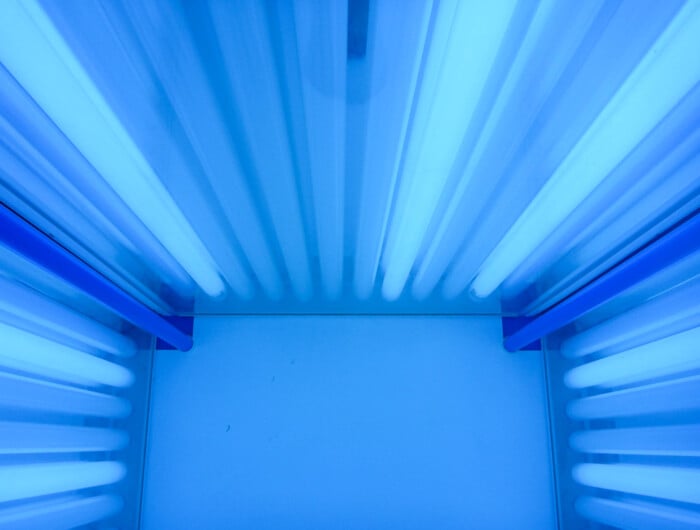
Started in 2021, Cytokind describes itself as 'the global leader in using UVB light to treat immune disorders and improve survival and the quality of life for patients'

Lebanon company’s technology helps surgeons pinpoint size, shape of tumors
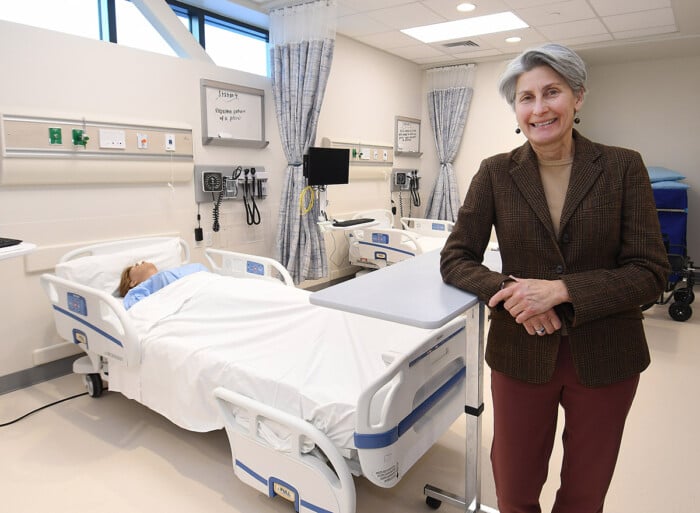
Amid statewide shortage, schools and hospitals aim to increase workforce

Some state officials and lawmakers are concerned that New Hampshire’s incoming Medicaid premium system may conflict with provisions in Congress’ One Big Beautiful Bill Act.