Ayotte suggests leasing surplus state land for housing
Gov. Kelly Ayotte suggests leasing surplus state land for residential development to help curb New Hampshire's housing shortage and attract more workers to the state.
The New England region was one of only four in the United States to experience economic expansion during October and early November, according to the latest “Beige Book” report of the Federal Reserve.
The report said the outlook for future economic growth was “cautiously optimistic” for the six-state region. But it expressed ongoing downside concerns about the labor market.
“Economic activity (in New England) continued to expand at a sluggish pace, as strong gains in home sales were largely offset by flat consumer spending,” reads the opening line in the New England chapter of the Beige Book, which the Fed released Nov. 26.
The Fed releases its Beige Book every eight weeks throughout the year. Unlike most government reports, it has almost no charts, graphs or quantitative assessments.
Rather, it provides anecdotal information based on interviews with unnamed bankers, business contacts, economists, market experts and others.
The findings reflect recent reports by the Pulse and the New Hampshire Fiscal Policy Institute, which show positive economic growth in New Hampshire but headwinds such as worker shortages, inflation and tariffs.
“I still think the word ‘resilience,’ that it’s a pretty strong characteristic of the New Hampshire marketplace,” said Joseph Campanelli, president and chief executive of Needham Bank, which closed its merger with Provident Bancorp this month and now has 18 branches in Massachusetts and southern New Hampshire.
Campanelli points to several factors that could have hobbled the New England economy — cutbacks on funding and research to colleges and universities, tariffs, the government shutdown, interest rates, Canadian tourists avoiding U.S. travel.
“Think of all we’ve been through. The economy’s still ticking along,” said Campanelli in an interview with NH Business Review.

The value of NH real estate deals has remained consistent for the past five years.
Total value New Hampshire property deals
The Beige Book reported economic expansion in regions centered on Boston, Cleveland, Richmond and Chicago. Other areas experienced either economic decline (including New York and Philadelphia) or little change (including Minneapolis and San Francisco).
For New England, the Fed said manufacturers saw modest sales growth and a reduction in tariff uncertainties. Activity in commercial real estate increased slightly, and demand for office space improved.
Demand for labor weakened and employment edged lower. About half of businesses still faced challenges finding qualified workers.
Wages were steady, prices rose at a modest pace and at a higher clip for import-related products such as beef, coffee and cocoa. (More recently, President Trump reduced high tariffs on countries such as Brazil, where those products originate.)
Capital expenditures in New England were level.
Rhode Island saw a steep drop in residential sales; Boston saw a modest decline. That’s expected, Campanelli said.
He noted that under Mayor Michelle Wu, Boston instituted a mandatory “inclusion zoning” policy that mandates that 20% of new residential developments be affordable.
“There’s not a lot of building going on (in Boston) given the 20% affordability requirement,” he said. “With higher rates, high cost of labor and mandatory 20% affordable, the numbers just don’t work.”

Gov. Kelly Ayotte suggests leasing surplus state land for residential development to help curb New Hampshire's housing shortage and attract more workers to the state.
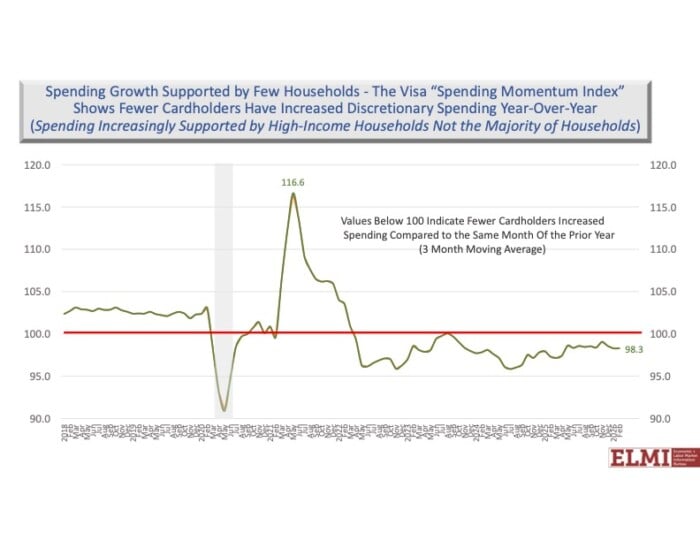
A key New Hampshire economist has trimmed down to 2.2% his forecast for the growth in the state's economy this for 2026, citing lackluster consumer confidence and the uncertainty of the U.S. war against Iran.

POLICY By: Kevin Cavanaugh To be a family who isn’t struggling in today’s economy, a lot has to be going right. You need steady work, an income that stretches far enough, reliable child care — or the flexibility to provide…
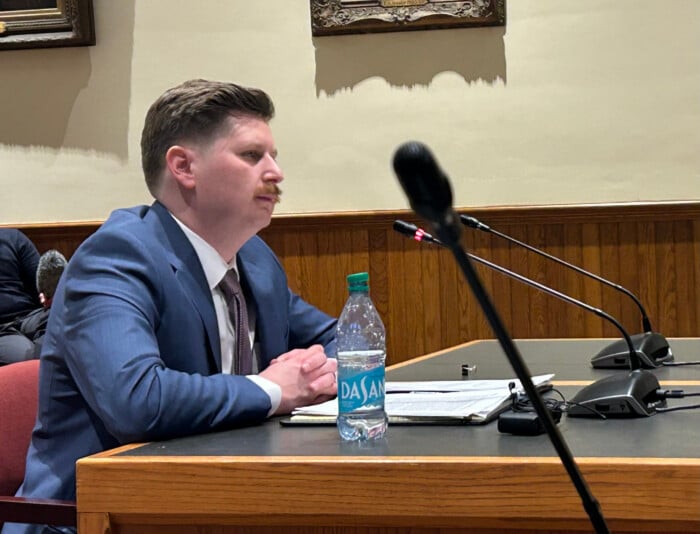
Christopher Ellms Jr. received a 4-1 vote from the executive council on Wednesday, March 4, to become the next chair of the state’s Public Utilities Commission.

If nothing changes between now and then, the trust fund that finances Social Security payments will run out, triggering a 7% decline in monthly payments in 2032 and dwindling further to 28% from 2033 through 2036.
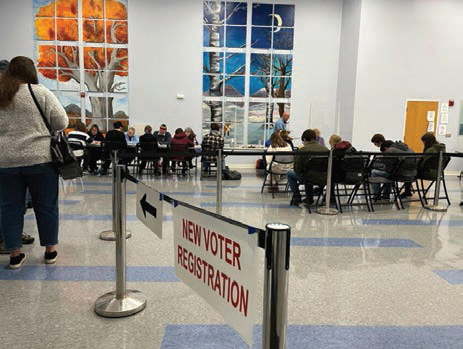
A federal judge heard opening arguments Monday, February 9, in a lawsuit challenging the constitutionality of a 2024 state law that requires first-time voters in New Hampshire to show proof of U.S. citizenship when they register.

Analysts fear that once it’s gone for the remainder of the fiscal year, overall revenue will lag unless other accounts, which have been underperforming to date, pick up the pace

Manchester Mayor Jay Ruais delivered his State of the City on Tuesday, Feb. 10, framing a path to the city’s future through the lens of history. His speech, at times rapid-fire and metrics-driven and at others raised to the passionate, oratorial tone of a secular civic sermon, addressed a standing-room-only crowd of business and civic leaders at the New Hampshire Institute of Politics at St. Anselm College.

The issue here in New Hampshire remains as it has been for many months: lack of supply that forces the hand of higher prices