Laconia company targets data centers for growth
Orion Entrance Control launches new security screening system
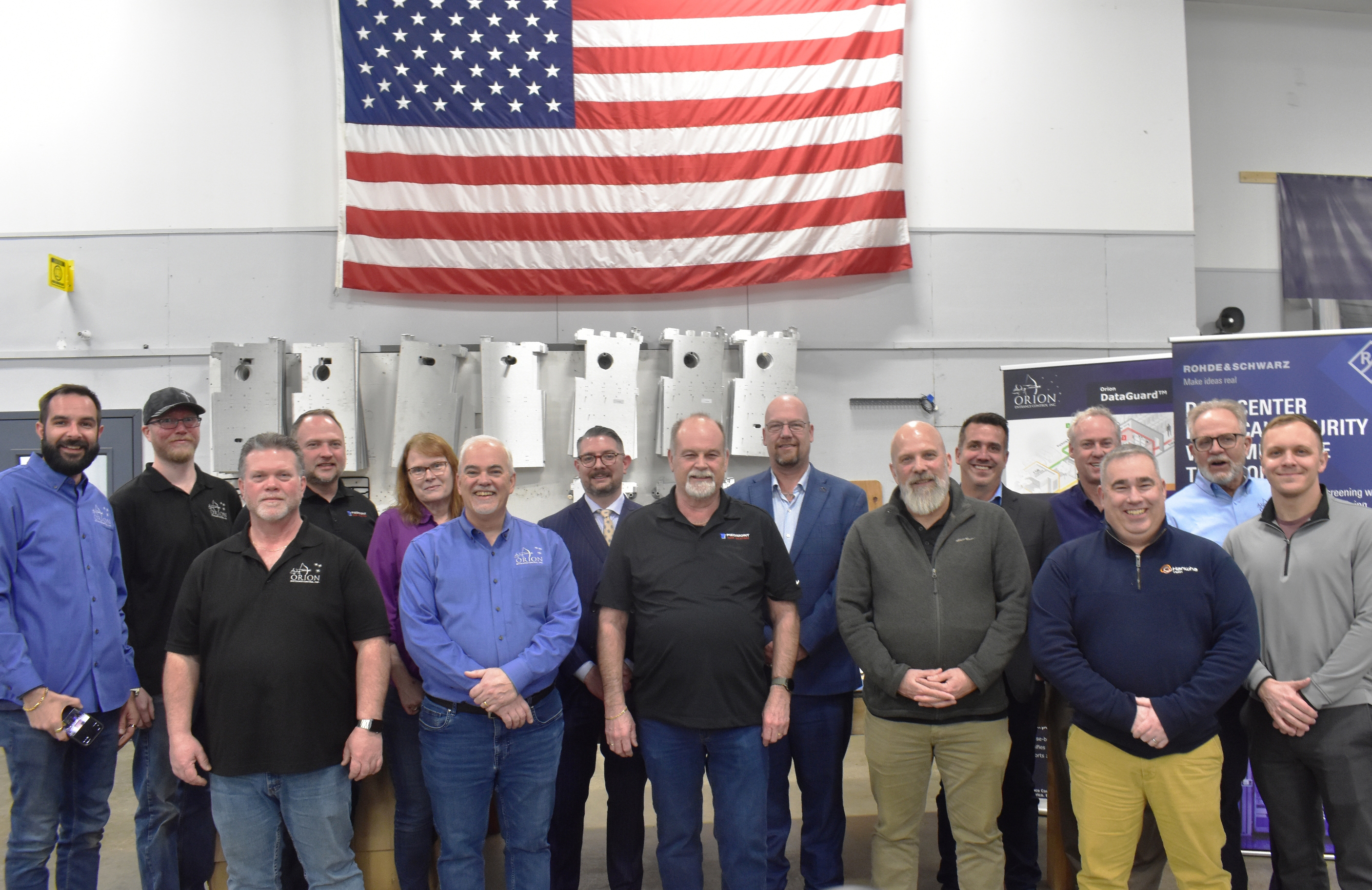
The Feb. 19 launch of Orion Entrance Control’s DataGuard automated screening system for data centers drew a sizeable number of employees and guests for a photo at the Laconia company.
A Laconia business is poised to take advantage of the expanding impact of artificial intelligence and the massive data centers that power them.
Orion Entrance Control Inc. recently celebrated the launch of its DataGuard automated security screening system for data centers. The company, which develops systems designed to protect critical environments, was founded in 2009 by Steve Caroselli, a 1988 graduate of Laconia High School.
Orion’s primary business is building turnstile entrance controls for hospitals, universities, data centers, energy facilities, transportation hubs and corporate campuses.
In 2020, in response to the COVID-19 pandemic, the company introduced the Orion Pre-entry Temperature Reader Kiosk, which uses infrared sensors to study some three dozen points on a person’s face and to almost instantly determine his or her body temperature to within fractions of degrees.
Instead of infrared sensors, DataGuard uses lidar — light detection and ranging — to identify persons who enter a secure area and what they might have brought with them into the secure area as well as what they might be trying to remove from it.
U.S. Sen. Jeanne Shaheen commended the company on its Data- Guard system, writing in a letter to Orion that data centers are “sprouting across the world” and that AI is the reason for them.
Data centers, however, have not been universally embraced. A Pennsylvania farmer recently sold his 261-acre farm for under $2 million to a local land trust to preserve the property rather than for $15 million to a company that wanted to build a data center on it, according to news reports.
Closer to home, last December the Lewiston, Maine, City Council rejected an agreement to develop a data center in that community, citing a public outcry and what the Portland Press Herald said included concerns about whether the deal was beneficial to the city and about “potential utility usage and environmental impacts that mirrors a national debate over the rise of AI data centers.”
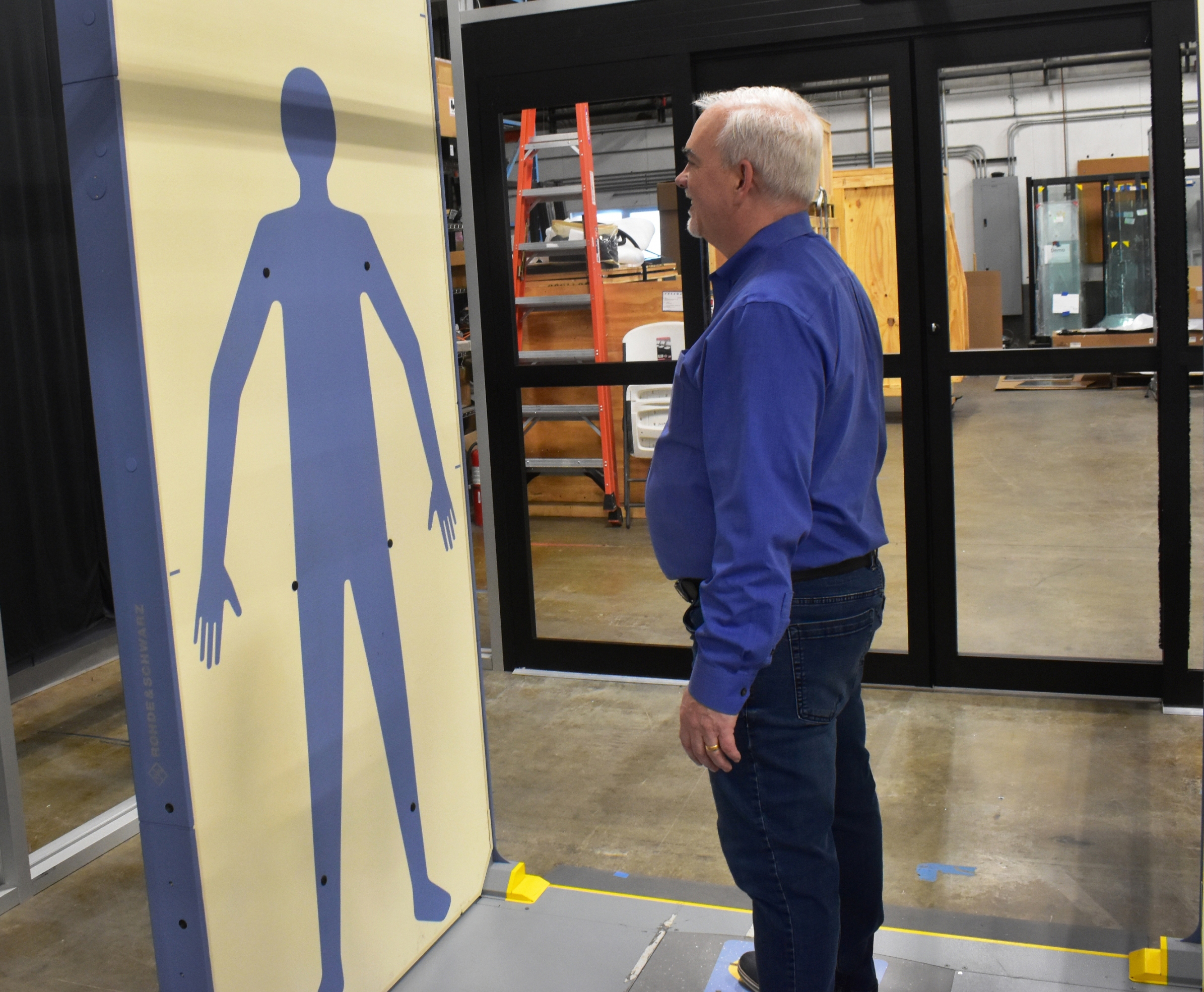
Steve Caroselli, CEO and president of Orion Entrance Control, stands Feb. 19 inside his company’s DataGuard automated screening system for data centers.
New Hampshire currently has no massive data centers, which are generally defined as those that exceed 500 megawatts of electrical demand.
Joe Fallon, the director of security and construction services at St. Louis, Missouri-based Faith Group Consulting, was among the attendees at the DataGuard launch on Feb. 19. Worldwide, there are $750 billion worth of data centers in development over the next five years, most of them in the U.S., he said, Despite the public opposition to them, developers are “looking to build data centers everywhere they can,” Fallon said.
Caroselli said Orion is profitable but he declined to share the company’s annual revenues. He said Orion presently has some 30 employees and is looking to add another half dozen or more.
“We’re very excited for 2026,” he said, in part because of Orion’s DataGuard product, which he said is fully customizable and sells for between $300,000 and $1.7 million. As of Feb. 19, Orion, which developed DataGuard with a number of partners, has received several inquiries but no purchase commitments yet.
Orion’s turnstiles, however, are in use in buildings “on all of Sixth Avenue” in New York City, said Caroselli, and in the MetroLink light rail system, which according to metrostlouis.org, connects “46 miles of rail across 38 MetroLink stations in Missouri and Illinois.”
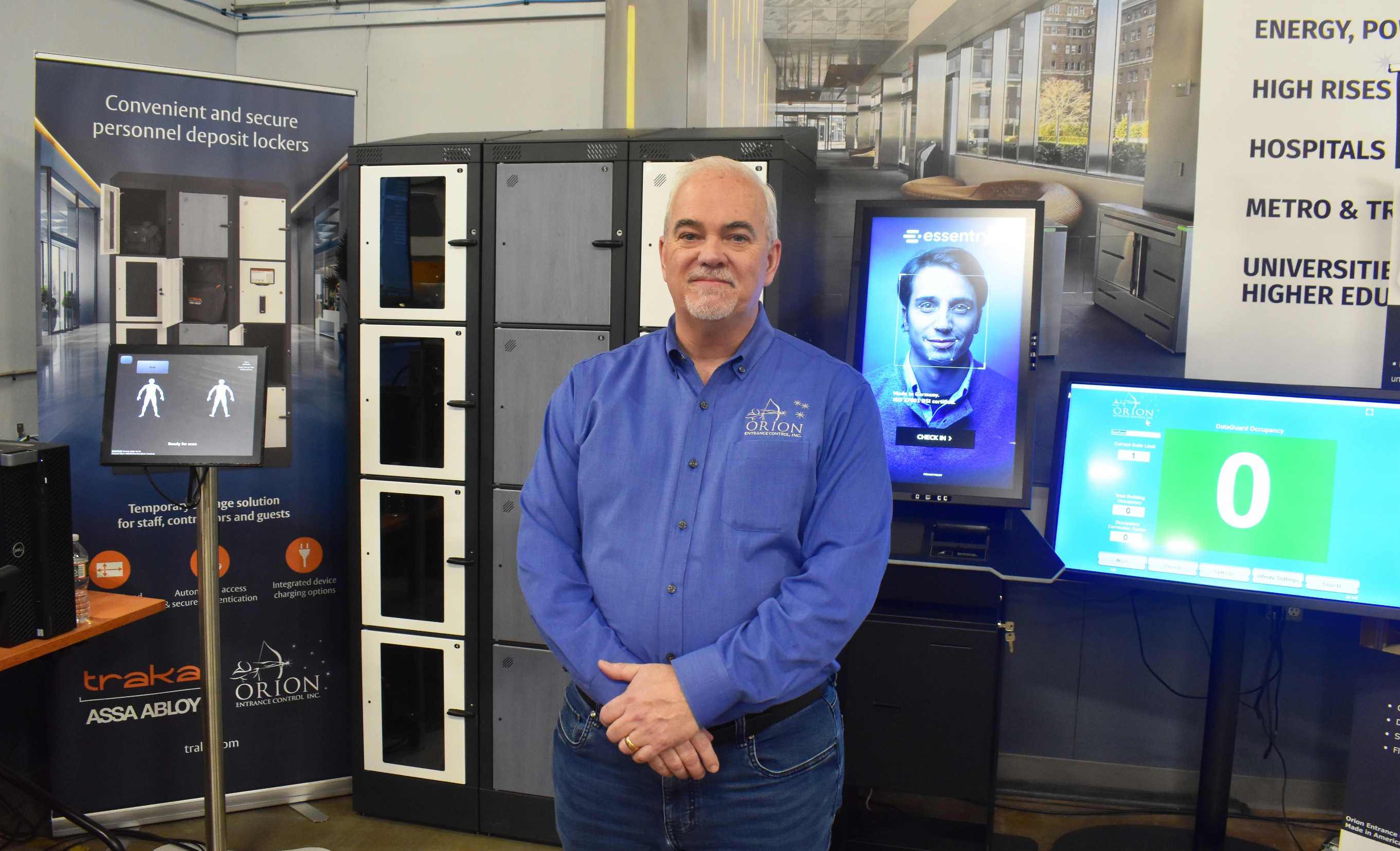
Steve Caroselli on Feb. 19 stands outside his company’s DataGuard automated screening system for data centers.
Additionally, Orion’s customers are the owners of Class A office buildings, data centers and the headquarters of energy companies. He noted that Orion has a contract to update turnstile at the Henry Reid International Airport in Las Vegas.
Asked about privacy concerns with DataGuard, Caroselli agreed with the observation that anyone entering a secure space has a limited expectation of privacy. Nonetheless, anyone entering a DataGuard unit must “opt-in” to proceed through it.
Caroselli said DataGuard, which is intended to be used remotely, reduces the need for human security officers, while permitting access around the clock.
Mike McGovern, who is Orion’s vice president for data center business development, said another benefit of removing human beings from the vetting process is that “personalities aren’t involved,” thereby reducing potential conflicts.
“One of our core values is reducing frustration for a lot of people,” said Caroselli, and the DataGuard system is helping that happen.
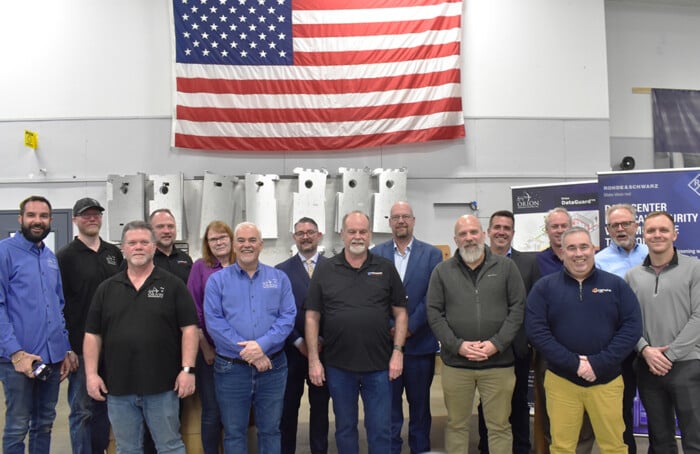
Orion Entrance Control launches new security screening system

Will New Hampshire ever land a massive data center?
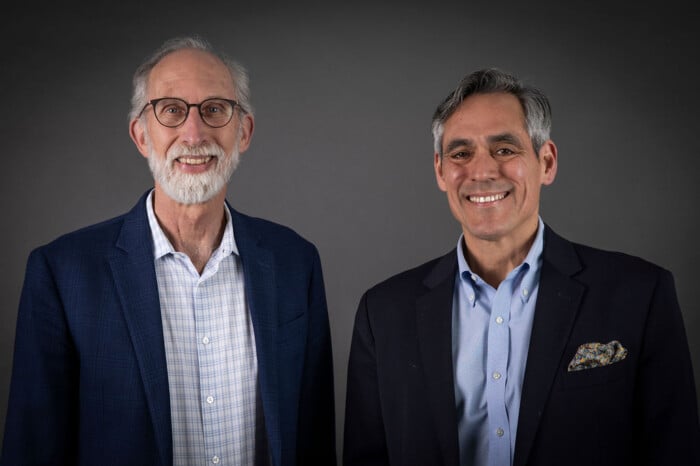
After an exhaustive national search, Yankee Publishing Inc. (YPI) has promoted an executive from within its ranks to lead the Dublin-based independent media company. Ernesto Burden, whose media experience spans three decades, is taking over as president and CEO from Jamie Trowbridge, who has served in those roles for more than 25 years.

Sig Sauer is partnering with an Israeli aerospace company to develop a military-application drone armed with the Newington company’s latest-generation machine gun

That half-million-dollar benchmark has stayed in place every month since, according to data from the New Hampshire Association of Realtors.

The availability of affordable yet well-maintained housing has become a perennial issue in New Hampshire communities and in the New Hampshire Legislature. While local and state policies and programs may open pathways to increased housing opportunities, policies alone won’t create new housing or keep existing homes in safe and livable condition.
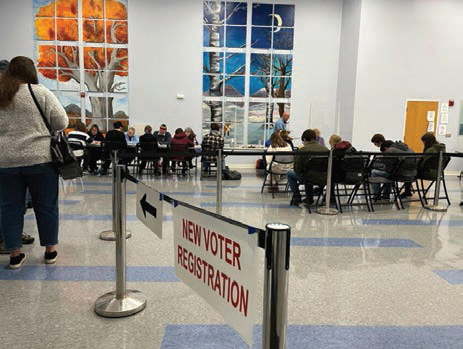
A federal judge heard opening arguments Monday, February 9, in a lawsuit challenging the constitutionality of a 2024 state law that requires first-time voters in New Hampshire to show proof of U.S. citizenship when they register.

What employers should know for the upcoming cap season

On February 11, 2026, California Attorney General Rob Bonta announced the largest enforcement settlement under the California Consumer Privacy Act (CCPA), resolving claims that The Walt Disney Company failed to adequately honor consumers’ opt-out rights — a core tenet of modern privacy law.