(Opinion) We aren’t building a workforce pipeline; we’re waiting for it
Across New Hampshire, the conversation about workforce shortages sounds familiar: We can’t find people.

Across New Hampshire, the conversation about workforce shortages sounds familiar: We can’t find people.
Today’s consumers don’t just want convenience. They expect it, whether it is speed, digital tools, quick answers, and the ability to do routine tasks from their phones.

Honoring a local centenarian; traveling abroad while war rages nearby
Beyond the anticipation of tee times and open fairways, the golf industry in northern New Hampshire is navigating a more complicated landscape than many realize. Like much of the economy, it is emerging from a post-COVID surge and settling into a new, less certain normal.
A roundup of news updates from public companies in NH and nationwide
Petroleum energy prices are rising globally, and New Hampshire is not immune to this increase. Sharp upward pressures on prices, particularly for crude oil, pose a new challenge to household budgets in the Granite State.
Wilcox Industries, a military and law enforcement tactical equipment developer and manufacturer, is planning a major addition to its headquarters that would house partner businesses in the electrooptics industry.

NH Business Review's biweekly snapshot of business and industry statistics

The U.S. Small Business Administration (SBA) earlier this month announced its 2026 New Hampshire Small Business Award winners.
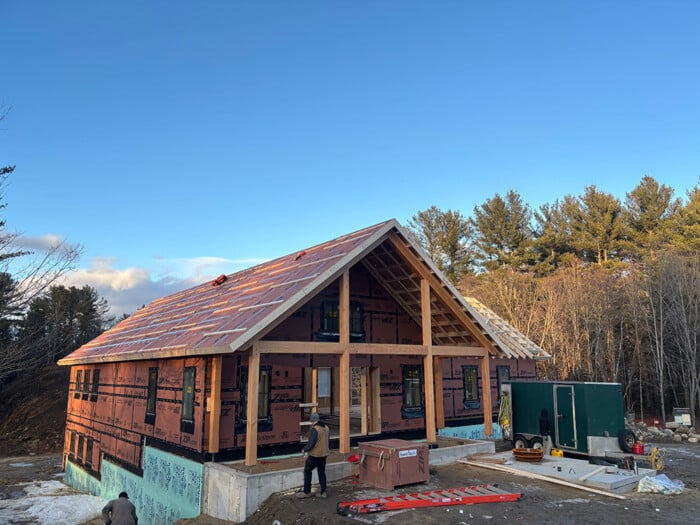
The Community College System of New Hampshire (CCSNH) and Lakes Region Community College (LRCC) received approval for a $1.2 million Training for Residential Energy Contractors (TREC) grant from the New Hampshire Executive Council to meet workforce needs for energy contractors.

Dartmouth College opened its “AI at 70” conference Thursday morning, Oct. 29, with a session called “The Future Worth Building is Human.”
On Nov. 26, 2015, heavy wet snow was falling, with a forecast warning of an impending storm for days. The phone rings, and before I answer it, I already know what the reporter is going to ask.
New Hampshire has more than 10,000 miles of rivers, many of which flow through downtowns.
The nationwide youth mental health crisis has seen marked improvements in New Hampshire since 2021, but the problem is still far from fixed. Indeed, while the measured outcomes are getting better compared to the worst years of the COVID-19 pandemic, the figures today are still historically concerning compared to a decade ago.
New Hampshire employers spend considerable time and resources trying to find dependable employees who want to work. Yet there is a segment of our population that is too often overlooked: adults with intellectual and developmental disabilities (IDD).

Reliable, accessible childcare is an economic advantage that helps New Hampshire businesses attract and retain employees, strengthen their workforce and support long-term growth.

Identifying growing and grace as my top two values helped me focus on who I want to be and how I want to show up. Revisiting these six years later, I am pleased that these ideas still ring true.

To many people, prediction markets and sports gaming are a distinction without a difference. Which begs the question: Should New Hampshire be regulating prediction markets, especially as they apply to sports, the same way it regulates — and draws revenue from — sports betting via DraftKings?

Over the course of my career, I have attended my share of ribbon-cuttings that were the result of a lot of effort to recruit a new company into the state.