Right-to-know office remains empty after cuts
Nine months after the office that handles disputes over access to public records was vacated, the state has yet to staff it.
On February 26, 2026, the Department of Labor’s Wage and Hour Division released a new notice of proposed rulemaking that would significantly revise the test used under the Fair Labor Standards Act (FLSA) for determining independent contractor status, marking the third major change to the federal independent contractor rule in less than five years.
The proposed rule is widely considered “business-friendly” and intended to provide more predictable guidance for businesses that rely on freelancers, gig workers and other nonemployee labor. But for businesses operating in New Hampshire, the new proposed rule is only one piece of the puzzle, because state law will continue to apply the stricter “ABC test,” even if the proposed federal rule becomes final.
Independent contractor classifications
The legal distinction between employees and independent contractors carries significant financial consequences. Employees are entitled to minimum wage, overtime pay and other protections under the FLSA, while independent contractors are generally considered to be in business for themselves and excluded from those requirements. Misclassification can result in liability for unpaid wages, liquidated damages, taxes, benefits, penalties and attorneys’ fees.
The 2021 rule
In 2021, the DOL finalized its first formal classification regulation, aiming to increase predictability by focusing on two “core” factors — control and opportunity for profit or loss — and using other factors as secondary considerations (skill, permanence and integration into production). If those core factors did not resolve the classification question, the rule directed consideration of three additional factors: (3) the amount of skill required for the work, (4) the degree of permanence of the working relationship and (5) whether the work was part of an integrated unit of production. Where the two core factors pointed in the same direction, they were often dispositive, which provided employers with increased predictability.
The 2024 rule
In January 2024, the DOL reversed course and issued a multifactor test without preweighted “core” factors. The rule adopted a six factor, non weighted analysis examining: (1) the worker’s opportunity for profit or loss depending on managerial skill; (2) the relative investments of the worker and the employer; (3) the degree of permanence of the working relationship; (4) the nature and degree of the employer’s control; (5) whether the work performed is integral to the employer’s business; and (6) the worker’s skill and initiative.
The DOL emphasized that all factors must be evaluated in light of the totality of the circumstances. The 2024 rule was widely viewed as less predictable than the 2021 rule and was challenged in multiple lawsuits, further contributing to the uncertainty.
The 2026 proposed rule
The DOL’s 2026 proposed independent contractor rule would largely restore the framework adopted in 2021, refocusing the analysis under the FLSA on a streamlined economic-realities test. The proposed rule identifies two core factors entitled to greater weight: (1) the worker’s control over the performance of the work, and (2) the worker’s opportunity for profit or loss based on entrepreneurial initiative or investment. If those factors do not resolve the classification question, the proposal directs consideration of three additional factors: (3) the degree of specialized skill required for the work, (4) the permanence or duration of the working relationship, and (5) whether the work is part of an integrated unit of production. Unlike prior rules, it would also apply this same standard across the FLSA, the Family and Medical Leave Act, and the Migrant and Seasonal Agricultural Worker Protection Act.
NH’s ABC Test remains unchanged
While the federal debate has drawn national attention, New Hampshire employers operate under a separate, and more demanding, state law standard. For purposes of unemployment compensation, state wage and hour laws, and coverage under various other state employment statutes, New Hampshire applies the “ABC test,” under which a worker is presumed to be an employee unless the employer can meet all three of the following requirements: (1) the worker is free from control and direction in performing the work, both under contract and in fact; (2) the work is outside the usual course of the employer’s business or performed outside all the employer’s places of business; and (3) the worker is customarily engaged in an independently established trade or business of the same nature. Failure to satisfy any single prong of this test results in employee status under state law. Courts have enforced this test strictly, making New Hampshire a challenging jurisdiction for independent contractor classification.
For New Hampshire businesses, this means that DOL’s proposed rule may reduce federal wage and hour exposure but will not eliminate state law misclassification risk. Navigating that dual framework remains essential to managing classification risk.
New Hampshire employers are encouraged to carefully review their employee and independent contractor classifications, and to consult with qualified New Hampshire employment counsel as appropriate.
Amanda Brahm is a member of McLane Middleton’s Litigation Department. She can be reached at amanda.brahm@mclane.com or 603-334-6913.
Nine months after the office that handles disputes over access to public records was vacated, the state has yet to staff it.

On February 26, 2026, the Department of Labor’s Wage and Hour Division released a new notice of proposed rulemaking that would significantly revise the test used under the Fair Labor Standards Act (FLSA) for determining independent contractor status, marking the third major change to the federal independent contractor rule in less than five years.

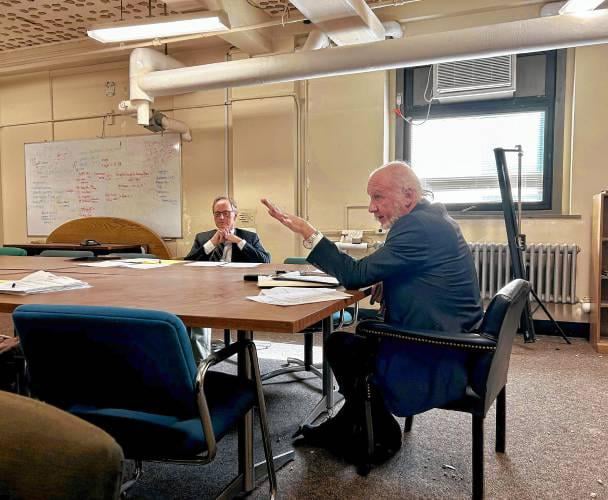
Gov. Kelly Ayotte suggests leasing surplus state land for residential development to help curb New Hampshire's housing shortage and attract more workers to the state.
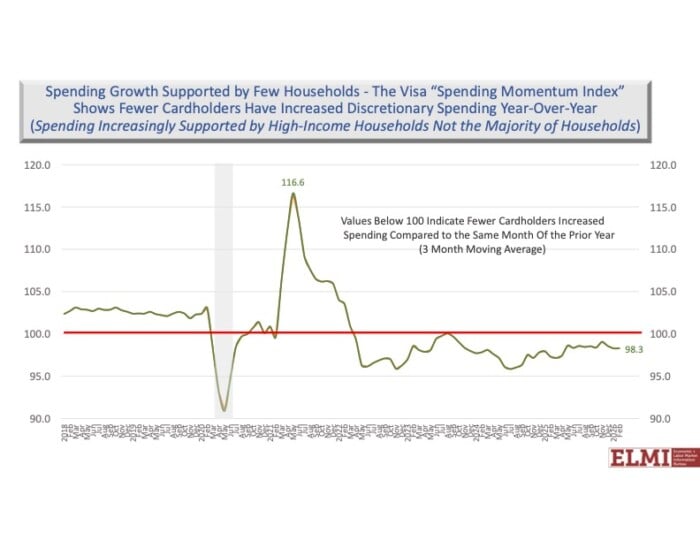
A key New Hampshire economist has trimmed down to 2.2% his forecast for the growth in the state's economy this for 2026, citing lackluster consumer confidence and the uncertainty of the U.S. war against Iran.

POLICY By: Kevin Cavanaugh To be a family who isn’t struggling in today’s economy, a lot has to be going right. You need steady work, an income that stretches far enough, reliable child care — or the flexibility to provide…
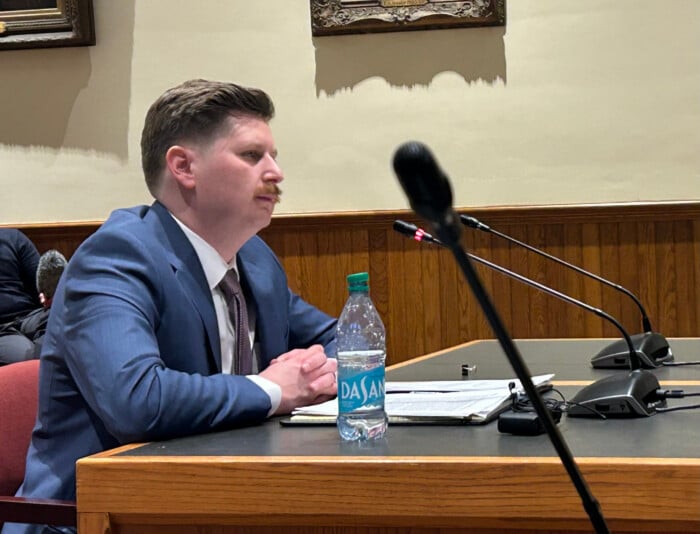
Christopher Ellms Jr. received a 4-1 vote from the executive council on Wednesday, March 4, to become the next chair of the state’s Public Utilities Commission.

If nothing changes between now and then, the trust fund that finances Social Security payments will run out, triggering a 7% decline in monthly payments in 2032 and dwindling further to 28% from 2033 through 2036.
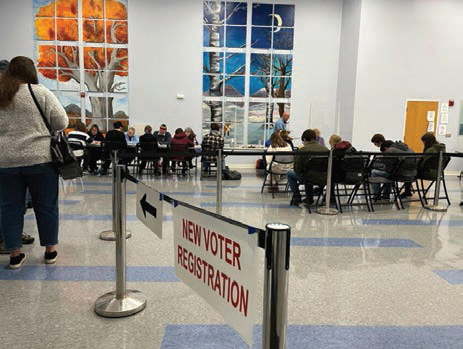
A federal judge heard opening arguments Monday, February 9, in a lawsuit challenging the constitutionality of a 2024 state law that requires first-time voters in New Hampshire to show proof of U.S. citizenship when they register.

Analysts fear that once it’s gone for the remainder of the fiscal year, overall revenue will lag unless other accounts, which have been underperforming to date, pick up the pace