Understanding the H-1B visa
What employers should know for the upcoming cap season
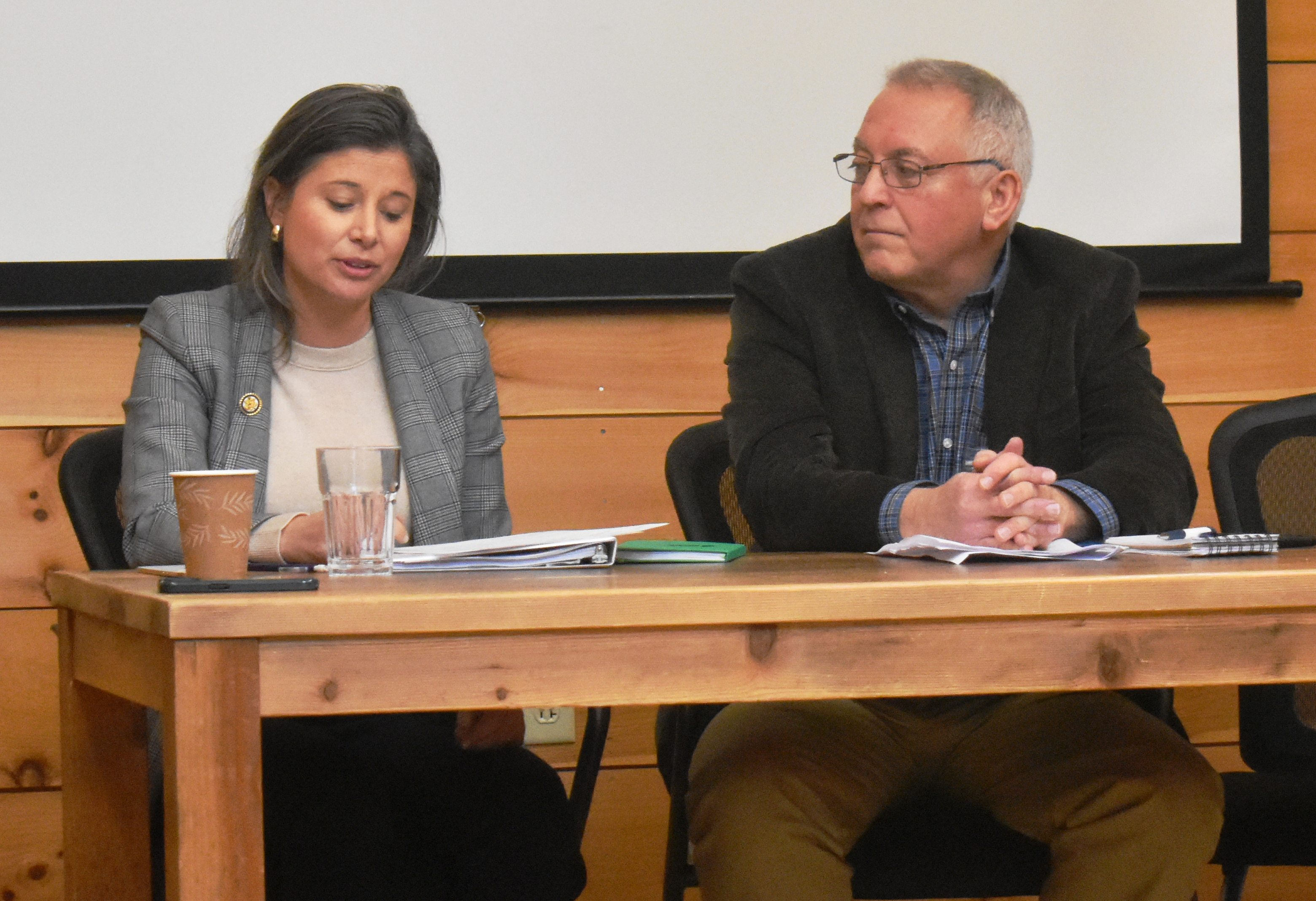
U.S. Rep. Maggie Goodlander talks about her efforts in Washington to support the outdoor industry at the second Grounded Growth forum on Feb. 18 at W. S. Badger in Gilsum. At right, Mike Cote, editor, NH Business Review. (Photo John Koziol)
Saying silence “will get you nothing,” U.S. Congresswoman Maggie Goodlander advised attendees of the second Grounded Growth forum that “raising hell is the best strategy” in dealing with the federal government’s broken funding promises.
A Democrat, Goodlander was a guest at the event Feb. 18 at the Gilsum headquarters of the Badger company, a family-owned maker of body-care products founded by Bill Whyte in 1995.
Sponsored by NH Business Review and The Nature Conservancy, the Grounded Growth series, according to the Granite Outdoor Alliance, “brings together New Hampshire’s outdoor, manufacturing and sustainability leaders to explore how the state can build a resilient outdoor economy that adapts to shifting markets, climate change and workforce demands.”
Each of the Grounded Growth sessions pairs a factory tour with an invite-only roundtable, “creating space for hands-on learning, peer exchange and forward-looking strategies that keep New Hampshire’s growth rooted in both community and conservation,” the GOA said.
The GOA said insights from the sessions — the first of which was held at Adventure Ready Brands in Littleton last month — “will inform a public report by GOA outlining recommendations to guide future strategy, partnerships and programming across the state’s outdoor economy.”
As at Adventure Ready Brands, there was much discussion about the challenges of recruiting and retaining employees, especially given a statewide lack of affordable housing and high child care costs.
At Badger, there was also talk — but no direct mention by name — of how tariffs imposed by President Donald Trump, a Republican, were having a deleterious effect on businesses and consumers.
The Grounded Growth session at Badger came two days before the U.S. Supreme Court ruled that many of the tariffs that Trump imposed unilaterally were not legal and a few weeks after a grand jury declined to indict Goodlander and five other Democratic lawmakers, who are also veterans, for making a video last November that addressed the active military.
In the video, Goodlander and the other lawmakers reminded members of the armed forces that they are not required to follow illegal orders, to wit Trump’s unilateral use of military force to strike what Trump claimed were boats in the Caribbean Sea and Pacific Ocean used to ferry illegal drugs to the United States.
Trump has said the lawmakers’ comments were treasonous and merited their execution.
Goodlander did not identify Trump, but spoke of his policies and how Trump’s One Big Beautiful Bill Act was “an absolute gift to China.”
She told attendees who relied on solar energy and other renewables to “do the math” on how the Act affects them.
In response to complaints from multiple parties that the federal government has reneged on numerous funding pledges, Goodlander said the best way to ensure the flow of those funds was to speak up.
“Raising hell is the best strategy,” Goodlander said.
“Staying quiet will get you nothing.”
In her first term as a U.S. representative, Goodlander told attendees of the event at Badger that she wanted to be an “advocate and partner.”
“We’re working with the limited tools that we’ve got,” she said. “I hope you will call on me and give me a lengthy to-do list.”
Peter Hansel, who worked for nearly 50 years at his family’s Keene-based Filtrine Manufacturing Co. and is also president of the Monadnock Conservancy, said Filtrine would not have invested in solar and biomass had there not been incentives to do so.
“The state incentives don’t exist anymore,” said Hansel, and there is a concern that federal incentives might go by the wayside, too.
Several attendees at the Badger event observed that the “New Hampshire Advantage” is not exclusive to low taxes and little regulation, but that it also includes clean air and water and a healthy environment, and that the two are not contradictory.
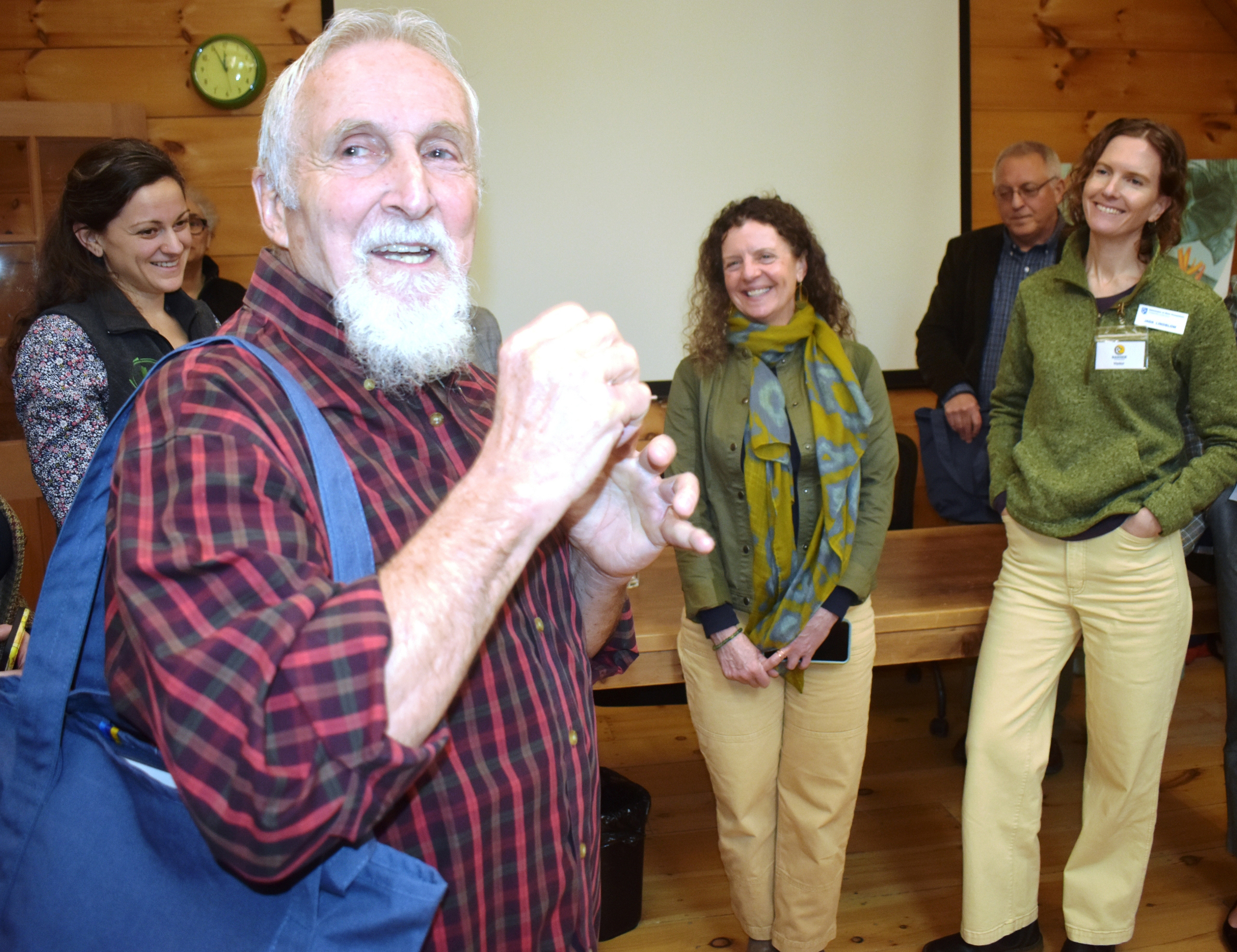
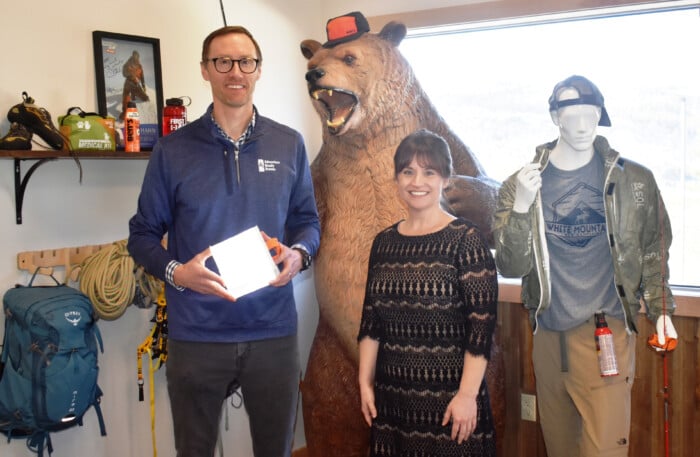
Bill Whyte, founder of W.S. Badger body-care products, talks about the company at Badger in Gilsum on Feb. 18 at a Grounded Growth forum. From left: Molly Taflas, deputy director, Northern Border Regional Commission; Janelle Lawton, director, NH Outdoor Recreation Industry Development; Mike Cote, editor, NH Business Review; and Jada Lindblom, economic development state specialist, UNH Cooperative Extension. (Photo John Koziol)
Others noted that there is confusion about how federal monies can be spent and how to apply for grants that are available.
NH District 2 Executive Councilor Karen Liot Hill, who is the lone Democrat on the Executive Council, said, “A lot of outdoor recreation happens in my district,” which is made up of 81 cities and towns in the capital region and western New Hampshire.
A former Mayor of Lebanon, Liot Hill said there is “kind of an anti-woke climate” about clean air and water, but that there are “nonpartisan ways we can connect.”
There are efforts underway, she added, to figure out “what is the language” that is going to best foster communication.
Andrew Schuyler of the Granite Outdoor Alliance, said sustainability “is top of the line” for many New Hampshire entities and that the costs of both solar and wind energy have significantly decreased over the past decade. Now, however, those attempts to embrace renewable energy are being stymied by an administration that he said is “hostile” to renewables.
Earlier, Paul Susca, board president of the Bike-Walk Alliance of New Hampshire, told attendees that the federal government is “more hostile” to bikes and “anything that is pro-bike.” There is a failure, he said, in recognizing the financial importance of supporting biking infrastructure.
Hansel said there was hope that “we can solve some of these problems on our own,” and Whyte was likewise optimistic “that things will change.”
“The current energy is the energy of decay,” Whyte said, “and it can’t last.”
Tyler Ray, the founder of the Granite Outdoor Alliance, said more data is now available that shows the importance of the outdoor recreation economy and that the data will “really allow us to go to bat with lawmakers.”
He called for continued resilience and staying the course. “This tide will change,” he said.

What employers should know for the upcoming cap season

On February 11, 2026, California Attorney General Rob Bonta announced the largest enforcement settlement under the California Consumer Privacy Act (CCPA), resolving claims that The Walt Disney Company failed to adequately honor consumers’ opt-out rights — a core tenet of modern privacy law.
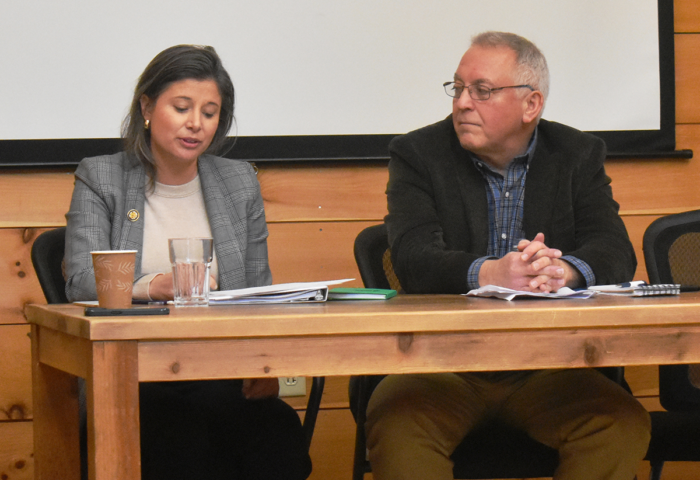
Goodlander says ‘raising hell’ best strategy to secure promised federal dollars
The backlash over Bad Bunny’s performance during the Patriots–Seahawks Super Bowl halftime show is a good example of when business bumps up against politics.
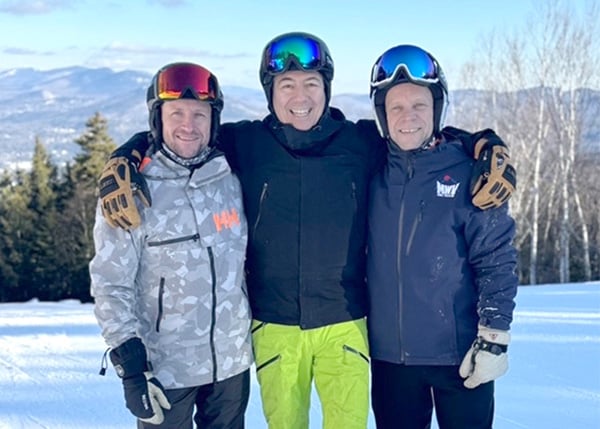
Hannes Schneider is regarded as the father of the alpine skiing technique known as the Arlberg method, a skill he brought to North Conway and the Mount Washington Valley in 1936.
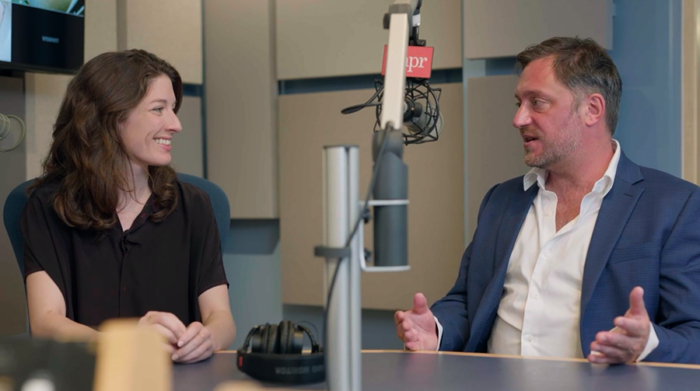
NH Public Radio’s new video series, “Your Neighbors, Your News,” introduces you to many of the nearly two dozen talented NHPR reporters, editors, hosts and producers who not only bring you the news that matters most in New Hampshire each day, but are your neighbors in the Granite State, committed to digging for answers you need to better understand our changing state.

As of April 2024, roughly 30% of New Hampshire workers were over 55, and more than 210,000 residents are expected to reach traditional retirement age in the coming decade.

Since 2020, our research team at the University of New Hampshire — the New Hampshire Youth Retention Initiative (YRI) — has been studying how young people view the Granite State as a place to live, learn and work.
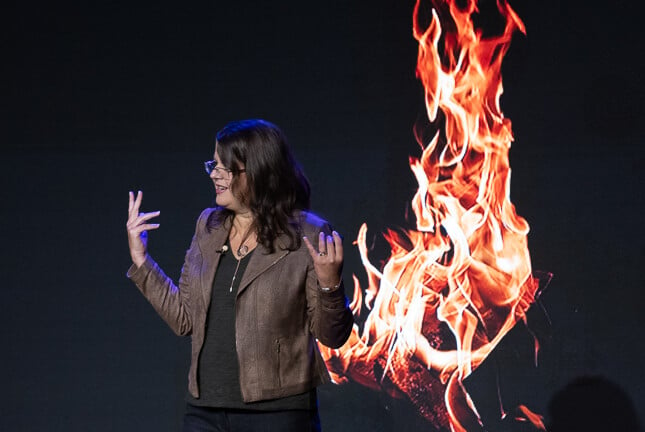
What’s the big idea? Ten people from different backgrounds and disciplines will share theirs at the Rex Theatre on Oct. 22 for TEDxAmoskeagMillyard, an annual storytelling event.