Forum: ADUs, manufactured homes can help with NH housing crisis
But zoning, social stigma and costs can make it challenging
Single-family and condominium alternatives, such as manufactured homes and accessory dwellings units (ADUs), could go a long way toward helping ease New Hampshire’s housing crisis. But those options can have some obstacles, according to participants in a forum.
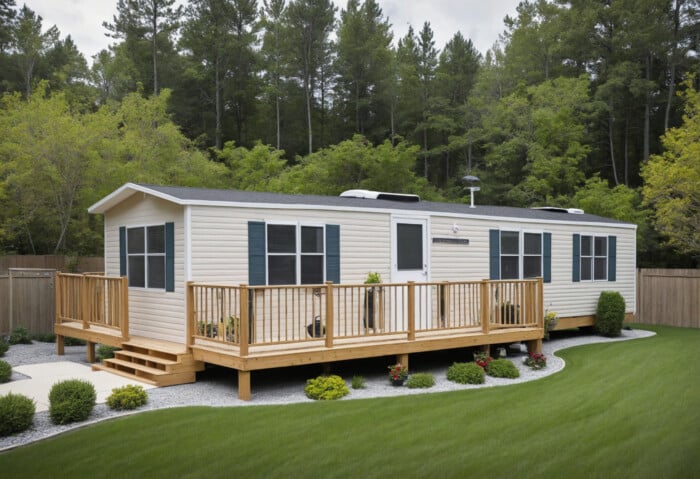
Manufactured homes “stand out as the most affordable ownership option in the state,” said Alexsandra Galanis, manager of research and data analytics at New Hampshire Housing.
ADUs “check a lot of boxes: social, economic and community needs,” said James Vayo, principal planner at the Southern New Hampshire Planning Commission.
Galanis and Vayo, along with Abby Bronson, director of policy and advocacy at the Community Loan Fund, participated in a forum entitled “Home Sweet (Extra) Home: How ADUs and other alternatives can boost housing supply in NH.” The April 2 webinar was produced by NH Business Review.
Housing supply and its affordability are an important workforce issue in New Hampshire, according to Galanis.
She offered data that shows how New Hampshire is making progress on replenishing its housing supply, but that it needs to happen at a faster pace and it needs to be more affordable.
“The long-term implication for future buyers in New Hampshire is that home ownership is becoming increasingly out of reach for a typical household,” she said, noting that a median-priced New Hampshire single-family home (around $530,000) is more than five times the New Hampshire median income of a New Hampshire household ($103,000).
New Hampshire Housing data shows that, in order to keep up with demand, the Granite State needs 67,000 new housing units by 2030, 102,000 units by 2040. Since 2020, she said, the state has added about 25,700 units, about 38%.
“While we are making progress, we’re not yet on pace to meet the 2030 goal,” said Galanis. “Sustaining higher production levels, especially across a broader mix of housing types, will be critical if we want to close the remaining gap.”
The most affordable option is manufactured housing, according to Galanis.
She noted that a new manufactured home — at about $269,000 — is just over two times more than the median household income, particularly among the workforce population.
“This is the only ownership option that truly aligns with their incomes. New Hampshire’s affordability challenge isn’t just about high prices overall, it’s about the type of housing being produced,” said Galanis.
“Manufactured housing plays a critical role in the affordability landscape, yet supply is limited, often constrained by zoning and local land-use policies,” she added. “If we want to expand home-ownership option opportunities, this is one area that deserves much more attention.”
One of the obstacles associated with manufactured homes is the social stigma, said Bronson during her presentation.
‘You might think of a trailer or a mobile home. You might think of rusted metal edges and not a permanent housing solution, and I’m here to tell you that the manufactured housing of today is nothing like what you have in your brain,” she said.
Manufactured homes, once transported to a site, are there for good, and they’re now built with style, durability and safety, features that help the home appreciate in value.
“According to Federal Housing Finance Agency data, since 2012 manufactured homes have actually appreciated faster than site-built homes,” said Bronson.” So we know that when you’re a homeowner, that’s often your single biggest financial asset, and that is true for manufactured homes, as well. It is an opportunity for families to really have that wealth-building opportunity that home ownership presents at a much more affordable price point for them.”
Zoning often stands in the way of manufactured housing, and its place among the Granite State housing stock remains an issue in the current legislative session.
One piece of 2026 legislation (HB 1016) sought to undo legislation from last year that passed and was signed into law requiring New Hampshire municipalities to allow for manufactured housing development. The bill was killed.
HB 1007 sought to expand on the 2025 law by revising siting standards for manufactured homes, expanding placement opportunities on individual lots. It, too, was killed.
HB 1026 sought to prohibit manufactured homes for use as ADUs. It was also killed.
Vayo encouraged anyone interested in ADUs to access a new resource from NH Housing: “The Homeowner ADU Guide.”
It was prepared by the Southern New Hampshire Planning Commission on behalf of New Hampshire Housing, and Vayo said it helps a homeowner navigate what he described as an “unfamiliar process” for most people.
There are three types of ADUs: in the home (think converted garage), attached to the home and detached from the home. No matter the type of ADU, it must be a complete living unit with sleeping, eating, cooking and sanitation built into it.
In deciding whether to create an ADU, according to Vayo, there are several factors to consider.
“This ADU guide helps homeowners step back and think long term about their choice: Who is the ADU for? How might it change over time?” he said. “There are social and financial considerations that every family needs to make. This includes things like how much privacy the home will have from the ADU? What are the income potentials or cost-saving potentials?”
An ADU can be appealing housing for a variety of reasons: for caretakers and helpers, single parents, downsizing seniors, older parents, boomerang children and people with disabilities, for example.
But the costs can be as expensive as building a home, and the value is not likely to equal the cost, according to Vayo.
He put the cost at anywhere from $300 to $600 per square foot, depending on where the ADU is being built and site conditions.
“ADUs are typically more expensive than the equivalent single-family home,” said Vayo. Cost can be mitigated, depending on how much the property owner is able to do with a home-building contractor.
The market value once completed is also a consideration.
“So if you spent $300,000 building an elaborate backyard ADU at your house when you’re done, and you go and get that assessed or appraised, it’s not going to be worth $300,000,” said Vayo. “The property value of an ADU after construction cannot be a driving force in the decision for building one.”
But zoning, social stigma and costs can make it challenging

Efforts are underway in Manchester to fashion a version of the iconic board game "Monopoly" into a Who's Who and What's What of New Hampshire's largest city.

Rising demand, transmission constraints, and the push for regional solutions

The Rugg family and the Town of Exeter have settled their long running land dispute, clearing the way for a developer to proceed with a housing development to be built on the Exeter-Newfields town line.

First-time-participant M&T Bank cites community’s ‘strong relationships’

On February 26, 2026, the Department of Labor’s Wage and Hour Division released a new notice of proposed rulemaking that would significantly revise the test used under the Fair Labor Standards Act (FLSA) for determining independent contractor status, marking the third major change to the federal independent contractor rule in less than five years.

Adventure Ready Brands makes health and safety products at North Country industrial park

Exacom, which provides voice and multimedia recording and logging solutions for 911 emergency communications, has been acquired by Motorola Solutions (NYSE: MSI). Terms of the transaction were not disclosed.

Keene State College’s (KSC) Safety and Construction Sciences programs recently hosted a three-day summit that brought students, faculty, alumni and industry leaders from across the country to address the future of the occupational safety profession and the growing demand for qualified safety professionals.