Critical care
The Central and Northern New Hampshire nonprofit soon will be expanding to 11 centers statewide
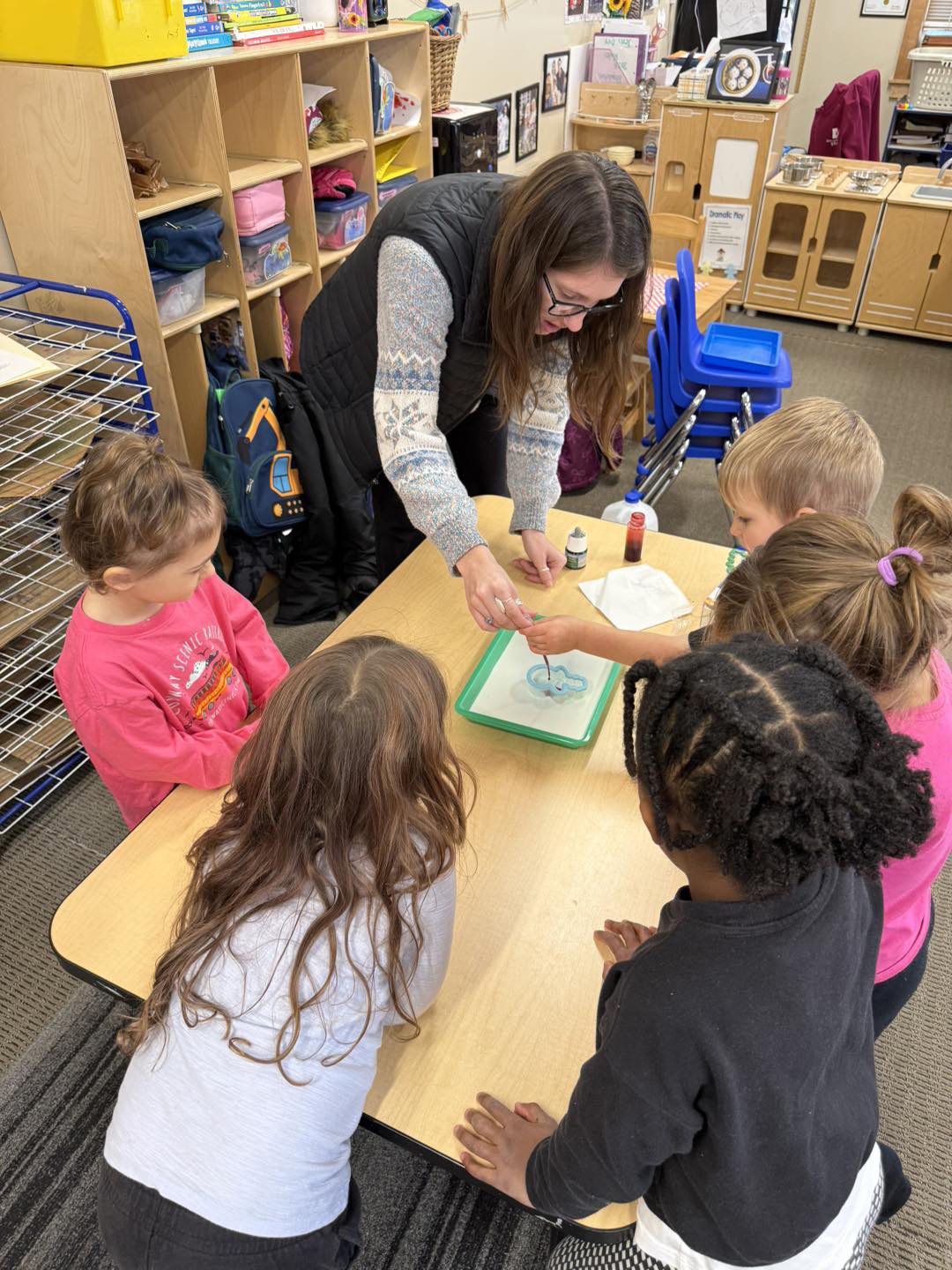
The Boys & Girls Clubs of Central and Northern New Hampshire operates nine early childhood centers in the state, including the Suncook Early Learning Center in Allenstown, pictured here. (Courtesy photo)
When people consider the work of the Boys & Girls Clubs, they probably think of community-based programs for school-age children.
Here in New Hampshire, in several regions of the state, however, they are also addressing a critical need, a need cited by analysts as having an effect on the state’s economy — providing early child care for infants, toddlers and pre-schoolers.
The Boys & Girls Clubs of Central and Northern New Hampshire, which is based in Concord, operates nine — soon to be 11 — early childhood care centers in the state.
The newest centers — the 10th and 11th — are at Keene State College and Plymouth State University. In August, they will transition from being school operated to being managed by the Boys & Girls Clubs.
As a nonprofit organization, being in the business of providing child care is not the leap for the Boys & Girls Clubs that some people might think it is, CEO Chris Emond says.
“We got into it because we know working with that age group is very important from a developmental stage,” Emond said. “You can change lives at any age, but it’s easier when they’re younger because they’re still developing so rapidly.”
Emond traces the origins of the Boys & Girls Clubs’ involvement in early childhood care to 12 years ago at the time it was rebuilding its main offices on Bradley Street in Concord.
“We opened up a kindergarten program before there was public kindergarten in Concord,” he said. “That was kind of our first foray, if you will, into a younger age group.”
With seed money from the Granite United Way, they opened up three preschools. “That was a big charge of theirs back then, to get more slots for preschool,” Emond said. “So we put one in Laconia, one here in Concord, then one down in Allenstown at our Suncook facility.”
A significant step toward the larger model of running day cares came with its merger in 2019 of facilities operated by Laconia-based Lakes Region Childcare Services. With a nod of gratitude to its director at the time, Marti Ilg, Emond said they transitioned to a larger-scale operation of running a day care.

With nine current early childhood centers in the state, the Boys & Girls Clubs of Central and Northern New Hampshire will soon operate the facilities at Keene State College and Plymouth State University. (Courtesy photo)
“I just can’t say enough about the person who was running it — a woman named Marti Ilg, and she had been there for 10 years,” Emond said. “She had a good business sense as well. But their program staff, most of them are still with us. This merger was seven, eight years ago now, and some of them are 20-year veterans still working in child care in classrooms.”
With the COVID pandemic the following year, and the period of lockdown of closed schools and remote learning, the state turned to the Boys & Girls Clubs to provide care for the children of first responders. “We became partners with the state and really were able to implement that. So that kind of put us on the map,” he said.
About a year ago, the University System of New Hampshire, citing financial viability, put out bid requests for the operation of early childhood care centers at its three primary campuses in Keene, Plymouth and Durham.
It chose the Boys & Girls Clubs for the Child Development Center at Keene State College and the Early Care and Education Center at Plymouth State University.
“Partnering with the Boys & Girls Clubs of Central and Northern New Hampshire allows us to sustain these vital programs in a way that is both financially responsible and aligned with our academic mission,” said USNH Chancellor Catherine Provencher of the February agreement.
While Emond said his organization was also interested in operating the Child Study and Development Center at UNH/Durham, the university in May approved an internal proposal to keep the center under UNH management while implementing changes designed to strengthen its long-term financial sustainability.
“We like doing things like this,” Emond said. “The board is very good about looking at things and, honestly, taking a risk, because if you’re taking over a place that’s not working financially, there’s a reason why that’s happening. So you’ve got to go in there and really take a look and make sure that you can keep it going.”
Knowing that transitions can be difficult, Emond said the organization will work with center staff at Keene and Plymouth. “Retaining that group is very important to us at both places. Of course, the parents want to know that too,” Emond said.
In another transition, the Boys & Girls Club is closing in June a day care center it runs inside the former Eastman School in Concord now that the building has been approved for sale by voters.
Students and staff will be absorbed into other organization centers in Penacook and at the New Hampshire Technical Institute (NHTI) in Concord. According to Emond, the Boys & Girls Clubs would like to find a replacement center in the same area, owing to the demand, but that will take time to raise money, build and staff.
The Boys & Girls Clubs’ involvement in day cares speaks not only to the need but to a statewide economic issue. Any discussion with a business owner about locating in New Hampshire or growing an operation in New Hampshire comes with two concerns: the lack of affordable housing and the lack of day care and its associated expense.
A Saint Anselm College survey of business leaders in 2024 showed 86% of them identified lack of affordable housing as the most urgent policy issue facing New Hampshire. In addition, 68% of them acknowledged that a shortage of child care options makes it difficult to attract and retain employees, adding another layer of complexity to workforce challenges.
The New Hampshire Fiscal Policy Institute (NHFPI) in February took a deep dive into the issue of day care and the economy and found that workforce shortages within the industry, high costs and limited child care options create significant barriers for working parents and hamper the state’s economic growth.

“You can change lives at any age, but it’s easier when they’re younger because they’re still developing so rapidly,” said CEO Chris Emond of why the Boys and Girls Clubs of Central and Northern New Hampshire became involved in early childhood care some 12 years ago. (Courtesy photo)
It said New Hampshire businesses could be losing up to $56 million annually in productivity due to the lack of available licensed child care slots.
“Early childhood care and education is an economic issue, not just a family issue,” said Nicole Heller, NHFPI senior policy analyst and the lead researcher on the study.
“When parents can’t find or afford child care, they are forced to reduce their hours, leave the workforce or turn down career advancement opportunities. That not only impacts families but also employers struggling to retain and recruit workers.”
The report noted the following:
• Business losses due to reduced productivity and workforce disruptions totaled $36 million to $56 million in 2023.
• New Hampshire families lost an estimated $114 million to $178 million in earnings in 2023 due to inadequate child care availability.
• State and local tax revenues may have been reduced by $9 million to $14 million due to inadequate child care availability, equating to nearly $1,300 to $2,000 per unavailable child care slot in 2023.
As they have with the housing availability and cost crisis, the state’s policymakers have stepped forward with some solutions.
There is scholarship money available through the state Department of Health and Human Services. Program eligibility includes households earning up to 85% of the state median income, expanded this year from 75%.
This change, according to NHFPI, allows a family of four with an income up to approximately $124,595 to qualify, significantly broadening access to child care for moderate-income families.
From his view of the issue, Emond wants national policymakers especially to commit to funding child care improvement efforts — to financially support families that struggle with tuition and to support better pay for providers and workers. He likens it to a national defense budget.
“We make the decision as a public of whether or not we’re going to allocate a pool of resources to it. The military is always like the famous example. It wouldn’t make sense for each state to defend itself. We pool all our resources together, and we have a national defense,” he said.
“At some point in time, we’re going to have to just come to the realization that that’s what we might have to do for child care, if we’re really going to be serious about it, or we’re just going to constantly have this problem,” he added.
New Hampshire businesses could be losing up to $56 million annually in productivity due to the lack of available licensed child care slots.