The debt and deficit blues
Even before the Iran war, the federal budget was already $2 trillion out of balance
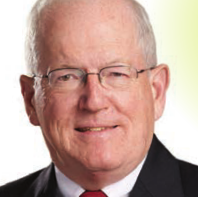
Brad Cook
On the morning of Jan. 3, American air forces executed an extraordinary raid in Caracas, Venezuela, capturing President Nicolas Maduro and his wife in their fortified home, brought them out of the country and ultimately to New York to face charges of drug trafficking. This has been widely reported, but a few comments stick with me from the commentaries.
Whatever one thinks of the wisdom or policy implications of this action, its complexity, planning and implementation were amazing. It should be good for Americans to know the CIA and military are still capable of protecting us. It should also be apparent that these tools in the wrong hands could have serious consequences.
It also cannot be doubted that Maduro and his predecessor, Chavez, have ruined their country, caused millions to flee and deserved to be removed, nor that the regime lost the last popular election and yet refused to leave.
Donald Trump’s statement that the United States is going to “run” Venezuela was undefined and drew a lot of comment. Thomas Friedman, writing in the New York Times, reminded people of Colin Powell’s advice to George W. Bush about Iraq: “If you break it, you own it.” Others commented on the examples of Vietnam, Afghanistan, Iraq and other adventures the U.S. has been in over the years as cautionary tales about trying to control foreign countries.
Sen. Rand Paul, R-Ky., on “CBS Mornings,” reminded viewers that the Constitution requires Congress to authorize foreign adventures, a provision inserted since prior to that time, European monarchs had used their armies as tools to pursue various personal goals, so the framers thought that decision should be made by representatives of the people.
As the smoke cleared, it became apparent that we were going to try to “run” another country from afar, using what remained of an illegitimate government, intimidated by military might and our control of that country’s oil resources and source of income, to accomplish whatever it is our goals are.
Hopefully, the expressed goals of order, elections and transfer of power to an elected government will be accomplished. However, using the bad guys to move away from the chaos they created seemed a curious strategy to many.
Many people pointed to comments by Deputy White House Chief of Staff Steven Miller that we should have dominant influence in the Western Hemisphere (Trump’s new “Donroe Doctrine”) to be an implied statement that China could have the western Pacific and have its way over Taiwan, and Russia could continue to lay claim to Ukraine, using our actions as precedent.
If all this was not curious enough, Trump started making noises about actions against Colombia, Cuba and Mexico, and revived talk about acquiring Greenland. The latter talk caused European allies to predict the end of NATO, and made other officials scramble to try to explain the inexplicable.
It is one thing to take action against clearly despicable people hostile to our interest. It is another thing to threaten a close ally that has a treaty allowing us access to Greenland.
And all of this in the first few days of the new year. No one heard much about Jeffrey Epstein or grocery prices that week.
Here in New Hampshire, the Legislature came back to Concord and began taking up a number of curious measures. There are a number of bills concerning education which alarm those trying to run public schools, and which make them believe the GOP majority in the House of Representatives is totally hostile to public education.
A bill to create a loan fund to help school districts like Claremont, which face major budget deficits, was amended to allow all parents in those districts to qualify for “Education Freedom Accounts.” This seems to confuse the issue and also threaten diverting even more education funds away from funding public schools.
The Legislature seems poised to do nothing in response to court decisions finding the levels of funding inadequate. Another bill would allow students from any public school district to enroll in any other one, threatening total chaos in budgeting, staffing and program for most school districts.
This Legislature will also have to deal with trying to fix a discriminatory provision in the budget passed last year, which will deprive Manchester, the state’s largest school district, of $12 million in state aid, and see if it can restore crippling cuts to the university system budget.
In the cities, newly elected officials were inaugurated the first week of January. In Manchester, the largest city, second-term Mayor Jay Ruais, a Republican, and 14 aldermen and 14 school committee members, all Democrats, took office, with Ruais urging all to work together for the good of the city — hopeful words.
This is the year Manchester will have to grapple with its school budget and continue to deal with all the urban issues of a city, as well as working with the state to consider the fate of the Sununu Center property.
All in the first week! Hold on to your hats.
Brad Cook is a Manchester attorney. The views expressed in this column are his own. He can be reached at bradfordcook01@gmail.com.

Even before the Iran war, the federal budget was already $2 trillion out of balance
The constitutions of the United States and New Hampshire have been in the news a lot recently, with questions about the president’s war powers and ability to impose tariffs unilaterally, and state issues about…
New York Times columnist says we’re in the ‘third great period of human history’
Former Manchester mayor and West High principal made a lasting impact in the city
For the last few decades, the New Hampshire legislature has split its 90 “legislative days” equally between the first and second years of the two-year legislative term.
On the morning of Jan. 3, American air forces executed an extraordinary raid in Caracas, Venezuela, capturing President Nicolas Maduro and his wife in their fortified home, brought them out of the country and ultimately to New York to face charges of drug trafficking.
Looking back on the shutdown, statesmanship and other meaty matters
Power shift in Manchester; residential proposal for North End