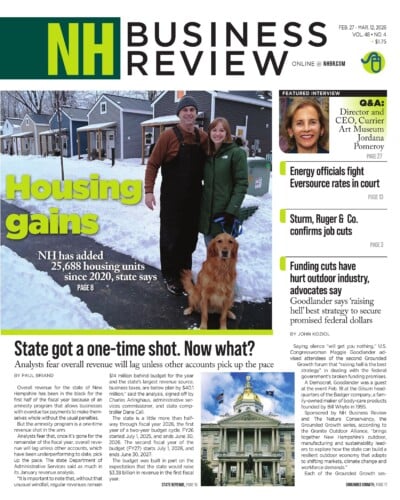
The new normal: A half-million-dollar median-priced NH home
That half-million-dollar benchmark has stayed in place every month since, according to data from the New Hampshire Association of Realtors.
After leaving his Keene home to attend a New York state college in Oneonta, Joshua Greenwald had his sights set on a job in New York City. And he got it — ultimately as an ad salesman for MTV, the Music Television network.
But he learned the cool job wasn’t the rewarding career he wanted. “Having a really cool time and a cool experience, my job sounded fantastic, but deep down inside I knew that it was something that just didn’t seem long term,” he said.
His quest for what he described as “a life of meaning” led him and his Queens-born wife, also in media sales, back to Keene, where he became a Realtor in 2003. Fast forward to today, and Greenwald is the owner broker of the Greenwald Realty Group and the new president of the New Hampshire Association of Realtors (NHAR).

Joshua Greenwald, owner broker of the Greenwald Realty Group in Keene, is the 2026 president of the New Hampshire Association of Realtors (NHAR).
“We were 27 years old, way back in 2003. We said: What’s our plan? What do we want to do? I mean, I’m not happy. I’m not doing anything that has purpose. And she felt the same way,” said Greenwald.
He went to work for his father, Keene City Councilor Mitchell Greenwald, who ran a realty business.
“I went to work with my father and got started selling real estate, trying kind of get in the world here and learn the business, make connections and grow. And that’s us now,” he said. “So 23 years later, my kids are grown, they’re in college, and we’re fully entrenched in Keene, Cheshire County and in the state of New Hampshire.”
Greenwald’s experience is on both sides of the real estate ledger — residential as well as commercial. The company specializes in buying and selling residential and commercial real estate in the Cheshire County region. He serves as sales manager for eight agents operating in the southwestern New Hampshire market.
Those early years in real estate were a bit of a reality slap for Greenwald.
He started in the real estate boom in 2003. “The market was rolling,” he said. “In ‘03, ‘04, ‘05 and ‘06 it was: This is great. Why isn’t everyone doing this?”
Then came what he called “the reset.”
The real estate bubble burst in 2007 and 2008, leading to a major downturn in the housing market and a global financial crisis.
Foreclosures. Homes that wouldn’t sell. People out of work.
It was what Greenwald described as “an awakening” for him. His introduction to the real estate business was like a honeymoon … good times all around. What the recession taught Greenwald — and what he believes made him a better Realtor — was the realization that he wasn’t just selling a product, a house.
“I’m helping people through a stage in their life,” he said. “I felt a lot wiser about the process, about what can happen and what is best for your client, and to help navigate them through that and getting much more involved in the whole life and emotional process of their journey.”
Challenges for some Granite Staters on that journey remain today as the residential real estate market here tries to come to grips with the issues of supply and affordability.
Greenwald sees his role as NHAR’s 2026 president much as it was for his predecessors — pushing for greater supply by advocating for fewer zoning restrictions that can locally stifle residential development.
“I’m a supply and demand guy,” Greenwald said. “I was a business economics major in college. It’s pretty straightforward stuff. We need supply. Supply will eventually make homes more affordable.”
As of the NHAR’s latest monthly indicators report from November, the current median price for a single-family home in the state is $525,000. It’s lower than the all-time high of $569,000 recorded in June, but the November median is still $25,000 more than the $500,000 median recorded in November 2024.
The measure of supply is the months supply of inventory — how long it would take to sell the entirety of existing inventory. In a healthy, balanced market that would be four to six months. In November it was two months; a year ago it was 1.4 months.
The other critical measure is the affordability index. An index of 100 means a household has exactly enough income to afford a house in a particular area. The affordability index in November was 60, just more than half of what is needed to afford a home here.
He acknowledges the progress made by the 2025 legislative session that allowed by right the creation of detached accessory dwelling units in New Hampshire communities and other legislation that addressed minimum lot sizes and residential development in commercial zones.
“We’re moving in the right direction. But we have to stay the course and do everything possible to encourage building,” he said, citing the cooperative work of the New Hampshire Housing Supply Coalition.
The coalition is made up of NHAR, the New Hampshire Business and Industry Association (BIA), the New Hampshire Home Builders Association, Housing Action NH and several supporting organizations. Its purpose is to advocate for land use reform, regulatory and permitting reform, and housing program funding and support.
There is pushback from some local communities against what they believe is a loss of local control when it comes to their zoning.
NIMBYism, the not in my backyard sentiment about housing, still exists throughout the state, according to Greenwald. He said it is important for communities to realize that their teachers, their firefighters, their police officers, their public servants need a place to live.
“Everyone has the right and should be able to have the ability to build a home, have a place to live, and it’s crucial for the survival of their municipalities,” he said.
Greenwald has served on the city of Keene’s zoning board, and he said he understands firsthand how local zoning can stifle housing development. More people involved in the real estate industry — brokers, lenders — should get involved in their local community’s zoning decisions because they bring first-hand knowledge of the need for more housing supply. “I think that’s the key, is for us to get a lot more involved in municipalities,” Greenwald said.
Greenwald takes the reins as president from Susan Cole, owner broker of Susan Cole Realty in Lebanon. The induction takes place on Friday, Dec. 12, at the Grappone Conference Center in Concord.
Cole also lauded the progress of the 2025 legislative session when it comes to housing, but she said the state still has a long way to go.
“We are still in a market that excludes too many buyers, particularly young people whom the state needs to drive the economy,” Cole said. “We have about a third the number of houses for sale that we did a decade ago, and when you have inventory problem, you have an affordability problem.”
She added: “A one-year plan is not going to do it. It took us years to get into this inventory hole, and it’s going to take years of effort to dig out. This is just a start.”

That half-million-dollar benchmark has stayed in place every month since, according to data from the New Hampshire Association of Realtors.
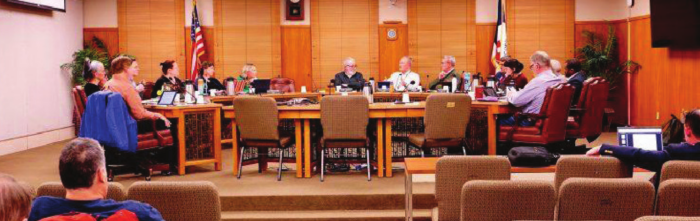
Responsible monetary decisions. Clear and widely disseminated communication with the public, especially on the city’s finances and taxes. Helping people keep their homes and find new ones. Regulatory and cultural changes to make it easier for businesses and development, and investments in the roads, sewers and other infrastructure to support them.
College cut the ribbon this month for a 21-home complex for college employees in West Lebanon
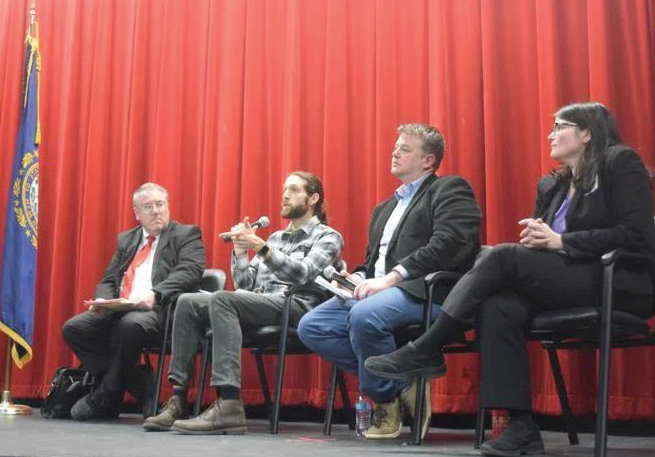
Property taxes pay for 70% of public education costs in NH
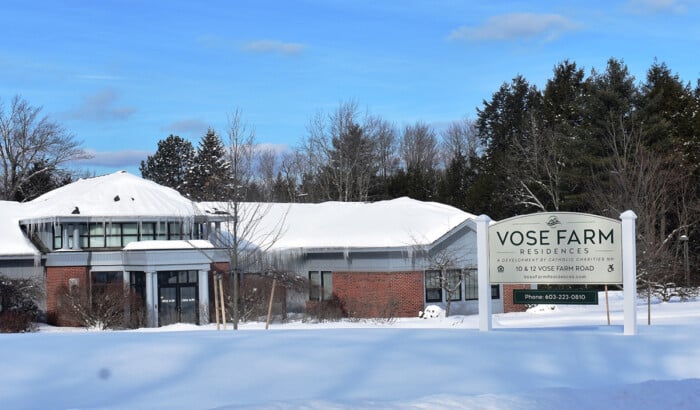
NH has added 25,688 housing units since 2020, state says
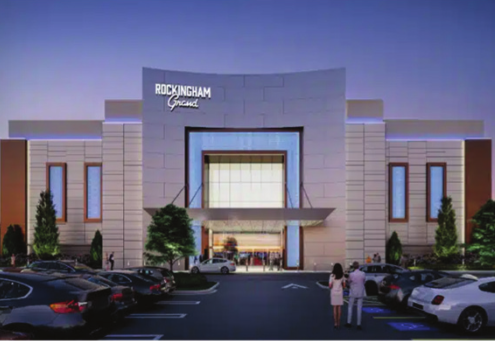
Casino Salem will close its doors in the early hours of March 9, as Churchill Downs Inc. prepares for a major redevelopment to transform the small gaming venue into the much larger Rockingham Grand Casino.
Developers and city officials have long eyed the northern part of Lebanon, along Route 120, as a hot spot for new housing and businesses, and the result has already been evident with large apartment complexes cropping up there in recent years.
City Councilor Rich Blalock, who served four years as the council’s representative on the HDC, said he was motivated to make the initial motion to address the lack of affordable housing in Portsmouth. He contended the HDC’s often monthslong reviews of new construction projects drives up the cost of development.

Residents debated a proposed $2.66 million wastewater project during a town deliberative session at Pittsfield MidCadle High School, with discussion focusing on costs, long-term planning and who should pay.