Letter to the editor: The empire strikes back at New Hampshire
New Hampshire does have power — that’s why the DNC is afraid of us.
TO THE EDITOR:
In John Koziol’s otherwise excellent reporting (NHBR 7/31/2026) on NH’s new landfill siting bill (HB 707), Casella’s spokesperson, Jeff Weld, tries to make the case that NH desperately needs Casella landfills. And he is not shy in suggesting that Governor Ayotte made a big mistake when she signed the bill.
His arguments that NH will run out of landfill capacity and we therefore will all be paying more for managing waste are self-serving; they are based on half-truths and conjecture and fall apart under even light scrutiny.
For at least the last five years, Casella has had one failure after another to meet DES’ permit requirements to expand its soon-to-close NCES landfill and build its proposed GSL landfill. Failing to win in the regulatory arena, it lobbied hard to oppose multiple landfill reform bills originating in the NH House, arguing that we are in the midst of a landfill capacity crisis. This strategy worked for a while, but even Casella now seems to recognize DES is right that our state has adequate capacity for at least a decade under the most unlikely assumptions, and for decades to come under realistic assumptions. Even Senator Howard Pearl, who with a handful of NH Senate colleagues, was the chief architect blocking sensible landfill siting reform for years, now supports HB 707.
Casella’s argument is now more nuanced. Mr. Weld suggests that, while there may be available capacity at NH’s other landfills, those landfills can’t accept additional trash, because it would cause them to exceed annual permit limitations. Casella is telling only half of the story — the company fails to acknowledge that non-municipal landfills in NH are obligated under state law to give preference to in-state trash. For the Turnkey and Mt. Carberry landfills, well over half of the trash now landfilled comes from out-of-state sources.
That makes the math pretty easy: All of the NH trash that is now landfilled at NCES can be easily absorbed by these landfills, now and in the indefinite future. Moreover, it’s important to point out that these two landfills, by an order of magnitude, are (based on the number of permit violations issued by DES) operated more safely than NCES.
Mr. Weld also suggests that 200 NH communities will have to pay more for transporting trash because travel distances will be longer when NCES closes. But even a quick look at a NH map shows that the vast majority of those 200 communities are in the central and southern tier of NH and so are much closer to the Turnkey landfill than to Casella’s existing NCES and proposed GSL landfills. So, Casella’s claim that transportation costs for 200 communities will increase falls apart, and if Casella continues to make that claim, it should show its evidence to NH’s decision-makers and business community.
And the evidence for cost increases completely falls apart for communities that actually are close to NCES, given the North Country communities that have already re-contracted to use the Mt. Carberry landfill that have seen their total costs for waste management go down, not up.
Casella’s broad argument that, with its withdrawal from NH markets, competition will decline and therefore prices will be higher, does have a certain Economics 101 appeal, but falls apart with only a slightly deeper dive. Because the landfill market in NH is already highly concentrated, the closing of NCES will have negligible effect on competition. Casella presented no evidence that tipping fees charged by Casella have been lower than tipping fees at Turnkey and Mt. Carberry, and no evidence that tipping fees at those landfills will go up with the closure of NCES.
Casella certainly does not seem ready to give up on permitting its proposed GSL landfill, despite the seemingly clear message from Governor Ayotte that she thinks putting a landfill next to Forest Lake State Park is one of the dumbest ideas she’s ever heard. Casella’s scare tactics are not working with the Governor, and not with the state legislature, DES regulators or the public. But Casella has a long and unpleasant history of relying on hard-ball litigation to get its way. For example, it has cost the town of Bethlehem (which hosts the NCES landfill) millions in legal fees to enforce contractual commitments it had gotten from Casella. Even more telling is the on-going defamation lawsuits that Casella has pursued against NH residents critical of GSL.
Casella suffered another significant setback to permitting GSL in a just-released NH Superior Court decision.
It has several weeks to seek rehearing in NH Supreme Court. Most observers think, given its litigious history, Casella will not only seek rehearing but will otherwise keep pressing forward on the legal front to try to get its way. The result: a mounting pile of legal fees for our state!
Eliot Wessler
Have your own NH opinion? Send it to EDITOR@NHBR.COM

New Hampshire does have power — that’s why the DNC is afraid of us.
TO THE EDITOR: In John Koziol’s otherwise excellent reporting (NHBR 7/31/2026) on NH’s new landfill siting bill (HB 707), Casella’s spokesperson, Jeff Weld, tries to make the case that NH desperately needs Casella landfills. And he is not shy in…
Good news for patients — and a reminder of what’s at stake
UNH is home to the state’s largest school of nursing
To the editor: On behalf of Trinity High School and St. Joseph Junior High School, thank you for your article in the June 7 edition featuring the expansion and renovation of the Trinity campus that will permanently bring St. Joseph…
To the editor: I am writing to commend Granite United Way for its proactive approach in adapting to the changing landscape of charitable giving and volunteerism. In a time where responsiveness is paramount, their commitment to evolving alongside donors, nonprofit…

To the editor: Governor Sununu issued a proclamation declaring November Pancreatic Cancer Awareness Month. As a volunteer for the Boston Affiliate of the Pancreatic Cancer Action Network (PanCAN), I want to bring awareness to this important organization, whose mission is…
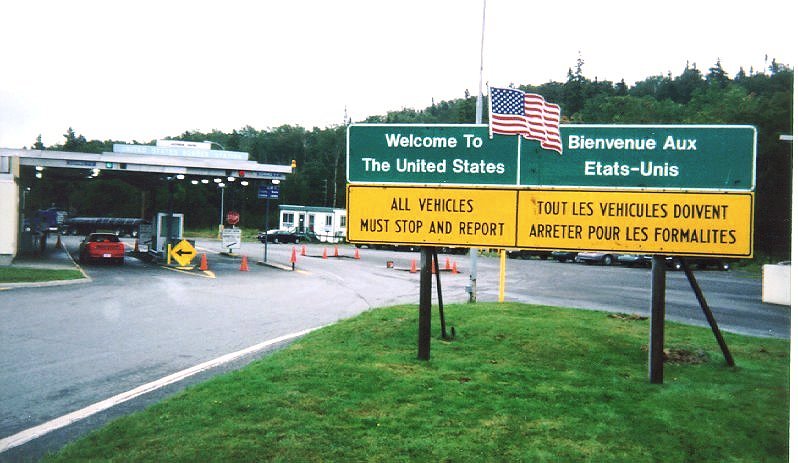
To the editor: There are many causes for concern in Thursday’s (Oct. 19) announcement by Governor Sununu and Attorney General John Formella of plans for the creation of the Northern Border Alliance Task Force. These include their ongoing inability or…
The New Hampshire Department of Environmental Services is receiving $7,640,000 this year to address PFAS contamination in our water.