Inflation hit magical target in early 2026; then the war started
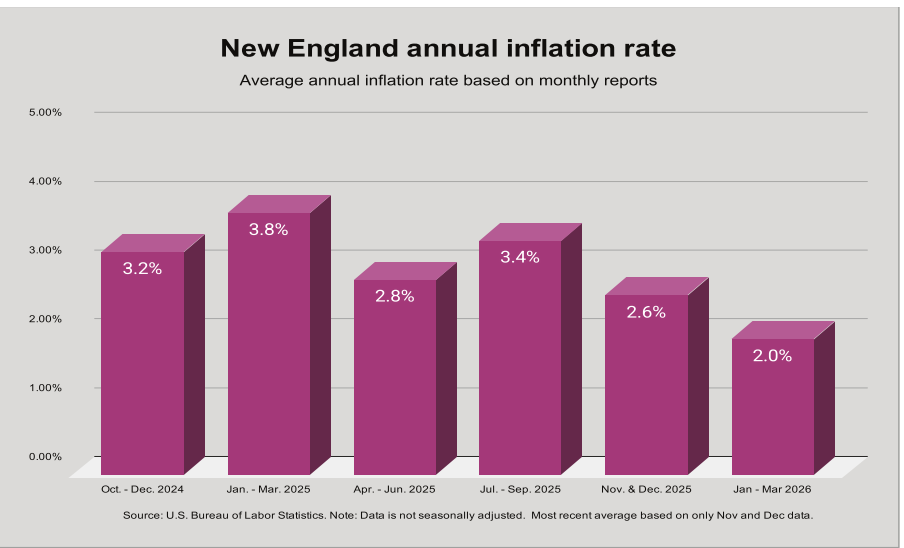
It was brief, even fleeting, but for the first three months of 2026, the average, annualized rate of inflation in New England was 2%.
It’s higher now: The war against Iran rekindled inflation, which has pushed gasoline above $4 a gallon in much of New Hampshire. And inflation even began climbing in March, the final month of the first quarter.
But over the winter, the three-month average, annualized, unadjusted consumer price index for urban New England consumers hit that magical number, 2%. Nationally, the Federal Reserve tries to reach and maintain that benchmark rate for inflation, something the country hasn’t experienced since February 2021.
Arguably, President Trump and outgoing Fed Chairman Jerome Powell, whose high-stakes feuding kept Wall Street on edge for most of the past year, would be the best of friends if 2% were the norm.
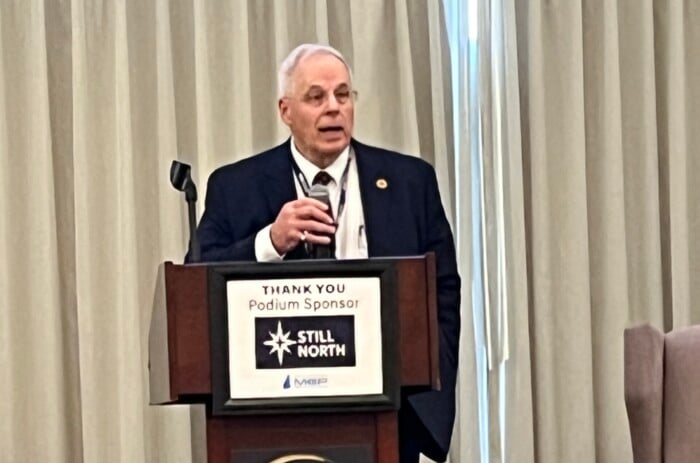
“It is the Holy Grail. It is the goalpost. It is what they’re always seeking to achieve,” said Anthony Poore, who worked on regional and community outreach for the Boston Federal Reserve for most of the 2010s. He now heads the New Hampshire Center for Justice & Equity.
Other economic gauges show a continuation of the “no-fire, no hire” economy described earlier this year by Granite State economist Brian Gottlob.
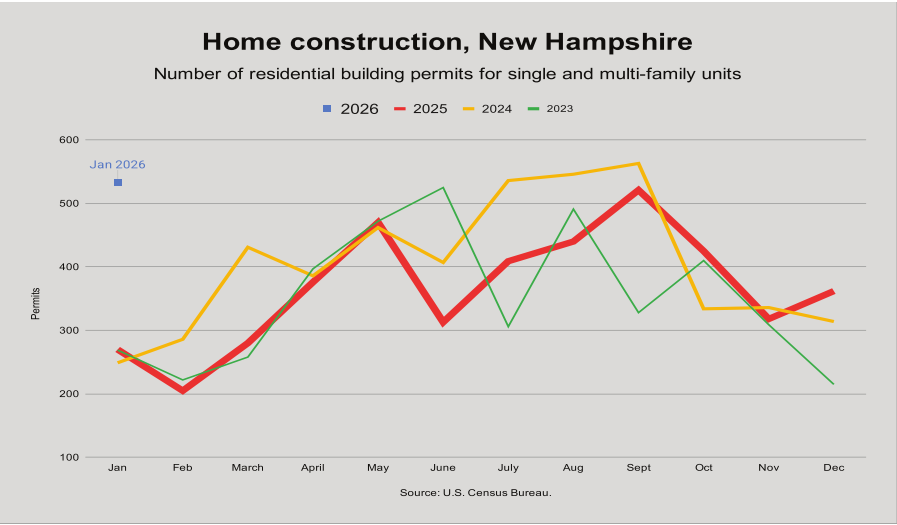
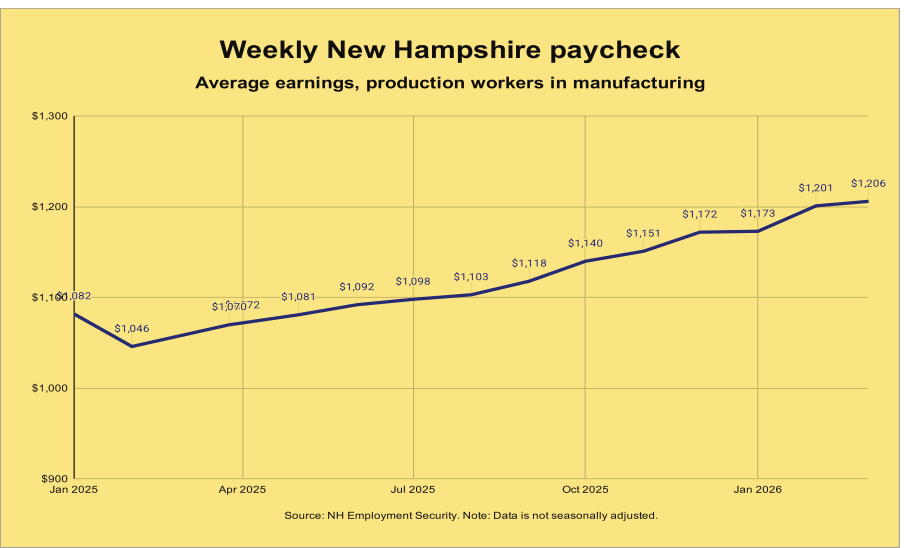
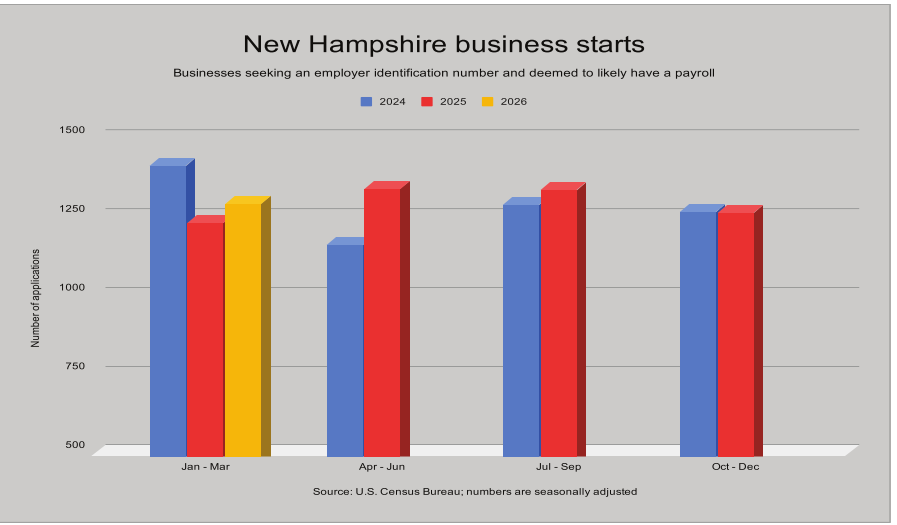
New Hampshire paychecks grew, and building permits took a big jump in January, the latest month data is available for. Business starts were slightly ahead of the same time last year.
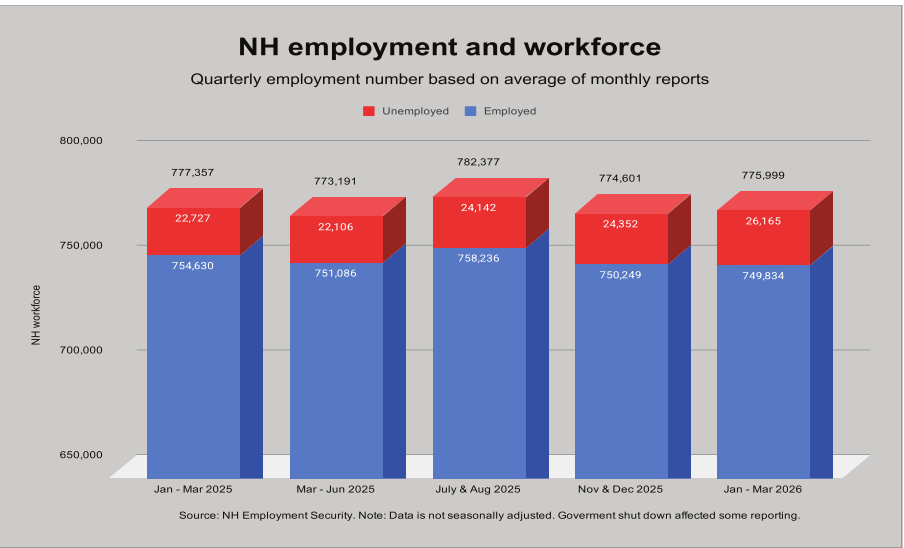
Unemployment was stable, but nearly 3,500 more people were unemployed in the beginning months of 2026 compared to early 2025.
“The data, (it doesn’t) look bad. It isn’t catastrophic,” said Gregory Randolph, the chair of the Department of Finance and Economics at Southern New Hampshire University.
He suspects that New England and New Hampshire may be slowing compared to the rest of the country.
For comparison purposes, the annualized inflation rate for the country as a whole during the first three months was 2.7%.
Why the lower New England rate? Energy prices were stable in the early part of the year, both Randolph and Poore pointed out. And Randolph said that another significant component of the consumer price index, housing costs, may have cooled more in New England than the rest of the country.
President Trump launched the Iran war in late February, and by March, inflation was back.
In March alone, New England prices rose 1.4%. If that rate were to hold for 12 months, it would work out to an 18% annual rate of inflation.
“It’s only going to get worse now,” said Poore, who worries that the price increases will lead to instability in the economy. On top of that, consumer sentiment is low, he pointed out. Poore heads the New Hampshire Center for Justice & Equity, which seeks to elevate and empower people of color in New Hampshire.
Inflation has a disproportionate impact on low- and moderate-income communities, he said.
The less income a household has, the higher percentage the household spends on necessities.
When prices rise, a low-income family doesn’t have the ability to reduce discretionary spending in order to pay for rent, food, housing, transportation and other necessities, Poore said.
Thousands are vulnerable. The New Hampshire Fiscal Policy Institute recently noted that one in four New Hampshire people have $2,000 or less in non-retirement savings, money that could be a temporary fallback when inflation accelerates.
Poore said North Country residents are even more impacted. Fuel costs can be as much as a dollar higher in the North Country, where residents already face longer commutes. And people who carry large debt — house, car, college loans — will find it hard to maintain regular payments.
“Inflation is something that hits everybody,” Poore said.
Outside of inflation, the state economy is growing, but slowly.
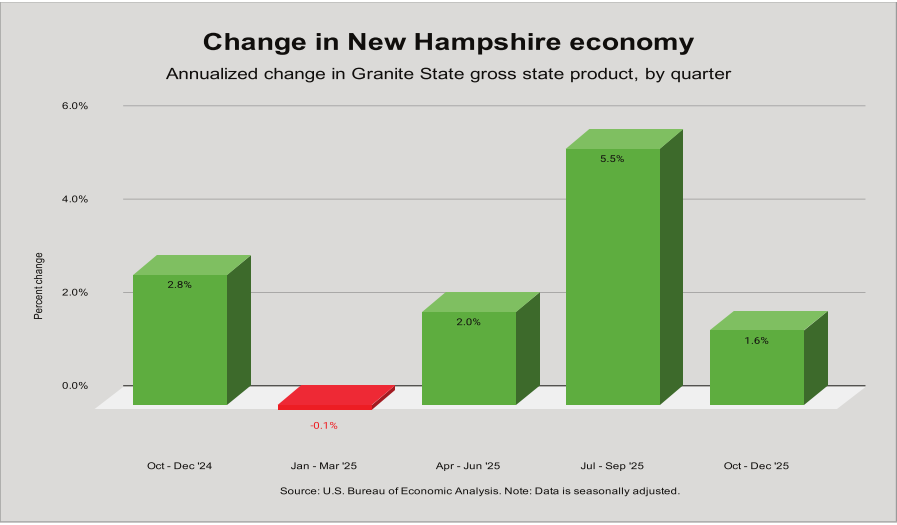
The gross state product — the broadest measure of the goods and services that the state produces — rose at an annual rate of 1.6% in the final quarter of 2025.
That was down from a brisk 5.5% during the summer months.
While slower, the fourth-quarter rate was the fastest of any state east of the Mississippi River.
 “The Pulse” is an exclusive feature of NH Business Review that examines local and national data to track New Hampshire’s economy.
Each month, the series examines an economic trend based on the latest data. On a quarterly basis, “The Pulse” will report key economic indicators such as employment, inflation and economic growth for the New Hampshire economy for a more expansive review that includes several informational graphics.
“The Pulse” focuses on three key indicators: prices, output and labor. It will also feature a wild card category. One of the six will change every quarter in an effort to capture data that gives additional insight.