Peterborough sells contaminated South Municipal Well to NH Ball Bearings for $110,000
The Peterborough Select Board unanimously approved the $110,000 sale and the company’s conditions to shut down the site on Tuesday
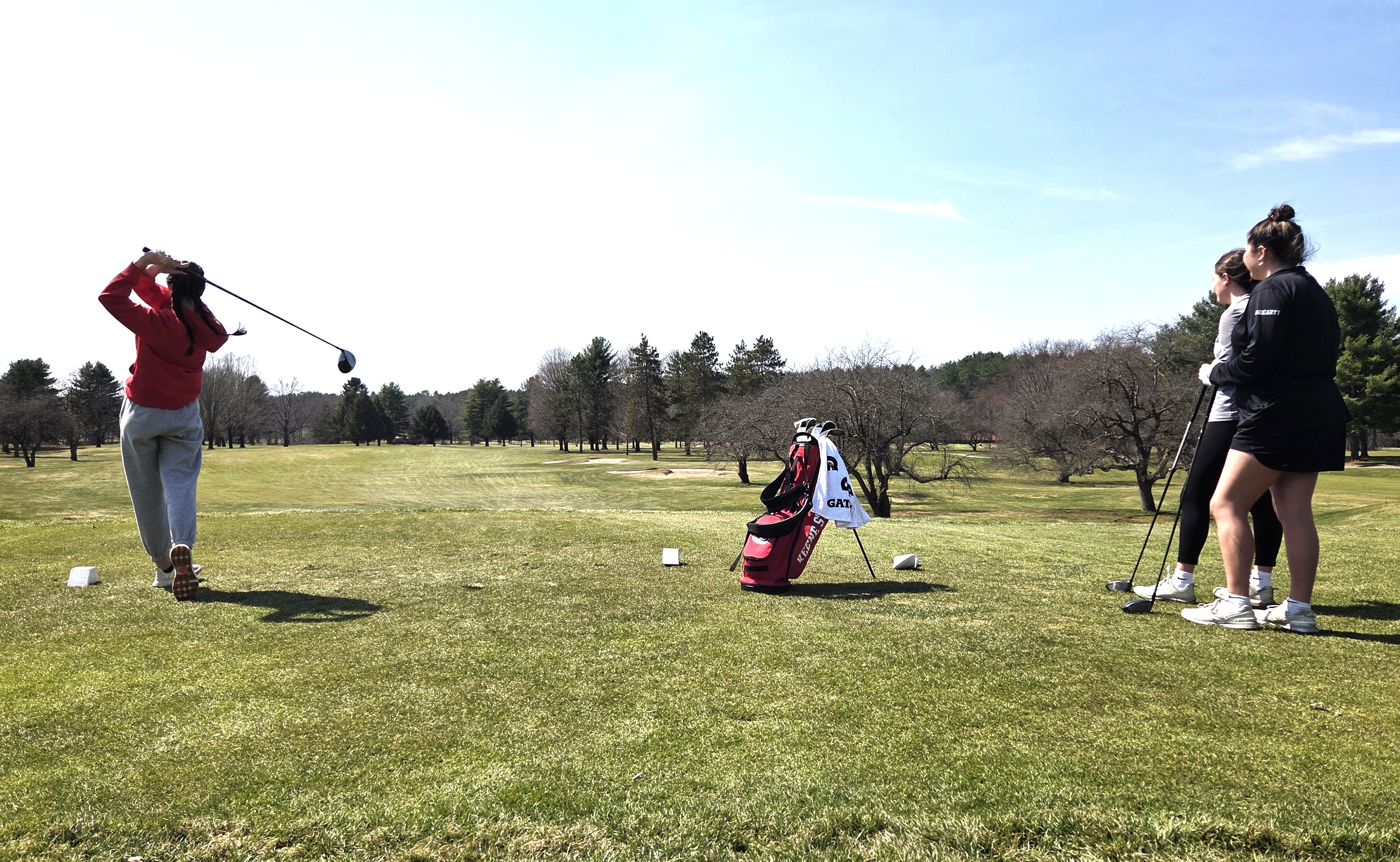
Bretwood Golf Course in Keene is the state’s only 36-hole complex and one of the most popular courses in the state. (Paul Miller photo)
No excuses necessary, no sugarcoating required, no spin imperative: “The state of golf in New Hampshire is good … very good.”
That is the assessment of Tim Riese, general manager at Pease Golf Course, a 27-hole complex on a sprawling one-time military bomber base in Portsmouth that, in 2025, topped 75,000 rounds.
Charlie Wheeler, who holds the same position as Riese, but at Laconia Country Club, a private, member-owned course in the Lakes Region, agreed. “We’ve seen a real boom here,” said Wheeler, nine years into his role, noting that the outdoor sport continues to benefit positively following the COVID pandemic.
“When I arrived, we were doing between 17,000 and 19,000 rounds annually,” Wheeler said. “Between 2020 and now, we’re averaging 24,500. We spiked the year after COVID, and we’ve come down slightly each year, but the numbers are up and the trends are positive, I think.”
Laconia has 480 members and a four- to five-year waitlist of 140 people ready to pony up $25,000 for a one-time adult initiation fee.
Bretwood Golf Course in Keene, the state’s only 36-hole complex, has long been one of the most-played facilities in New Hampshire. Head Professional John Pawlak said Bretwood logged 51,200 rounds, roughly a quarter of which were by out-of-state players, in 2025.
“I like to say COVID was the best thing for golf since Tiger Woods,” said Kathy Blair, a member of the Barrett family that owns and operates Bretwood. “Our membership continues to grow, and we are especially excited to see increases in couples, youth and women playing the game.”
Golf may not pop up routinely in conversations about primary sectors that help to drive New Hampshire’s economy, directly or indirectly, but it can’t be overlooked. Golf’s impact is not all dollars and cents. With walkable open spaces, recreational opportunities and other amenities, it also offers healthy choices, social connection and enriches quality of life.
Curling, for example, is a popular winter tradition at Nashua Country Club. Candia Woods Golf Links, meanwhile, features an award-winning wedding venue, The Farmhouse.
“It is not a second-class citizen,” Matt Schmidt, executive director of New Hampshire Golf, said about golf as an economic force. “It drives tourism and so much more. Data shows that, in summer, golfers from the south visit our stay-and-play resorts, where they find perfect 78-degree weather and get to experience everything else New Hampshire offers.”
On-course play, tourism and real estate are among the primary levers of the sport’s contribution to the state, financial and otherwise. And with growing demographics, women and youth in particular, golf is also contributing meaningfully to filling and creating more state and industry-related jobs, Schmidt said.
New Hampshire boasts 97 golf facilities, 75 of which are public and 22 that are private; 12 standalone driving ranges; and 14 indoor golf simulator venues.
The game’s impact state-by-state is seen as relative to the size of the respective state, according to a comprehensive impact study by a consulting division of the National Golf Foundation (NGF). Forty-one states, for example, have more golf courses than New Hampshire. Yet, there is this interesting contrast: Only 32 countries have a greater golf supply.
Golf’s economic impact here is still dwarfed by more popular outdoor pastimes such as recreational boating and skiing, as well as their supporting industries, but it is nearly twice that of recreational fishing, the report noted.
The 2022 study was produced in collaboration with the NHGA and its affiliated umbrella organizations and released in April of 2023.
Among other key findings: About 142,500 people play golf in New Hampshire.
This number has grown in the last four years.
NH golfers account for around 2.1 million rounds played per year, with another 400,000 rounds played by out-of-staters.
Golf’s direct economic impact in the state is $641 million, the greatest contributions being golf-facility revenues ($198.2 million) and golf tourism ($109.6 million).
Other slices of the pie chart are property-tax capital, golf-related supplies, capital investment, tournaments and associations, and charitable events.
“Growth-wise, I think we’ll continue to see momentum for golf continue to build,” Riese says. “The only thing I worry about is the cost of equipment, and the cost of playing becoming prohibitively expensive. It’s our job to not let the game become exclusive.”
NH Golf continues to add to its tournament schedule to meet demand, Schmidt said. The organization offers roughly 85 events — competitive, casual and those held indoors at simulators — each season for men, women and juniors.
Since 2022, NH Golf has seen more than 1,500 unique event participants on average, Ben Lanman, director of junior golf and tournament operations, said.
“We average around 4,600 total tournament entries,” he said. “Since 2002, all but a few of the NH Golf events have reached the allotted field size.”
While it can differ slightly year by year, Lanman noted that, on average, more than 40 individual courses host NH Golf events each season.
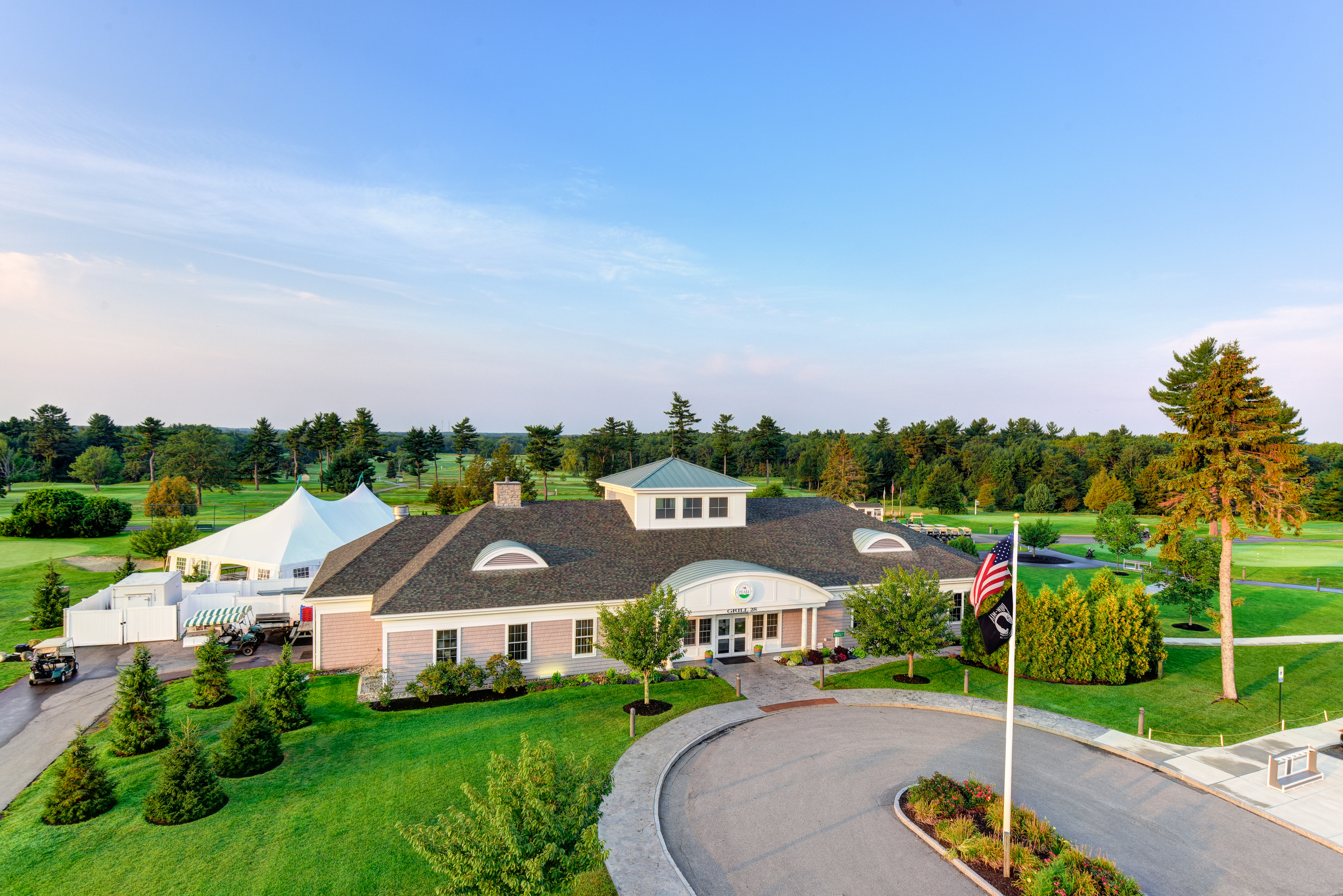
The clubhouse at Pease Golf Course in Portsmouth. (Courtesy photo)
Tournament and association revenues, the NGF study found, totaled 2.4 million for 2022. The state is home to 14 separate golf associations large enough to file tax information with the government.
Healthy revenues, of course, allow courses to invest in their operations and grow their appeal.
In April, Pease begin work on a new $1.2 million irrigation system. In December, construction of an $8 million, 22,000-square-foot clubhouse is scheduled to be completed at Laconia Country Club.
Capital improvements at Bretwood in 2025 included installation of split system air conditioning in the clubhouse, parking lot sealing and striping, new carpeting, renovated bathrooms and a new deck awning.
Bretwood’s preparation for this season featured more enhancements, including installation of 54 solar panels on the clubhouse’s main roof.

Tim Riese, general manager at Pease Golf Course, expects the sport’s popularity to continue to gain momentum. (Courtesy photo)
“Bretwood has no business having a 36-hole golf course as Keene lacks the population to support one,” said Matt Barrett, president of Bretwood Golf Inc. “So, we must rely on out-of-town and out-of-state customers. We try to provide a great golf experience for all.”
Donald Ash bought the Shattuck Golf Club in Jaffrey in 2019. That year, the club had 98 members and recorded 6,000 rounds, he said. Ash undertook projects to try to reset a course with a history of highs and lows, including a top-golf-public-course-in-NH ranking by Golf Digest and a bankruptcy filing, both in its early years.
Shattuck is nestled at the foot of Mount Monadnock and winds through acres of protected wetlands.
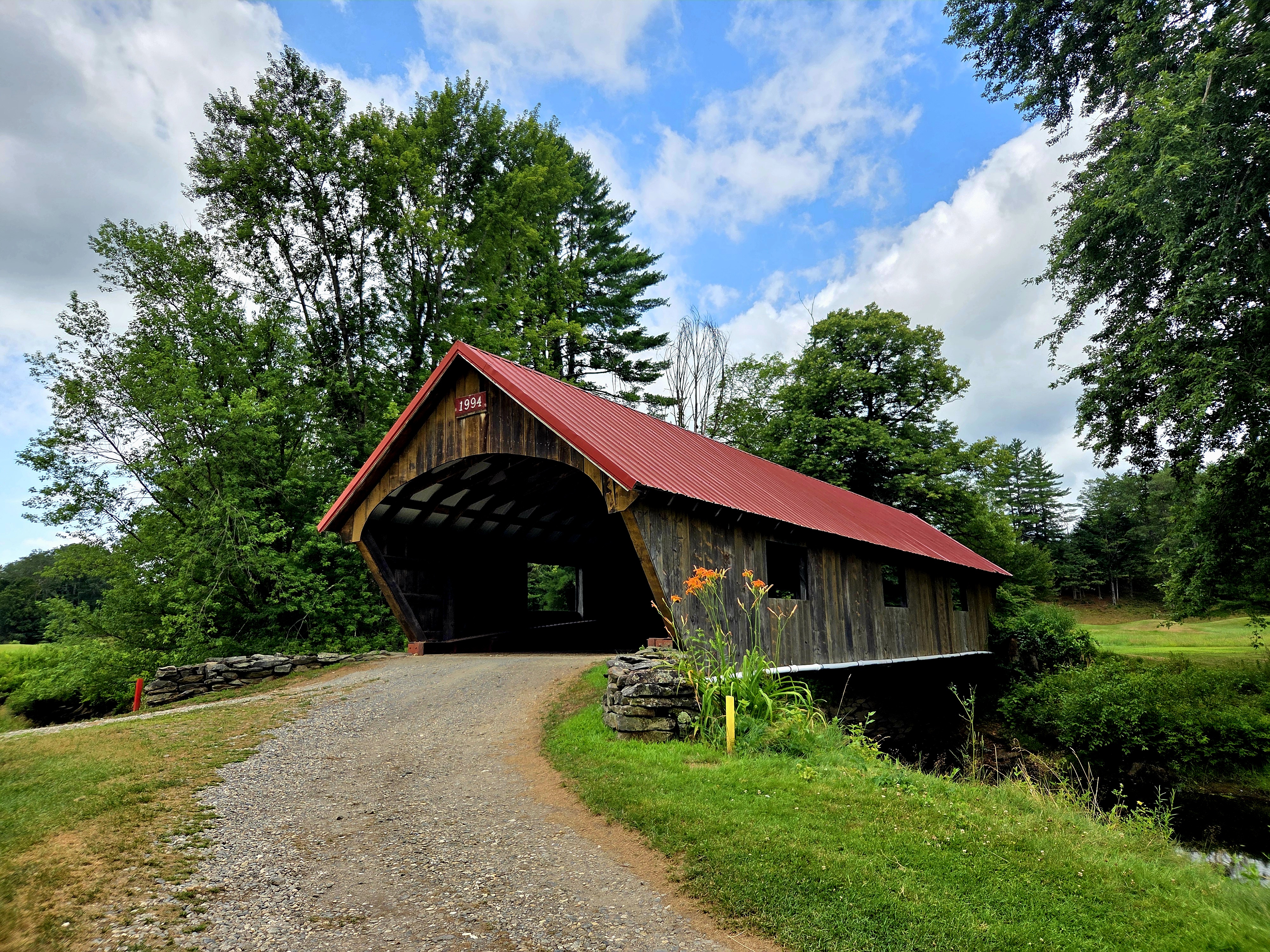
Bretwood Golf Course relies on players outside Keene for much of its business, its president says. (Paul Miller photo)
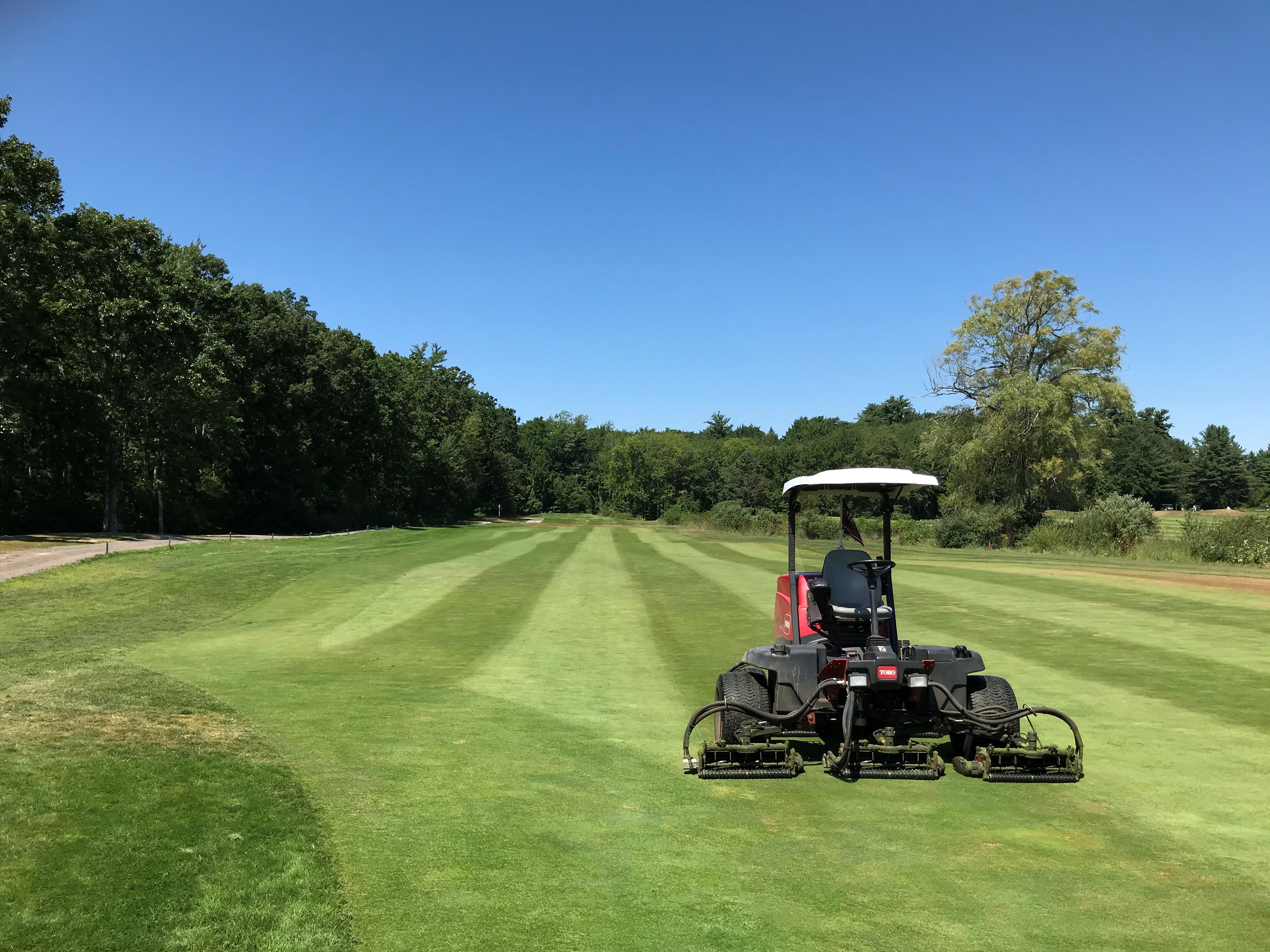
A grounds worker mows the fairway at Pease Golf Course in Portsmouth. (Courtesy photo)
Ash paved the parking lot; upgraded equipment; added a veranda; turned the upstairs into a popular all-season eatery, the Dublin Road Taproom; added a golf simulator and a full miniature golf facility; and removed more than 3,000 trees to open the course and “let it breathe.”
Last year, Ash said, membership topped 300 and rounds played 30,000, a number boosted by a sizable contingent of golfers from neighboring Massachusetts.
Ash imagines events — car shows, food truck and music festivals, for example — to make Shattuck a full-immersion experience.
All of those interviewed for this story agreed on this: Golf in New Hampshire, a state known for its natural beauty and diverse seasons, is in a good place with growth potential to realize.
NH Golf, formerly the NH Golf Association, is part of a branding effort to modernize and broaden reach of all of golf’s possibilities for shared enjoyment, Schmidt said. The 2025 rebrand also led to a new organization slogan: “For Every Swing.”
Golf goes far beyond numbers, he said, describing in a letter to members that it is a “community connector and a source of pride.”
On-course play, tourism and real estate are among the primary levers of the sport’s contribution to the state.
The Peterborough Select Board unanimously approved the $110,000 sale and the company’s conditions to shut down the site on Tuesday
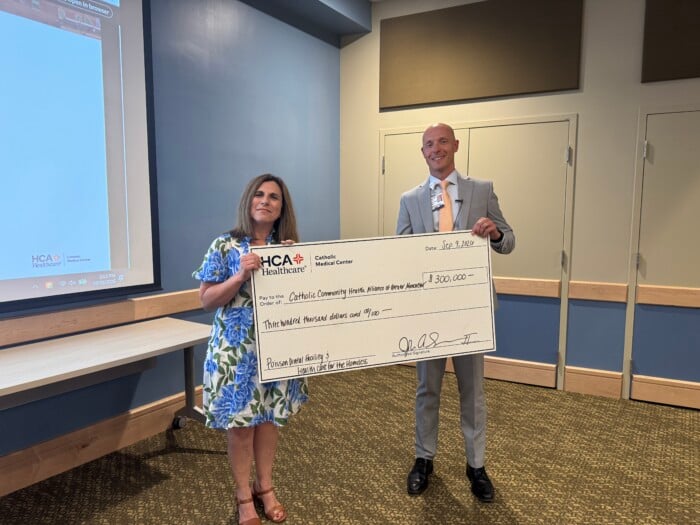
The investment is the second installment of CMC’s $2 million, three-year commitment to the programs, bringing its total support to date to $600,000

Annual summit scheduled as NH welcomes company from Massachusetts
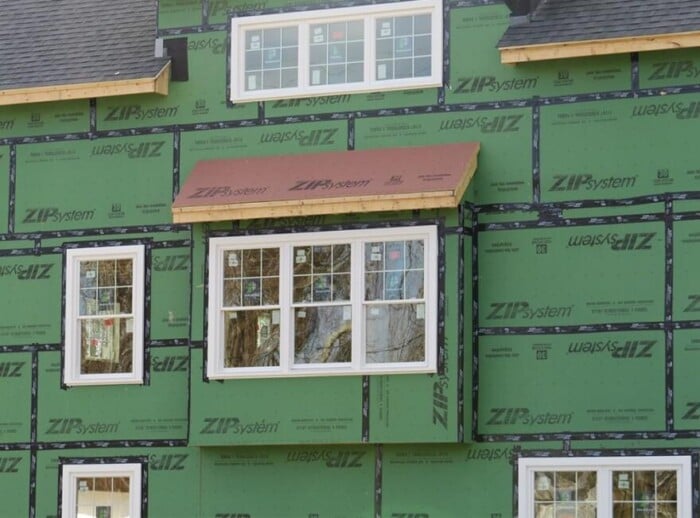
Data from a NH Housing report focused entirely on New Hampshire dispels the notion that affordable housing development in a community depresses the property values of nearby residences

If you live in Manchester or Concord, you probably don’t think twice about finding a doctor. There is a specialist within a few miles for almost anything you need. But if you live in Colebrook, or Lancaster, or any one of dozens of small communities spread across New Hampshire’s North Country, the picture looks very different, and the gap between those two realities is wider than most people realize.
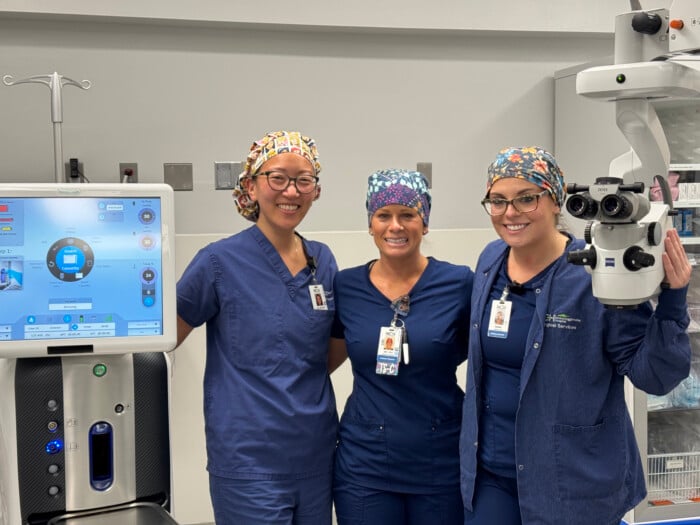
Androscoggin Valley Hospital (AVH), a member of North Country Healthcare in Berlin, performed its first cataract surgery in recent memory on August 20, 2026, a milestone made possible through the hospital’s partnership with North Country Ophthalmology, a physician-led alliance of board-certified MD ophthalmologists that began seeing patients at AVH in January.
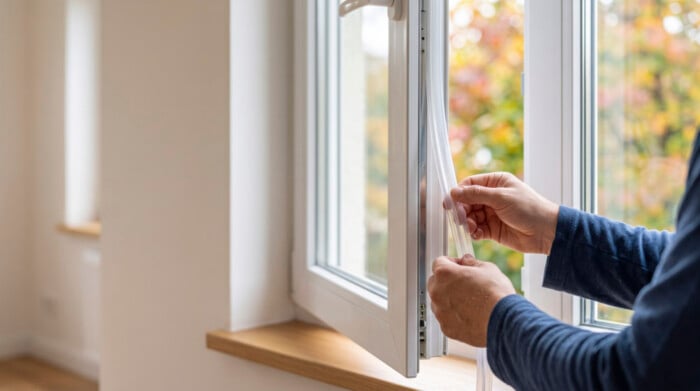
Evan Clements and Precia Harthcock of Jaffrey love their 1926 home, but they acknowledge the drawbacks of houses built in that era. The room that is now their sitting room, for example, was once a porch that had been enclosed and is noticeably colder than other parts of the house. The second floor was much hotter than the first floor, and their kitchen was drafty.

The NH Tech Alliance is seeking applications from New Hampshire technology and life sciences companies for its 20th annual Product of the Year competition, which will showcase some of the state’s most innovative new products and significant product advancements.

F.L. Putnam (FLP), a growing financial services company based in Lynnfield, Mass., is bullish on New Hampshire.