Q&A with Executive director of NeighborWorks Southern New Hampshire Robert Tourigny
Robert Tourigny has been leading NeighborWorks Southern New Hampshire for more than 20 years, but he’s still chasing the big ones.
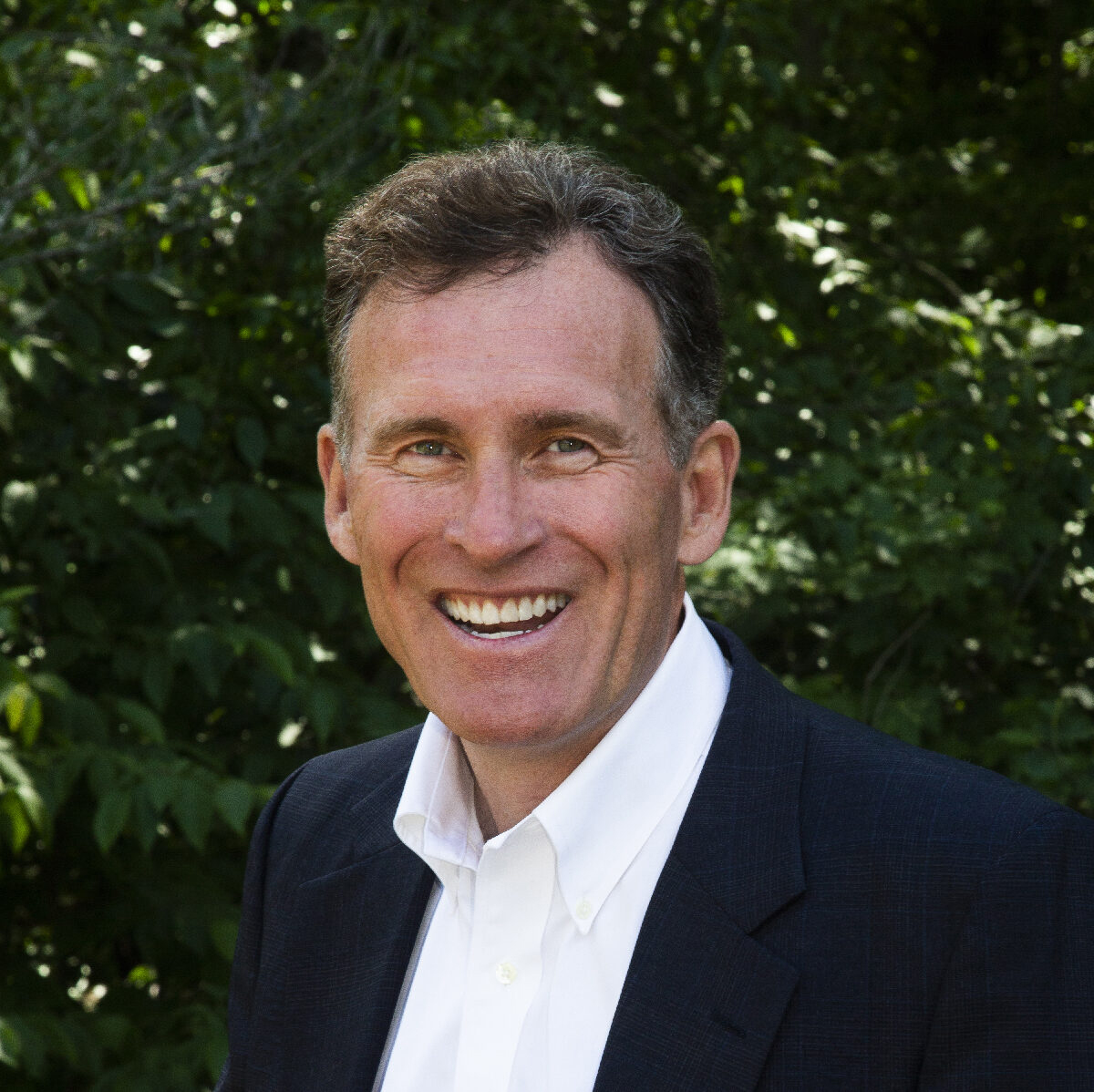
“You hear a lot of laughter in the dining rooms and other places on our campuses because residents are reconnecting with their peer group and developing lasting friendships. … That’s probably the most important thing that we’re able to provide for folks.”
Flaherty recently stopped by NH Business Review to appear as a guest on the “Down to Business” podcast with editors Amanda Andrews and Mike Cote. This article was adapted from the interview.
Listen to the entire conversation at nhbr.com
Q. Taylor Community is a nonprofit with three campuses. Can you share the services that you offer and what you provide?
A. Taylor Community is a life plan community, or what some people call a continuing care retirement community. CCRCs essentially provide peace of mind through a range of services.
One is obviously the continuum of care.
People move in primarily independently and enjoy an active retirement lifestyle and ideally remain independent for the rest of their lives. But if that changes, there’s the security of knowing a full continuum of care is available on campus, including assisted living, memory care and nursing.
It’s also an insurance product that’s overseen by the Department of Insurance. If someone outlives their financial resources, they’re going to be all set and well taken care of for the rest of their life at Taylor Community. This coming fiscal year, we expect to provide close to $2.5 million in charitable care.
The third thing we provide is maintenance-free living in well-appointed apartments and cottages. We call them cottages, although some are over 3,000 square feet.
And then the fourth thing that we provide is the social experience. I often describe it as college for seniors: There’s the arts, dining and, most importantly, friendships. You can only stay home so much.
You hear a lot of laughter in the dining rooms and other places on our campuses, because residents are reconnecting with their peer group and developing lasting friendships. It’s really great to see. That’s probably the most important thing that we’re able to provide for folks.
Q. And that helps longevity, right?
A. Being alone is associated with a range of health outcomes, many of them negative. It can lead to depression. But if you provide opportunities for people to be active and engaged, it’s not just mental but physical health that really prospers.
Q. Since you joined Taylor Community, it has expanded to three different campuses, in Laconia, Wolfeboro, Meredith. Can you walk us through that growth?
A. I was working for a small consulting group and had spent most of my career in different versions of this field. At the time, the board of trustees, many of whom are still with us, recognized the need for a new direction and new leadership. They brought me in as a consultant, but it quickly became clear it was more of an interview than anything else. When I confirmed what they already understood, they asked me to step in and build a new management team.
The community had a lot of potential, but it was facing some financial challenges. We created a long-term strategic plan with great cooperation between the board and the management team, and then set out to implement that plan.
At that point, we had to make a decision: Do we want to be acquired by a larger organization, or do we want to chart our own path forward? To do that, we needed to grow. Because if you’re not growing, costs continue to rise, and ultimately those costs fall on residents. Over time, it becomes more expensive to maintain the same level of service, and at some point, it can become unaffordable because you just don’t have enough customers.
About six years ago, Sugar Hill in Wolfeboro, partially owned by residents and partially by Huggins Hospital, approached us about an acquisition. They were struggling financially, and it wasn’t their primary business. We acquired Sugar Hill and nearly doubled in size. Then, in November 2024, we essentially did the same thing with Meredith Bay.
With those two acquisitions, we grew from about 250 residents to roughly 800, and from around 130 employees to about 400.
We do want to continue to grow, but we also have to make sure that we’re successful in digesting what we’ve taken on up to this point.
Q. These are places that are relatively close together. Is part of your strategy to be a Lakes Region entity?
A. Who knows what the future will bring. But over the next 10 years, that’s really where the organization is focused. If you stepped back and said, “OK, we’re starting from scratch in the Lakes Region, where do we want to be?” It would be Laconia, Meredith and Wolfeboro.
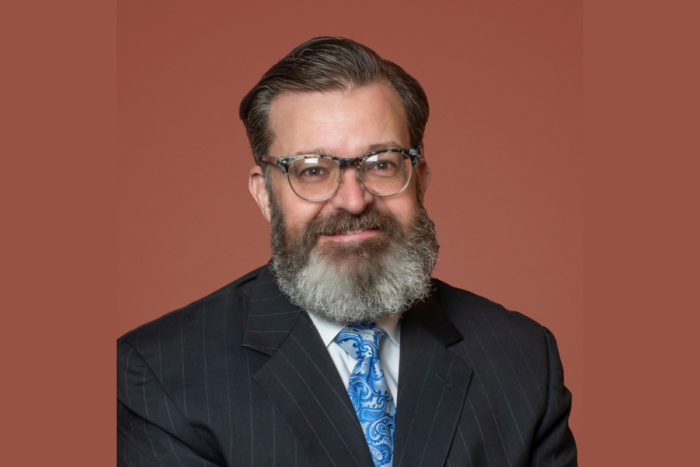
Robert Tourigny has been leading NeighborWorks Southern New Hampshire for more than 20 years, but he’s still chasing the big ones.

Don Gregori’s journey to become chief operating officer for a multinational technology company began with earning a liberal arts degree.
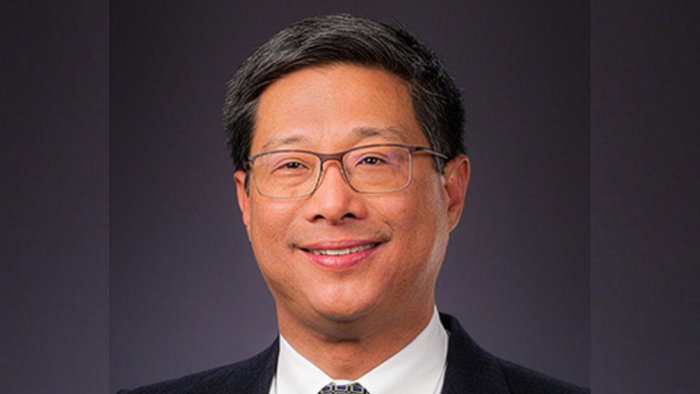
Since 2022, Ken Woo has been the president of Marmon Utility, an advanced manufacturing firm based in Milford that produces polymer insulators and underground cables, including the Hendrix and Kerite brands, for the electric utility industry.
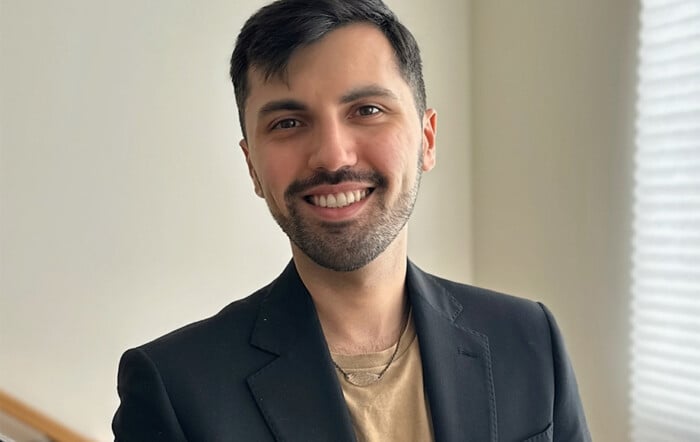
Kyle Moschen, a senior media relations manager at Weber Shandwick based in Seattle, was this year’s commencement speaker at Nashua Community College.
A company whose products are essential to manufacturing and food production worldwide is headquartered in a former Walmart building in Bedford, New Hampshire.
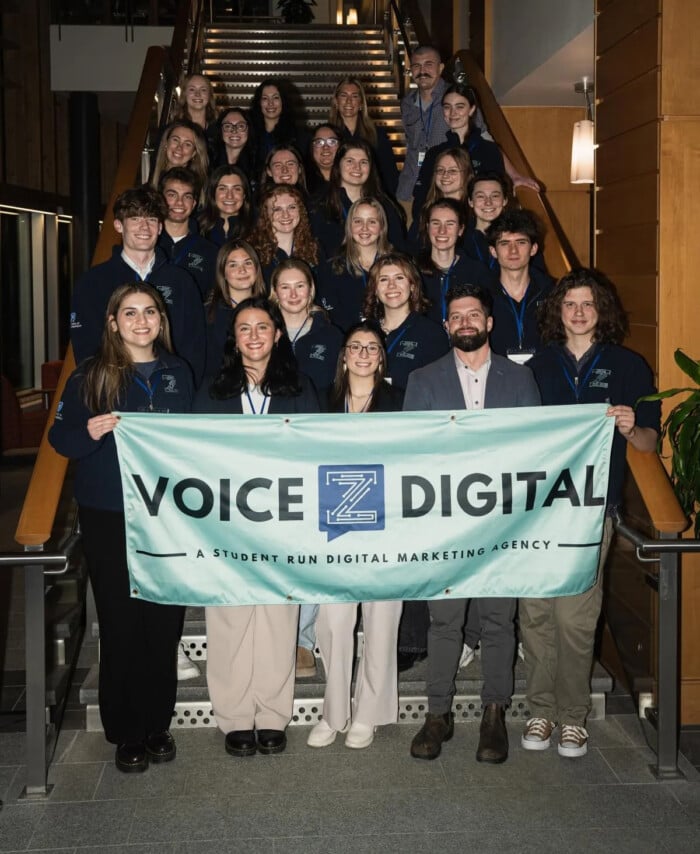
Voice Z Digital, a digital marketing agency run by students at the University of New Hampshire, recently celebrated working with its 100th client.
Rubinstein, who has served as the chancellor of the Community College System of New Hampshire since 2021, announced his plan to retire before the start of the 2026-27 academic year, capping a career in education that spans more than four decades.
Eastern Bank entered the New Hampshire market in 2015, when it acquired Centrix Bank in Bedford. The Boston-based bank operates seven branches in New Hampshire and more than 125 in its overall footprint in eastern Massachusetts and Rhode Island.
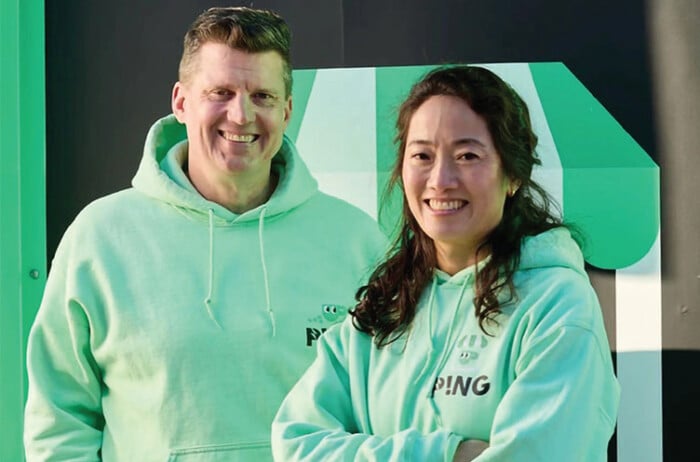
Rob Whitten and Jane Lo want to speed up that line of cars that snakes around a coffee shop. With P!ng, they’re updating the traditional drive-thru model by replacing human servers with robotic automation and moving orders from speaker boxes to smartphone apps.