NASA veteran joins UNH to lead R&D
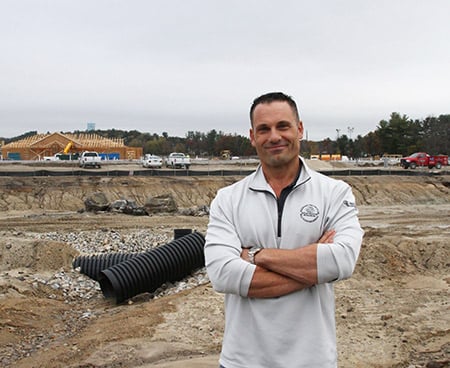
Ramy Rahimi is the new vice president for research and development at the University of New Hampshire.

Over 20 years of working with New Hampshire business owners, I’ve noticed something consistent: The businesses that thrive aren’t the ones chasing every new trend. They’re the ones who know how to evaluate whether a new tool or strategy actually serves their goals.
Right now, that evaluation challenge is all about AI. The pressure to adopt is everywhere. But pressure isn’t strategy, and activity isn’t progress. Let’s talk about what realistic AI ROI looks like for New Hampshire businesses.
I’ve had countless conversations with business owners about adopting new technologies or processes. The ones who succeed at implementation always start by understanding the full cost, not just the purchase price.
AI is no different. When you’re evaluating an AI solution, the subscription fee or licensing cost is just the beginning. You need to factor in implementation time. How many hours will your team spend getting this up and running? What about data preparation? Many AI tools require clean, organized data to work effectively. If your customer information lives across multiple spreadsheets and systems, that prep work takes time and often money.
Then there’s integration. Does this AI tool need to talk to your existing software? That usually requires technical work. Training matters too. Your team needs to understand not just the mechanics of using the tool, but when to trust its recommendations and when to apply their own judgment.
An accurate cost assessment up front leads to better decisions about which AI projects are worth pursuing.
In thinking through growth strategies and operational improvements, the question “How will we measure success?” often gets skipped. People get excited about a solution and assume the benefits will be obvious.
With AI, you need to define your metrics before implementation. Yes, cost savings matter. If an AI tool reduces the time spent on invoice processing from 10 hours a week to two, that’s real money saved or redirected to higher-value work.
But ROI isn’t only about cutting costs.
Quality improvements count. Fewer errors in data entry. More consistent customer communications. Better forecasting accuracy. These might be harder to quantify initially, but they have real business impact. Customer satisfaction, employee morale, reduced rework and faster decision-making all contribute to return on investment.
If you can’t articulate what success looks like, you’re not ready to implement. Before you buy that AI tool, write down what needs to be true six months from now for you to consider it a good investment.
Mismatched expectations around timing kill good initiatives. Someone gets excited about a solution, expects immediate results, gets frustrated when things take longer than anticipated, and abandons the effort before it has a chance to work.
AI implementations follow a predictable curve. Most business AI applications need between three and 12 months to deliver meaningful ROI. Simpler tools like automated email responses or basic chatbots might show value faster. More complex applications involving process changes or custom implementations take longer.
If you need immediate cost relief, AI probably isn’t your solution right now. But if you’re building capability and efficiency for the next few years, the investment makes sense.
The most successful business transformations I’ve witnessed over two decades share a common trait: They happen incrementally. The owner who tries to overhaul everything at once usually ends up overwhelmed and stuck. The one who picks a focused starting point, executes it well and builds from there actually gets things done.
AI adoption works the same way. You don’t need to transform your entire operation in one move. Pick one clear use case.
Implement it thoughtfully. Measure the results. Learn what works in your specific environment. Then expand.
This approach limits your initial investment and risk. It builds internal confidence and capability. And it gives you real data about what AI can and can’t do for your business before you commit to larger changes.
Find your highest-impact, lowest-complexity opportunity first. Prove the concept.
Scale what works.
After thousands of conversations with business owners about growth, mindset and achieving their goals, I’m convinced that success comes down to asking the right questions. Not “What AI should we use?” but “What problems are we trying to solve?” Not “Are we falling behind?” but “Where would AI create genuine value for our business?” The competitive advantage isn’t in adopting AI first. It’s in adopting AI thoughtfully, in ways that align with your actual needs and capabilities. Your competitor might implement faster, but if they’re solving the wrong problems or creating complexity instead of value, their speed doesn’t help them.
New Hampshire businesses have always been practical. We focus on serving customers well, running sustainable operations, and making smart investments. AI can absolutely support those goals. But only if we’re honest about costs, realistic about timelines and clear about what we’re trying to accomplish
Jason Alexander is the CEO and founder of ChiefAI, an AI advisory and consulting firm helping small and medium-sized businesses implement AI solutions strategically. A serial entrepreneur for the past 20 years, he is passionate about democratizing AI technology.

Ramy Rahimi is the new vice president for research and development at the University of New Hampshire.
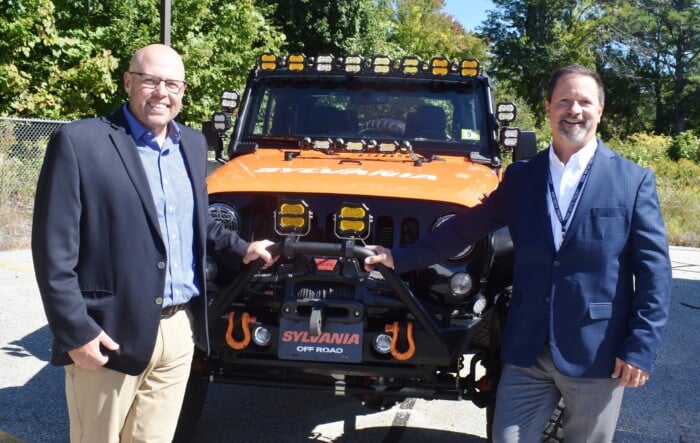
The Sylvania brand celebrated 125 years of bringing light into the world with a Sept. 24 event at its plant in Hillsborough. The plant on West Main Street, which produces automotive lighting products for original equipment manufacturers and the aftermarket, is the last major automotive aftermarket lighting plant in the country.
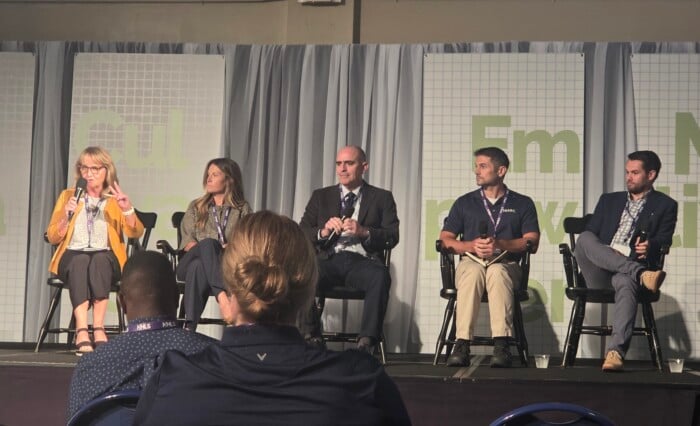
New Hampshire’s life sciences industry is expanding quickly, but the workers employers need range far beyond biomedical scientists — from manufacturing technicians and engineers to project managers, supply-chain specialists and finance professionals. At the Empower Life Sciences event hosted by…
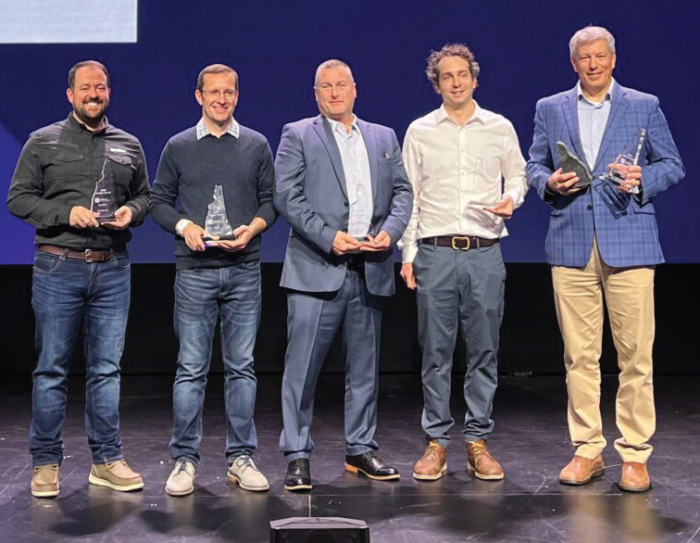
The NH Tech Alliance is seeking applications from New Hampshire technology and life sciences companies for its 20th annual Product of the Year competition, which will showcase some of the state’s most innovative new products and significant product advancements.

The Honor Summit, a four-day commemoration of the 25th anniversary of the Sept.11, 2001, terrorist attacks, features dual towers of light designed to be visible from as far as 135 miles away from Mount Washington.

Biotechnology firm United Therapeutics Corporation has acquired the former Anheuser-Busch brewery site in Merrimack for $47 million, according to sources familiar with the matter. The transaction secures one of Southern New Hampshire’s largest industrial parcels, spanning nearly 300 acres off Daniel Webster Highway

Becoming a top-ranked private company in the United States came as a bit of a surprise to the team at Tenovi, a Portsmouth-based developer of connected medical devices.

Artificial intelligence is transforming business at remarkable speed. Most discussions focus on productivity gains, cost savings or the jobs AI may eventually replace. Yet a more significant change is already underway — one that could reshape the future of nearly every profession.

Unapproved and unmonitored AI use is spreading inside businesses faster than leadership teams know, and it may be one of the biggest privacy and security blind spots companies have today.