The NH economy is ‘stable, moderating’ — if you can believe ChatGPT
Where does AI end and your ‘secret sauce’ begin?

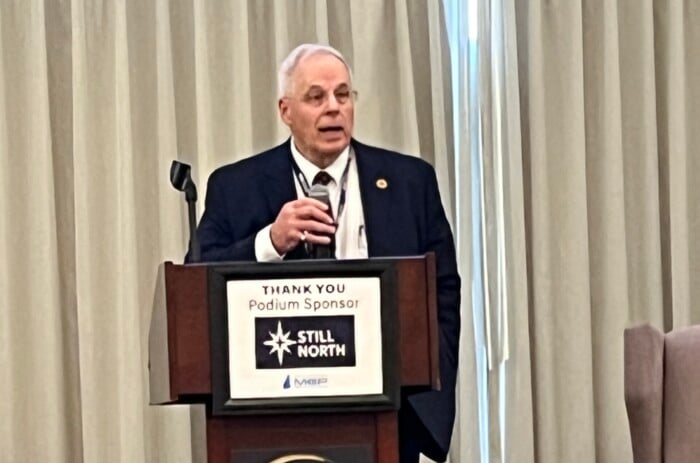
I began work on a speech about the economy for the Chamber Collaborative of Greater Portsmouth the same way every business person begins such a task these days: I asked my digital assistant.
“Give me an outline for a 20-minute presentation on the current status of the New Hampshire economy that includes links to source material.”
In seconds, ChatGPT started spitting out an outline with a parade of data about growth, jobs and wages, inflation and the cost of living, housing, public finances and the near-term outlook.
To perform its magic, my plucky assistant culled information from:
• The state department of Business and Economic Affairs
• The federal Bureau of Labor Statistics
• New Hampshire Employment Security
• New Hampshire Housing Financing Authority
• New Hampshire Public Radio
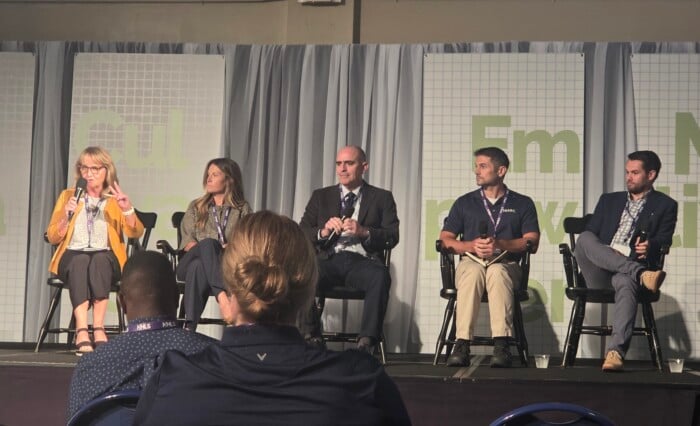
• The Federal Reserve Bank of St. Louis (Why that one and not Boston? Because that’s where the Fed posts that data, according to Daniel Cooper, vice president and economist with the Federal Reserve Bank of Boston, who presented a talk about the national economy at the Feb. 17 event.)
Curiously, ChatGPT did not source NH Business Review, where it would have found a story we published Feb. 13 by reporter Mark Hayward, who contributes a monthly feature called “The Pulse,” that examines the New Hampshire economy.
More on that in a little bit. I accepted ChatGPT’s offer to prepare a slide deck that I could roll into PowerPoint.
I had no intention of using it. I did not want to inflict a dozen charts of data on a morning breakfast audience, nor am I at a point where I can spend five minutes with a robot and claim its work as my own.
Did ChatGPT’s analysis tell me anything that I didn’t already know?
I’ll skip right to the “Final Takeaways” slide.
The bottom line, ChatGPT says, is the New Hampshire economy is “stable, moderating.”
Interesting. We have a “still tight labor market.” Shocking. The “business climate remains competitive.”
Insightful. “Smart workforce strategy = growth advantage.”
Sage advice.
Checking ‘The Pulse’
Now let me tell you what the latest episode of “The Pulse” tells us.
Mark Hayward, a retired reporter who was my longtime colleague at the NH Union Leader, loves crunching data and interpreting it to tell stories.
“The New Hampshire economy has entered a good news/bad news phase, where strong growth is tempered by rising joblessness and paychecks that don’t keep up with an even slower rate of inflation,” Hayward wrote.
The New Hampshire economy grew 5.5% over the summer, which was one of the fastest rates in the country, he said, citing federal data.
Inflation in New England as a whole was a bit lower than the national rate. But at the end of the year, nearly 4,000 fewer people were working than during the same period in 2024, suggesting a sluggish labor market.
I included a few more data points from “The Pulse” during my presentation to the Portsmouth chamber audience at the Atlantic Grill in Rye.
While Hayward demonstrates what a smart human can do to interpret economic data, my experiment with ChatGPT made me think deeply about how to present a talk that was richer and more compelling than what audience members could have learned by themselves by spending a few minutes with their favorite chatbot.
What special knowledge and skills do you possess that are not readily available from ChatGPT, Claude, Google Gemini or Microsoft Copilot?
That’s the question we should all be asking ourselves right now about our jobs and our businesses as AI infiltrates our lives.
Companies are making big bets on AI, as we saw during the Super Bowl with those ads for Claude. In December, Disney reported it was spending $1 billion to invest in OpenAI, the parent company of ChatGPT.
Investment in AI has reached nearly $1.6 trillion since 2013 — already surpassing the Manhattan Project and NASA’s Apollo, according to Reuters.
All five finalists for last year’s New Hampshire Tech Alliance Product of the Year Award incorporated AI into their products, including Advanced Solutions Life Sciences, a Manchester Millyard company that took top honors for the AI-fueled software it uses to communicate with a robotic arm that produces human bone and skin tissue. (Now users can send it a text and tell it what to do.)
AI appears to be poised to become a disrupter that will have a major impact on the workforce in ways that regular economic forecasting may not be able to predict until it hits us square in the face and white collar workers are laid off by the thousands.
What AI can do is staggering. But, for now at least, it can’t gather the kind of information only we can by going about our everyday lives.
AI can’t grab a seat at the bar at a restaurant and meet someone who just launched a new company or overhear chatter from the cooks about how short-staffed they are.
It can’t ride a gondola at a ski resort and hear a small business owner grumbling about how hard it is to find truck drivers willing to be on call 24 hours a day for oil delivery because some of them like to take a gummy at night before bedtime.
Those are the kind of stories that lead us to explore the data and reflect back on what’s driving those numbers.
How’s consumer sentiment doing? You can make some pretty smart guesses by monitoring where and how people shop for groceries. Market Basket or Hannaford? Whole Foods or Aldi? Private label or premium brand? Visit different stores to shop for deals, and you encounter a wide range of demographics and income levels.
ChatGPT recommended that I “end confident but grounded” and invite discussion by asking, “What are you seeing in your business right now?” I’m pretty sure I could have come up with that one all by myself.
Note: This column was adapted from a Feb. 13 presentation to the Chamber Collaborative of Greater Portsmouth at the Atlantic Grill in Rye. Mike Cote is editor of NH Business Review. Contact him at mikecote@yankeepub.com.