Housing gains
NH has added 25,688 housing units since 2020, state says
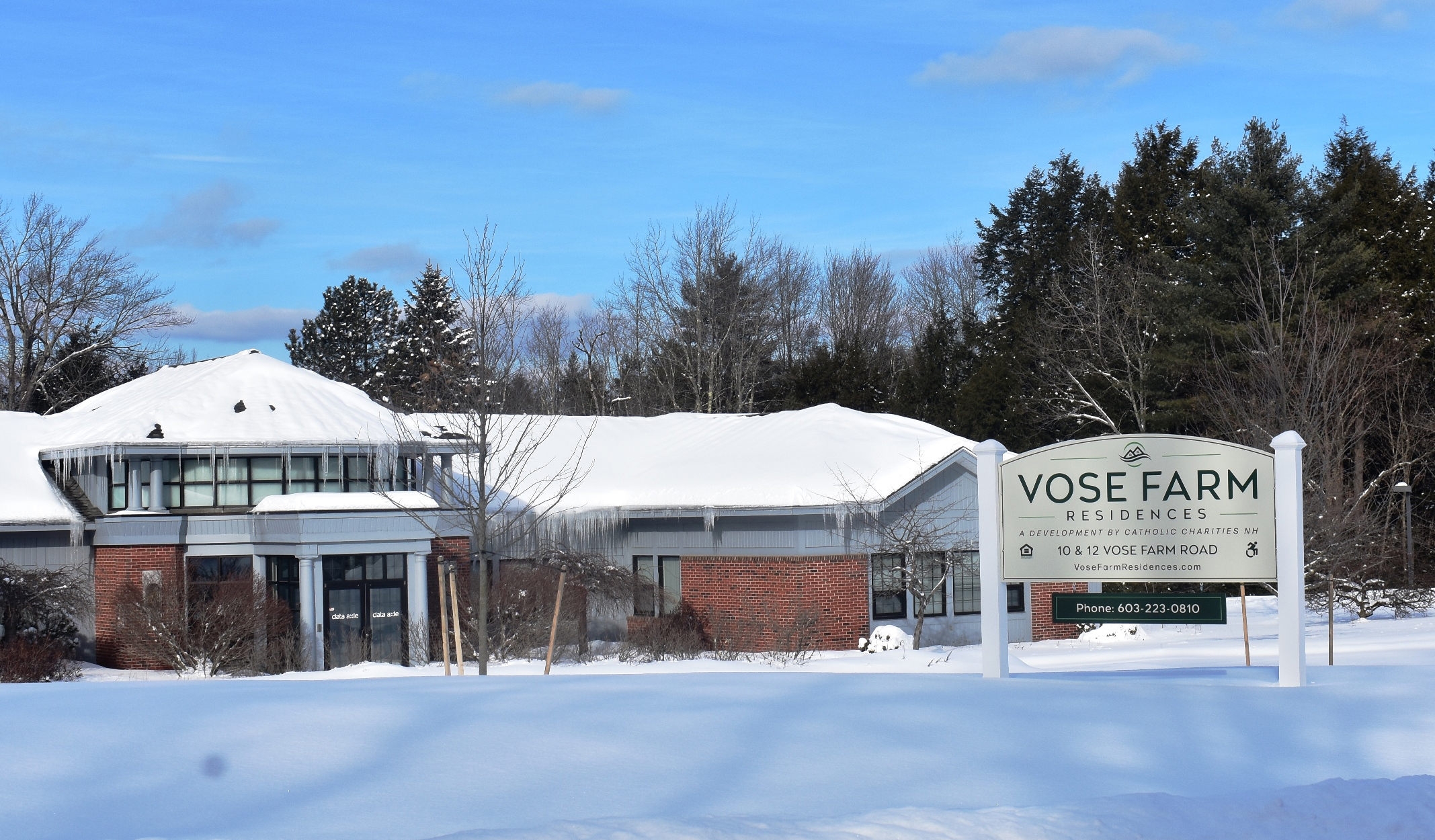
The Vose Farm Residence in Peterborough was built by Catholic Charities of New Hampshire. (Photo by John Koziol)
For the first time in what seems like forever, there is good news to report about New Hampshire’s ongoing housing shortage.
Fueled by high demand and low availability, the shortage remains, but in a report released late last month that counted the number of building permits issued statewide in calendar year 2024, the NH Department of Business and Economic Affairs said things are looking up for the future.
In 2023, NH Housing commissioned a housing-needs assessment whose conclusion was that the Granite State, in order to reach a “balanced market” by 2040, needs 32,704 housing units to be added between 2020 and 2025 and 88,364 units by 2040.
“Assuming all permitted units were constructed in 2025, New Hampshire has added 25,688 housing units since 2020, or 78.5% of the amount called for by the New Hampshire Statewide Housing Needs Assessment for that period. The total number of housing units in the state as of July 1, 2025, is estimated to be 664,039,” the BEA said.
As of its 2024 assessment, the BEA said, “The state is 29% of the way to the total 2040 goal.”
Taylor Caswell, the former and most recent BEA commissioner, hailed the 2024 BEA housing assessment as well as the InvestNH and Housing champions programs in particular.
“We’re 80% of the way there” to meeting NH Housing’s goal for 2025, he said, but “that doesn’t mean that we’re done. The housing crisis continues, and it’s not exclusive to New Hampshire.”
Caswell said there has been a trend in recent years of more communities joining the discussion about housing, which they previously shied away from, and he agreed that affordability is a key issue for many parties in the housing conversation.
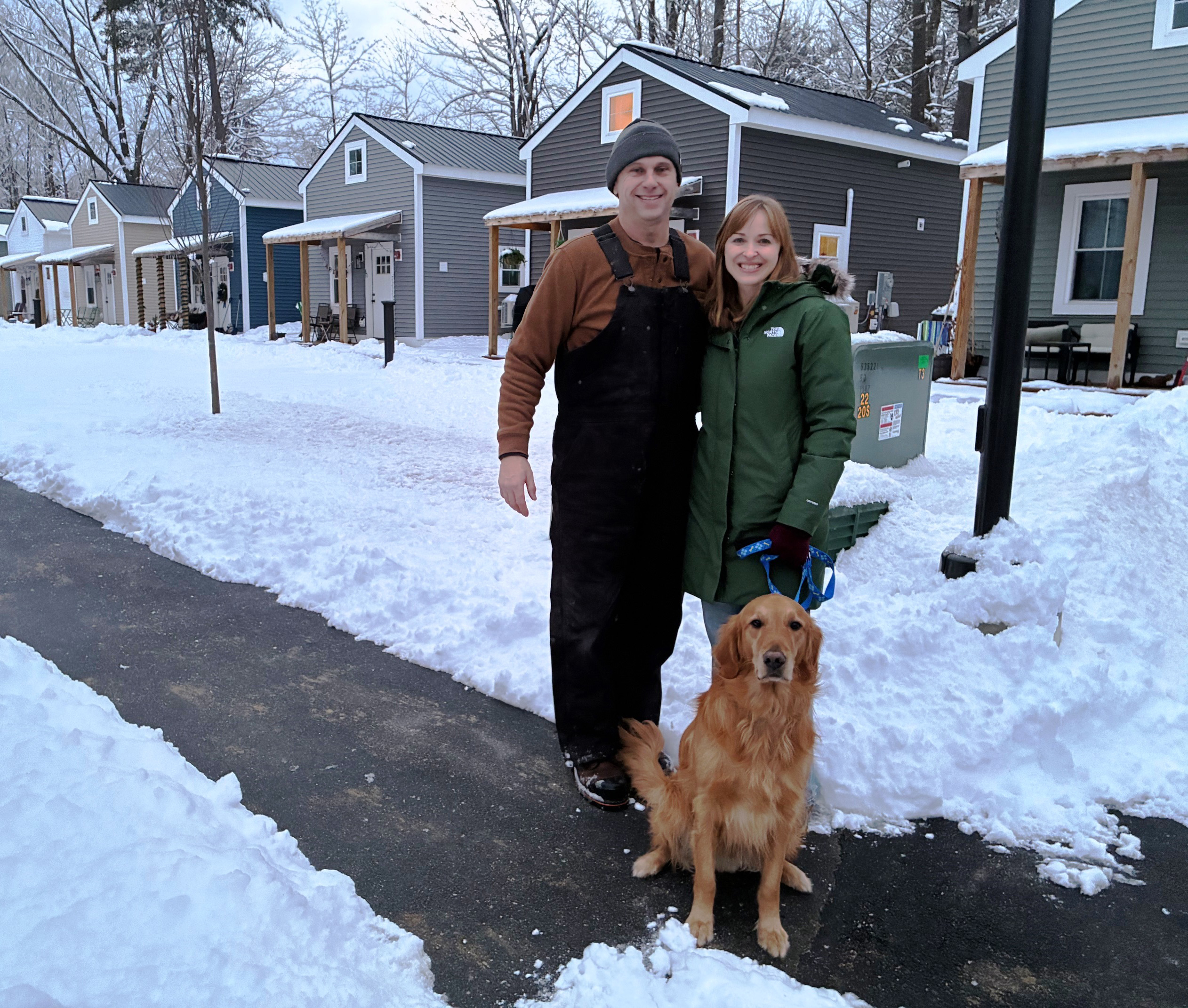
Maggie and John Randolph, joined by Hugh, their golden retriever, pose for a recent photo at The Cottages at Back River Road in Dover. The Randolphs built, own and operate the 44 small-house rental units at the site. (Photo by John Koziol)
Without incentives, builders are going to continue to build high-end housing, a situation that he said has plagued Conway “for years” to the exclusion of affordable and workforce housing.
Communities need to define their own priorities, said Caswell.
“What we were doing when I was at BEA was trying to connect the dots” for communities, including through the InvestNH and Housing Champion programs, he said.
Caswell said he was optimistic New Hampshire will continue to reduce the number of needed housing units but cautioned that, “There are some hard decisions about how and where the state and municipalities can work together and what we’re seeing in this report (the 2024 BEA housing assessment) is a good source of information.”
He summed up that communities, not the state, should determine how cities and towns want to look like in terms of housing and how much development is appropriate for them. The communities, and state, however, need to be mindful of providing water, sewer and broadband services, he said.
Rob Dapice, the executive director of New Hampshire Housing, which works with individuals seeking housing as well as for-profit and nonprofits seeking to provide it, said the challenge is to create a housing market that has, roughly, a 5% vacancy rate and a six-month supply of homes for sale.
Unfortunately, demand continues to outpace supply, leading to soaring prices for housing.
In fact, the state has been undersupplied since 2016, he said, and what has also happened is that the cost of housing has jumped precipitously.
In a perfect world and in a “balanced market” in the Granite State, there would be a ready supply of housing for sale which would cost around three times a person’s annual income, said Dapice. The current rate, however, is about five and a half times income for a median-priced home, he said, and it could go into the eights, which is where the Boston area and San Francisco markets are now.
And, he added, the need for housing is “for all types of housing.” It’s not enough to have a roof over one’s head, but some people are also looking to buy to build equity, Dapice said.
He said the 2024 BEA housing assessment “had some good news in it, but more work needs to be done, for sure.” He was concerned that, in 2024, a relatively small number of communities were responsible for the lion’s share of building permits issued.
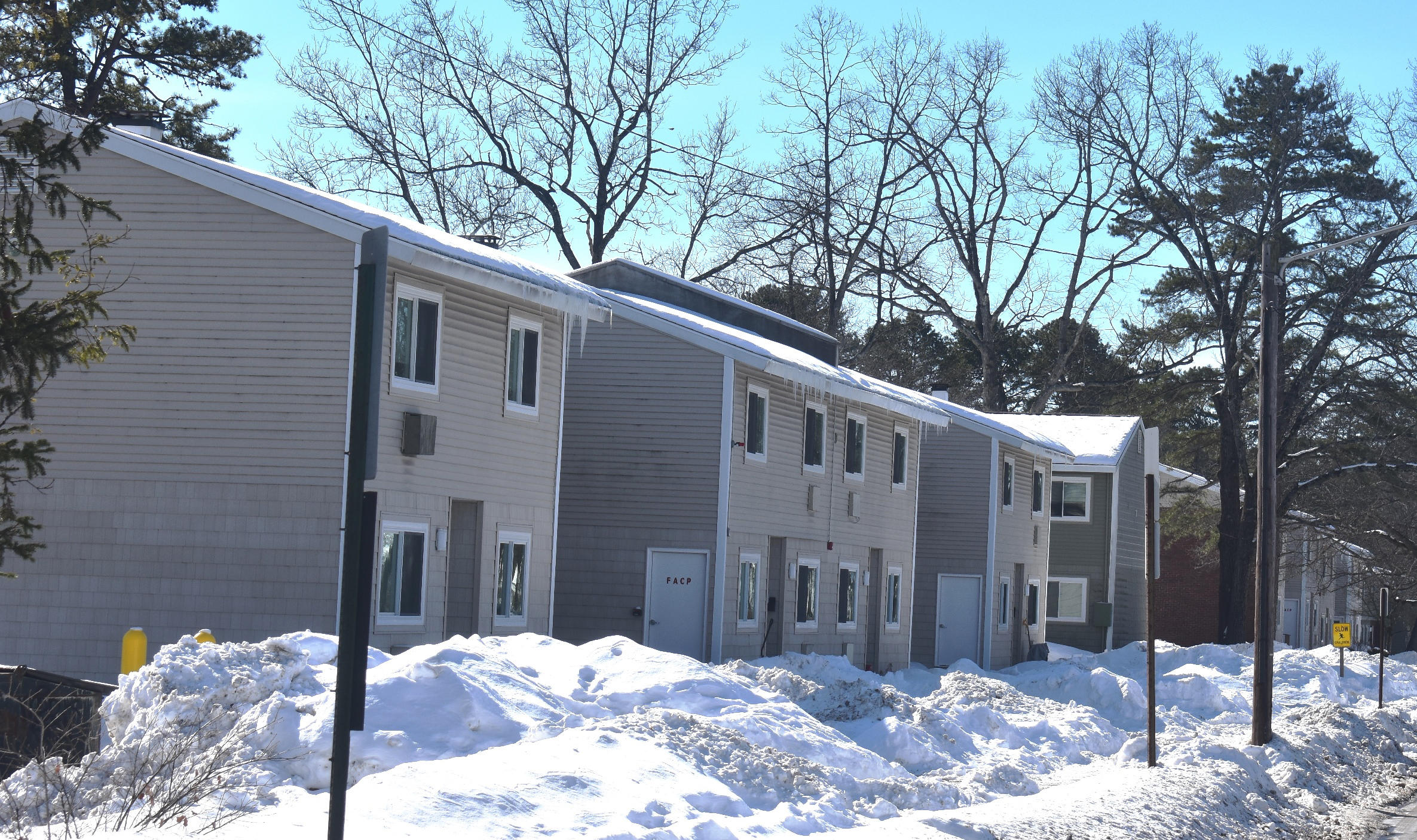
Units at the Concord Royal Apartments in Concord. (Photo by John Koziol)
Dapice foresees an increase in the rental market and worries about the possible demise of the Housing Champions program. Lawmakers need to do more to make housing available, including incentivizing communities to promote it, he said, but stressed that the desired changes “are not going to come overnight.”
He sees some positives in the current market, including the Vose Farm Residences, a new affordable workforce housing community in Peterborough developed by Catholic Charities of New Hampshire that officially opened on Jan. 15 and will be accounted for in the BEA’s 2025 assessment.
Catholic Charities said the residences are one- and two-bedroom apartments “for individuals, families and older adults earning 50%–60% of the area median income.”
In addition to Peterborough, which in 2026 might see the next phase of development at Vose Farm by Catholic Charities, the Seacoast might see some more small homes.
Maggie and John Randolph built, own and operate the Cottages at Back River Road in Dover, which is made up of 44 small homes, all rentals, measuring 540 square feet in size.
The Randolphs, who are married to each other — she is an architect, he is a general contractor — said they have spoken to other Seacoast communities about building two- and three-bedroom small homes, possibly under an ownership, not rental, model.
Echoing Jeff Lefkovich, the executive director of real estate and housing development for Catholic Charities of New Hampshire, John Randolph said, “No one’s going to solve this (housing) problem alone, and the only way is if we get in the room together” with the myriad of housing partners in the state.
“There’s a lot more to housing” said Maggie Randolph, than a single-family home on two acres or an apartment building. She agreed that every bit of new housing is better than no new housing.
A small home “won’t work for everyone,” she conceded, but “it will work for someone” and overall, a small home is another option in the housing toolbox.
Another option in the housing toolbox is an old one: employer-provided housing. At its Dec. 10 meeting, the Lincoln Planning Board approved the application of Mark Bogosian to convert the third floor at The Mills Marketplace into a 12-bedroom boarding house.
“We see a need for both affordable housing for the greater community as well as employee options that are in Lincoln,” said Bogosian, who is the owner of South Peak Resort in Lincoln. His company, he added, “will continue to develop additional housing to make sure that there will be price points and availability.”
Dennis Ducharme, the owner of the RiverWalk Resort in Lincoln, which is a partner with Bogosian and Loon Mountain resort in a pulse gondola which would link River-Walk to South Peak, said his company has “pockets of housing throughout the towns of Lincoln and Woodstock. It’s been going on for a while. We have employees come in from all over the world. Over the past 10 to 15 years we’ve always had additional help, and we find housing for them.”
Mike Somers, the president and CEO of the New Hampshire Lodging & Restaurant Association, said workforce housing is a statewide concern and that association members are buying, renting or building workforce housing everywhere throughout the Granite State.
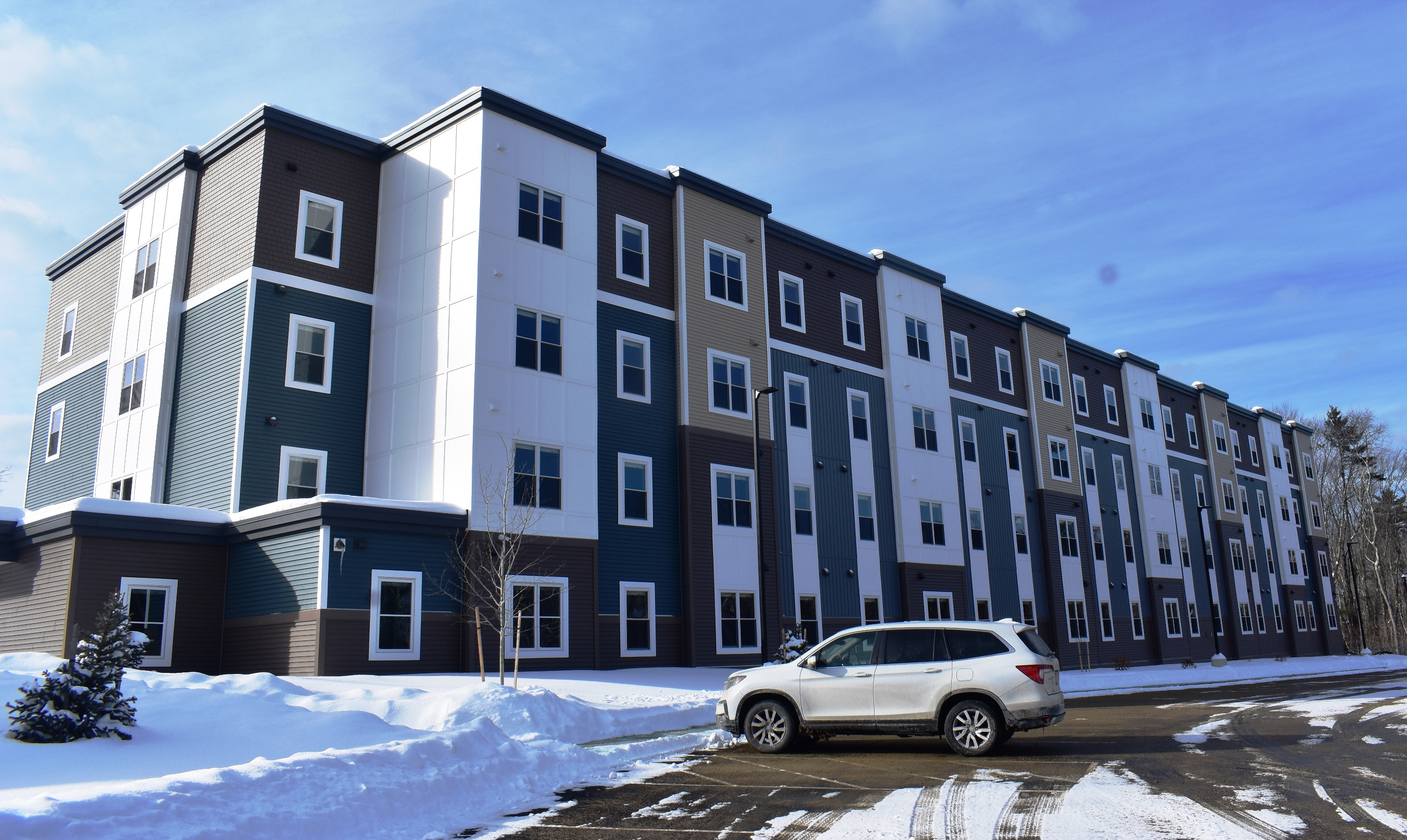
The Vose Farm Residence in Peterborough, which was built by Catholic Charities of New Hampshire, opened in January. (Photo by John Koziol)
Laconia City Planner Rob Mora said boarding houses are permitted in some zones of the city and that, while occasional, they have been applied for and granted.
The City on the Lakes, he said, has also adopted some of the Housing Champions proposals, such as making it easier to build more densely on parcels, thus increasing the number of units, and a broader view of accessory dwelling units.
He said several businesses in Laconia have wanted to expand, but couldn’t due to a lack of housing for employees.
The fact that New Hampshire has some of the oldest residents in the nation is exacerbating the housing shortage, said Jessica Williams, a policy analyst at the New Hampshire Fiscal Policy Institute.
Given few choices for them to downsize, older homeowners are hanging onto their homes longer, she said, which means fewer properties for sale.
Also, she noted, those seniors/empty-nesters are competing with millennials and other first-time buyers for housing that is available.
Income has not kept up with housing costs, said Williams, and housing construction has not met demand since the late 2000s.
On the plus side, Williams said she sees more people getting involved in addressing the need for housing, which she thinks requires both financial investment and regulatory reform to succeed.
Like Dapice, Williams acknowledged that “affordability has continued to be a challenge” but if prices level off somewhat “that lower increase could mean more folks are able to enter into the housing market.”