Cyber crime legislation aims to protect victims from bad decisions
SB 482, which goes into effect in December, sets a daily conversion limit of $2,000 per digital transaction kiosks.
During the 2025 legislative session, housing advocates hailed new laws that seek to improve the housing supply in New Hampshire.
Included among the legislation was the ability for homeowners to construct detached accessory dwellings units on their property, something local zoning in many communities prohibited.
In the 2026 session of the New Hampshire Legislature, which got underway Jan. 7, there are efforts to undo some of those efforts, including repeal of the right to build ADUs.
But advocates are optimistic that representatives and senators didn’t take one step forward in 2025 only to take two steps back in 2026.
“Poll after poll have shown that housing is a top concern for residents, so it would be surprising for state leaders to reverse course and make it harder, not easier, to create that much-needed housing,” said Robert Quinn, chief executive officer of the New Hampshire Association of Realtors (NHAR).
The need for housing remains one of the issues that a sometimes very partisan New Hampshire House and Senate agree on, according to Nick Taylor, executive director of Housing Action NH.
“I think there will still be a lot of bipartisan interest in addressing the housing crisis and the housing shortage,” Taylor said.
He notes that 2026 is an election year for representatives and senators, and a lot on the housing issue was accomplished in 2025. “But I don’t think that means that people are taking a year off from the issue, or not trying to continue to make progress, which I think is exciting,” Taylor said.
Here are some of the repeal efforts of the housing-related efforts that advanced in 2025 and from years before, as well as efforts to restrict housing development, such as parking requirements:
• HB 1005: Repeal study commission on zoning enabling act.
• HB 1010: Repeal statewide requirement to allow residential development in commercial zones.
• HB 1012: Repeal right to build ADUs.
• HB 1016: Repeal requirement for towns to allow manufactured housing.
• HB 1196: Repeal Housing Champion program run since 2023 by the NH Department of Business and Economic Affairs (BEA).
• HB 1006: Require on-site parking for ADUs.
• HB 1026: Allow towns to ban manufactured housing ADUs.
“I’m hopeful that there will be a bipartisan opposition to trying to pass those and making sure that those get defeated early, because we definitely shouldn’t be going in the wrong direction,” Taylor said.
On the other hand, there are several pieces of legislation that build on the 2025 housing efforts:
• HB 1007: Revise laws on siting for manufactured housing.
• HB 1008: Expand options for inclusionary zoning.
• HB 1017: Let towns require ADUs to be workforce housing.
• HB 1079: Allow ADUs in existing nonconforming structures.
• HB 1103: Expand community revitalization tax relief to housing.
• HB 1251: Mandates that municipalities approve residential construction permits if a licensed architect certifies the project is consistent with existing neighborhood density, overriding contrary zoning ordinances.
• HB 1681: Allow for innovative housing structures such as tiny houses.
• HB 1726: Use surplus state property for housing.
• HB 1764: Set targets for workforce housing development, add special assessments for towns below target.
• HB 410: Require extra justification from towns to impose various restrictions on residential development.
• SB 435: Removes the requirement of a “hardship” to grant a zoning variance.
Taylor sees the new pro-housing legislation as adding “more tools in the housing toolbox.”
Quinn describes some of the new legislation as “moving the needle productively.”
Of particular interest to Quinn is legislation that advances manufactured housing as an option for homebuyers, especially since the median price for a single-family home in New Hampshire was $535,000 in 2025.
“$535,000 is just not attainable for many New Hampshire families and workers. Manufactured housing becomes a more attractive option in that situation,” said Quinn.
“And I will say that manufactured housing, of all the types of housing, has been increasing at a rate faster than anything else,” added Quinn, “faster than single families, faster than condos. So there’s a real demand that’s out there, and that demand has been created because there is such a lack of inventory in the single-family housing market.”
Another piece of legislation that the NHAR is watching is HB 1786, which would create a state assessment on nonhomestead luxury second homes to fund statewide housing development programs and address housing shortages. The bill proposes a semi-annual assessment on residential properties valued at more than $1 million and not used as a primary residence.
It’s an off-budget year, so Taylor doesn’t expect any action that might restore some of the housing money that Gov. Kelly Ayotte removed or reduced in her fiscal year 2026-27 state budget.
The previous FY 2025-26 budget had provided $25 million toward the Affordable Housing Fund, $10 million for the InvestNH Fund, $10 million for homelessness and housing shelter programs, and $5.25 million for the Housing Champion Designation and Grant Program.
There are three areas in the new budget that funds initiatives supporting resident access to housing or housing construction efforts each in biennium in an ongoing fashion, according to the New Hampshire Fiscal Policy Institute (NHFPI).
Totalling $61.7 million, they include:
• $5 million each year in transfers from the Real Estate Transfer Tax to the Affordable Housing Fund, which provides grants and loans to developers looking to construct or rehab affordable housing for those with low and moderate incomes;
Funding for the Judicial Branch’s Community Housing Program, which provides temporary housing to individuals involved with the criminal legal system who are also experiencing substance use disorders (SUD), including those participating in a drug court program or entering back into the community under parole or probation.
• Funding for the Bureau of Homeless Services, which provides support and resources for those experiencing homelessness or at risk of being unhoused, largely known as the Continuum of Care.
Taylor doesn’t hold out any hope for anything beyond that.
“If we were in a slightly different environment, where revenues were far exceeding projections, yeah, I think there may be some opportunity to try to get something done there, but I’m not really anticipating anything,” he said.
Thus far during this budget cycle, revenue collections overall are behind projections.
The NHAR, Housing Action NH, and other pro-housing entities are part of the New Hampshire Housing Coalition organized by the Business and Industry Association of New Hampshire (BIA).
Michael Skelton, BIA’s president/CEO, lauded the 2025 legislative efforts on housing, but said “there’s still more to do.”
“While more pro-housing reforms were enacted in 2025 than in any previous year, more remains to be done if we are to make meaningful progress on housing affordability and workforce sustainability,” Skelton said in the BIA’s Legislative Report 2025.
The BIA is the statewide chamber of commerce that provides overwatch on legislation that might affect its self-described mission “to ensure New Hampshire remains an economically competitive and vibrant state to live, work and do business.”
Several business-related bills have been filed for the 2026 session having to do with artificial intelligence, data centers, business taxes, landfills and other matters. Some bills seek to restrict certain ventures, such as landfills, others, such as data centers, are the focus of efforts to both advance and restrict.
Here’s a sampling:
Data centers
HB 1265: Impose moratorium on new data centers.
SB 439: Add zoning regulations for data centers.
HB 1739: Incentivize data centers and grid modernization.
Landfills/solid waste
HB 1138: Cap out-of-state waste in NH landfills.
HB 1478: Impose stricter siting and staffing rules for new landfills.
HB 171: Suspend new landfill permits until 2028.
HB 707: Require state to set minimum landfill distance from water.
SB 226: Suspend new landfill permits until 2031, study incinerating waste.
SB 593: Grant state exclusive authority over landfill expansions.
Artificial intelligence (AI)
HB 1406: Ban insurers from using AI to alter clinical judgment.
HB 1506: Allow exceptions to state agency AI ban.
HB 1725: Regulate artificial intelligence use.
HB 640: Regulate use of AI in providing services that require a professional license.
Business and Enterprise Tax (BET)
HB 155: Cut BET to 0.5%.
HB 1629: Repeal BET.
HB 635: Apply business enterprise tax to nonprofits that settle illegal/undocumented immigrants.
The BET, around since 1973, levies an assessment based on the “enterprise value tax base” of a business, including compensation paid, interest paid and dividends paid. Reaching a high of 0.75% from 2001 to 2015, it currently stands at 0.55%.
There is no evidence yet of legislation that follows-up on the governor’s commission to make state government more efficient, particularly as it applied to the elimination of the Pease Development Authority, which, among other tasks, oversees the Pease International Tradeport in Portsmouth and the airport there.
Ayotte’s Commission on Government Efficiency (COGE), in its report to her released Dec. 11, suggested an end to the Pease Development Authority (PDA) and transitioning its functions to other state agencies, saying “it is past time to restructure the PDA in light of current needs.”
But the two pieces of Pease-related legislation currently on file have nothing to do with its dissolution:
• SB 183: Add members from Hampton, Rye to Pease Development Authority.
• SB 490: Study, allow housing development at Great Bay community college.
Currently, the communities represented on the PDA board of directors are Portsmouth and Greenland. There is a Strafford County representative, now filled by Newmarket Town Manager Steve Fournier.
There is no housing now at the Tradeport, a restrictive covenant of the agreement that turned over the former Pease Air Force Base to the state in 1991.
The task force would, among other responsibilities, consider community college system residence hall models, leased apartment models, and military dormitory or housing models.
Michael Skelton, BIA’s president/CEO, lauded the 2025 legislative efforts on housing, but said ‘there’s still more to do.’

SB 482, which goes into effect in December, sets a daily conversion limit of $2,000 per digital transaction kiosks.

New report cites Tradeport’s ‘uniquely important role in New Hampshire’s economic architecture’ as executive director looks toward ‘retooling’ for life science users
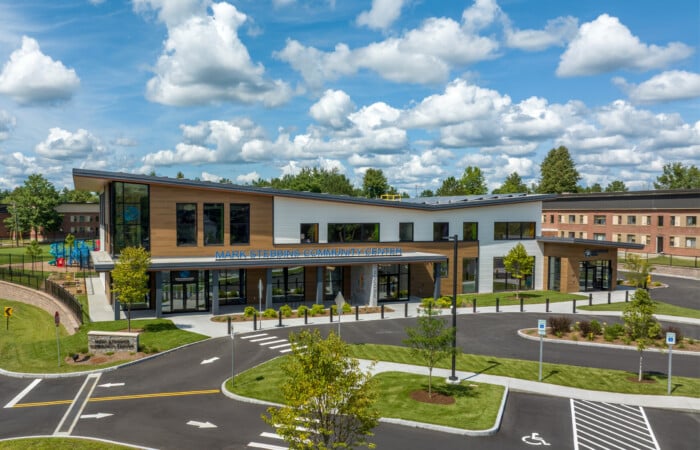
After a 14-month construction mission, the “Apollo” landed at the Kelly Falls apartment complex this week with the completion of the Mark Stebbins Community Center, the culmination of a vision by the late Mark Stebbins, a long-time business leader and philanthropist.

Because of tariffs, the war with Iran, and other White House policies, New Hampshire families have had to spend an additional $4,800 or more on goods and services, according to U.S. Sen. Maggie Hassan, D-NH.

There are any number of reports, surveys, and rankings that show how well — or how poorly — New Hampshire is doing on a range of issues. Everything from education funding to safety to having a baby to business opportunities to student loan delinquency — it seems everything can be measured in one form or another, often as a yardstick against other states.

In a recent ad, a candidate for Congress claimed that “two families have controlled New Hampshire politics for the last several decades,” or something to that effect. That rather curious claim referred to the alleged dominance of New Hampshire politics by the Shaheen and Sununu families. The notion that any family has or could dominate New Hampshire politics has to be dismissed.
Webinar panel discusses far-reaching consequences of the 21st Century ROAD to Housing Act, the bipartisan legislation that seeks to address the lack of supply in the Granite State and across the country

There's been a rebound of Canadian tourists across NH this summer. But new tariffs and words may have an effect on their visits this fall. Meanwhile, right along the border, there's still cross-border neighborliness in the small New Hampshire and Canadian communities.

Child care and early education are the initial focus of a Stay Work Play initiative called NH Nexus to identify and address key issues facing young residents of New Hampshire