Water country
Realtors are learning more about coastal conditions to better inform homebuyers
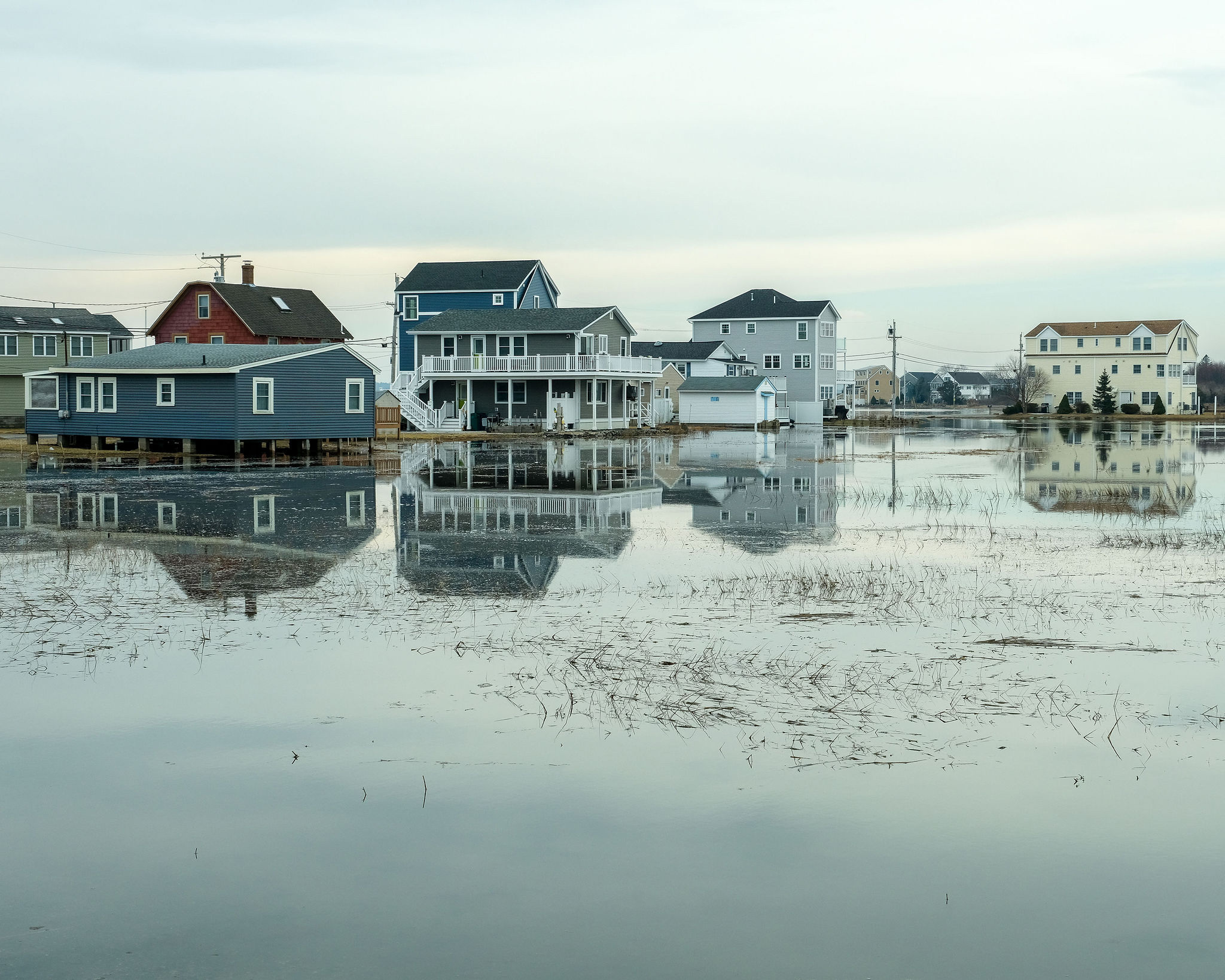
Photos taken during exceptionally high tides, like this image of a Hampton neighborhood, offer a glimpse into future impacts of sea-level rise on coastal communities. (Photo by Elise Sullivan)
In the age of rising sea levels, protecting homeowners from getting underwater is no longer just about negative equity.
A group of Realtors gathered at Strawbery Banke in November to participate in the second Living with Water Workshop. Organized by the New Hampshire Coastal Adaptation Work Group, also known as NHCAW, the offering provides real estate professionals with resources related to coastal habitats, water quality and flooding, allowing them to inform potential buyers and sellers about the complexities of living near water as well as considerations for stewarding coastal land.
Combining real estate with environmentalism, the three-hour workshop featured a series of panelists, including Lynn Vaccaro of the Great Bay National Estuarine Research who spoke about wetland ecology, shoreline stabilization and land protection; Kaleigh Johnson of Portsmouth Atlantic Insurance who shared information regarding home, auto and flood insurance; and Jennifer Gilbert from the NH Department of Environmental Services Coastal Program, who discussed floodplain mapping and regulations, flood hazard mitigation and coastal flood resilience.
“Realtors are increasingly getting asked more questions about flooding from their clients,” said Lisa Wise, a coastal resilience specialist with the NH Sea Grant and another of the workshop’s featured panelists. “Zillow, Redfin and others have been starting to add more information about flooding and other climate risks. There’s more awareness.”
The unofficial tagline for the workshop urges participants to become the “source of the source,” when it comes to answering questions.
“They don’t necessarily want to be in the position of telling clients what they should or shouldn’t do,” Wise added, “but they want to be able to provide the resources.”
The course comes at a critical time when rising sea levels, increased storm intensity and frequent flooding have impacted property values, coastal infrastructure and regulations surrounding insurance and home ownership.
“The FEMA maps are retroactive,” Wise said.
“They’re not looking at forward impacts of climate change.”
Many homebuyers assume that, if they fall outside FEMA floodplain maps (any mapped area with a 1% chance or higher of experiencing a flood each year is considered high risk), then they don’t need to worry about insurance, but many flood events in recent years have been outside of the mapped floodplain.
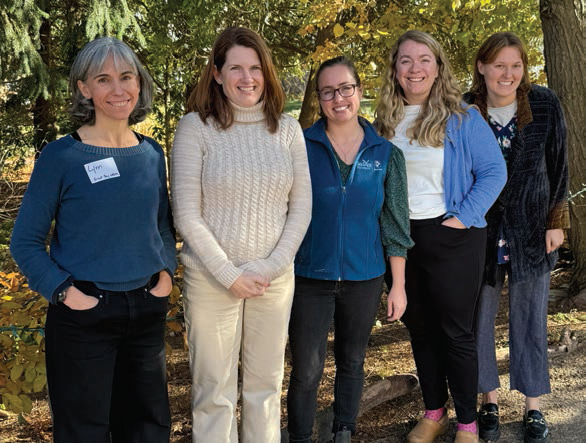
From left: Lynn Vaccaro, Great Bay National Estuarine Research Reserve; Jennifer Gilbert, NH DES; Lisa Wise, NH Sea Grant; Abigail Lyon, Piscataqua Region Estuaries Partnership; and Talia Sperduto of Samonas Realty. (Photo by Lisa Wise)
“There’s some real gaps there,” Wise added. During the workshop, participants were taken on a site visit around Strawbery Banke, touring the Water Has a Memory exhibit and listening to Rodney Rowland, the museum’s director of environmental sustainability, discuss preventative measures being taken to protect the historical waterfront neighborhood from flooding and sea-level rise.
According to research at the University of New Hampshire, over 17% of prehistoric and historic cultural sites will be lost to sea-level rise in less than 100 years, which could have ramifications not only on eroding the state’s heritage but also on tourism and local towns and businesses.
“We held the course at Strawbery Banke to make it a little more interactive,” said Talia Sperduto of Samonas Realty, a real estate professional specializing in coastal and historic home sales in the towns surrounding Portsmouth and Kittery, Maine. With a background in environmental science and a seat on the Portsmouth Conservation Commission, Sperduto facilitates the workshop and advises the logistical aspects of the course.
“Since being on the Conservation Commission, I feel like I am more educated and able to really inform my buyers of what they’re purchasing,” Sperduto said, “but really only because I have that scientific background and authority to share that most realtors don’t have.”
Her interactions with homebuyers, and conversations with individuals such as Lynn Vaccaro, sparked the idea to create the workshop. To maintain licensure, NH Realtors have to take a certain number of continuing education credits, facilitated through one of the local boards. Living with Water is run through the Seacoast Board of Realtors.
“Most people say this is the best class they’ve ever been to,” Sperduto said. “They get to go outside, ask questions and move around. And the information is really relevant to their work.”
For Catherine Allen of the Allen Realty Group, who also has a background in environmental science, the program spoke to her passion for conservation. Most notably, she appreciated the different industries represented during the workshop, which demonstrated how insurance, science and even historical preservation are all related.
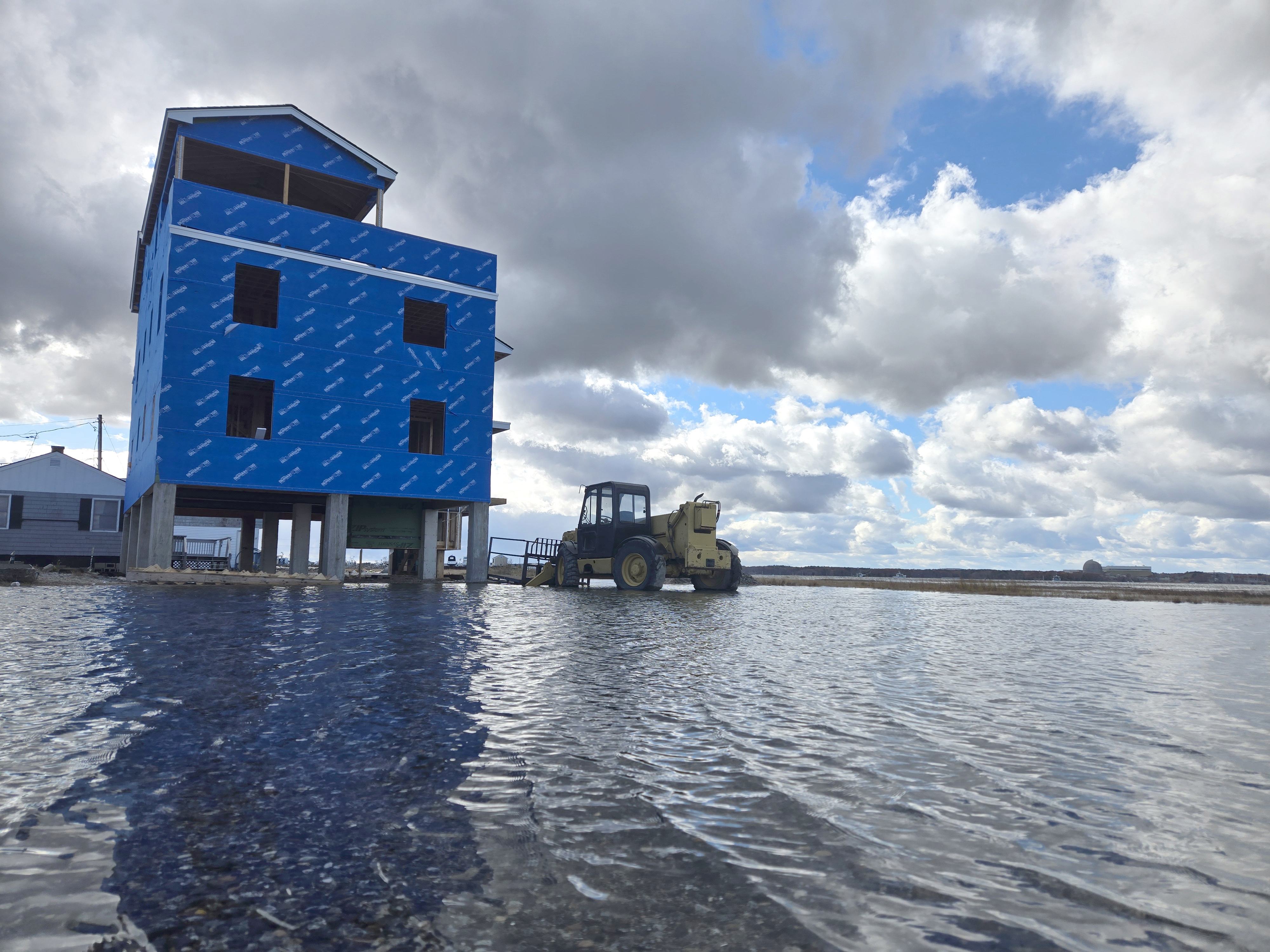
This construction site in Hampton was captured during the Picturing Rising Tides photo campaign. (Photo by Polly Perkins)
“I think we get very segmented and we lose that interconnectedness, but everything is connected,” she said. “You can’t fix one problem if you’re not looking at the sum of all the parts.”
At the end of the workshop, participants get access to a website created by Realtors, scientists and other professionals in conjunction with the NH Sea Grant. For course developers, the goal is to get science into the hands of people who can use it most.
“I think a lot of the time when we take classes it’s mostly theoretical,” Allen said, “but this is something that we can take home.”
“We’re able to educate our clients,” Allen continued.
“What the homebuyer knows is directly related to what we know. So if we aren’t educated, we cannot help them.”