Tannenbaum Times
Real vs. fake: New Hampshire’s ongoing Christmas Tree debate
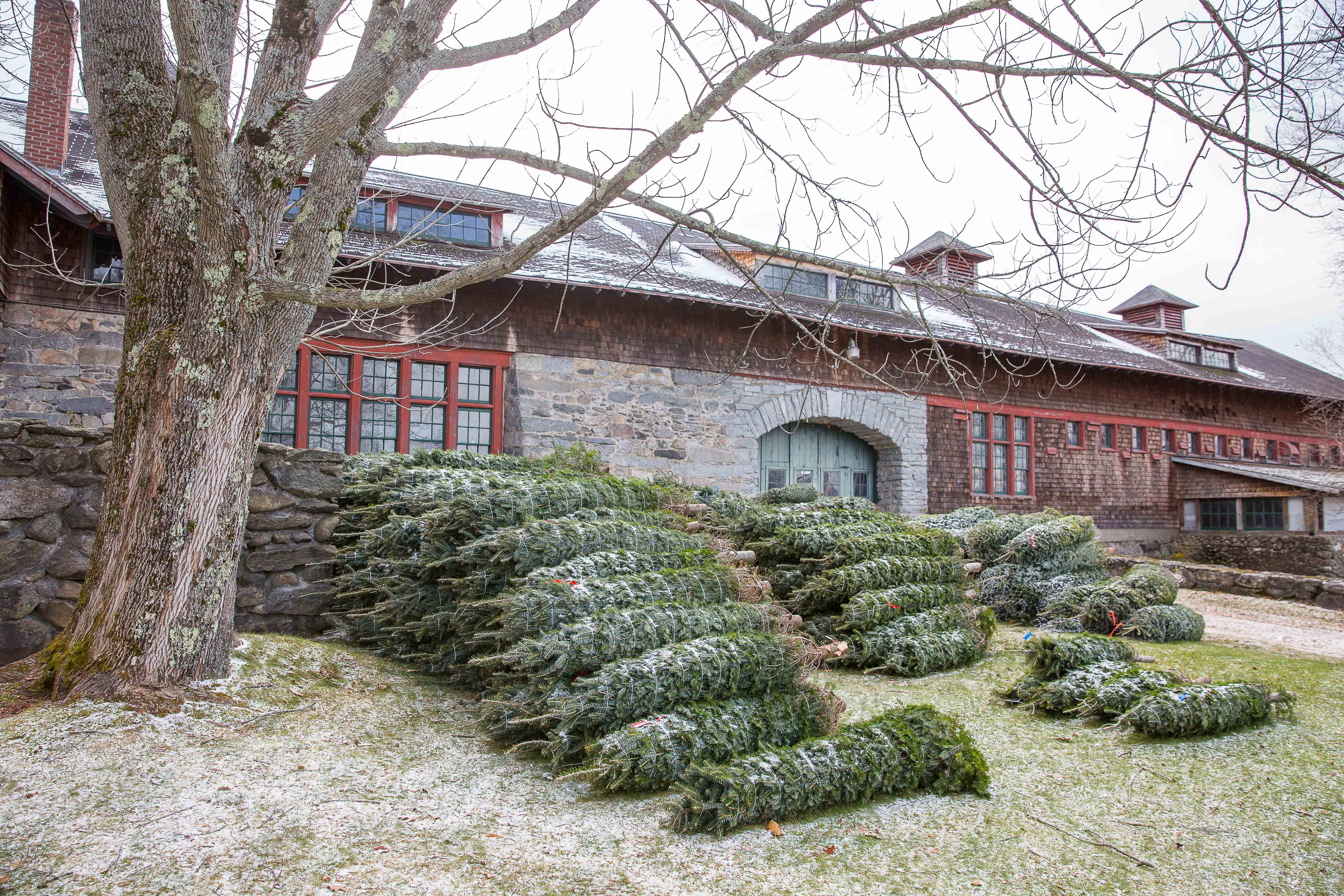
The Society for the Protection of New Hampshire Forests operates a tree farm at The Rocks in Bethlehem. (Photos courtesy of Visit New Hampshire)
Is there any symbol more synonymous with the holiday season, and less contentious, than a Christmas tree? True, not everyone celebrates “Christmas,” but in New Hampshire, it’s safe to say that an evergreen tree, adorned with treasured decorations that often span generations, is an emblem that can transcend individual faiths.
Yet there are still differences of opinions, many of which come down to one basic question: Do you want a real tree, or an artificial one? Would you rather have the convenience and durability of an artificial tree that can be displayed year after year? Or do you prefer the aesthetic, and even the scent, of a natural tree, which can come with the experience of cutting your own?
On its surface, the choice seems to be a simple one.
But the debate isn’t without controversy. That’s because Christmas tree farmers in the Granite State aren’t happy with what they claim are dishonest marketing campaigns by artificial tree manufacturers and retailers.
“I don’t mind if somebody buys an artificial tree, if that’s their preference,” says Mike Ahern of Glove Hollow Farm in Plymouth, which offers both cut-your-own and wholesale options. “What I do mind is if they’re making ad claims that aren’t honest or upfront. That bothers me.”
Ahern, a past president and past director of the NH-VT Christmas Tree Association, has plenty of company among his tree-growing colleagues.
“The biggest challenge to our industry is artificial trees and misinformation. Fake trees are our greatest competitor,” says Illan David Kessler, whose family owns Noel’s Tree Farm in Litchfield and a second wholesale operation — North Pole Christmas Trees — in Colebrook.
“The profit in artificial is very large, and consequentially artificial tree companies have larger advertising budgets then real tree producers.”
The advertising, says Kessler, is often misleading, as is the trade organization — (ACTA) — established to promote artificial trees and other artificial holiday decorations.
“It’s a fake-news campaign masquerading as a tree farmers association, which it certainly is not,” Kessler says. “You may be surprised to learn that artificial tree companies are notorious for publishing misinformation about real trees in the media.”
The American Christmas Tree Association did not respond to a request for an interview with NH Business Review. The ACTA, according to its website, is “a nonprofit organization that serves as a resource for media and consumers seeking information and education on the Christmas tree industry.”
The same website features news articles and television segments focusing on the artificial tree industry, such as an article in Reuters story entitled “Fewer fake firs, higher prices: China tariff delay does little to save the holidays.”
“We’re going to have a lower supply year,” says Chris Butler, CEO of National Tree Company, a New Jersey-based artificial tree importer supplying Walmart, Home Depot and Lowe’s, in the Reuters’ article.
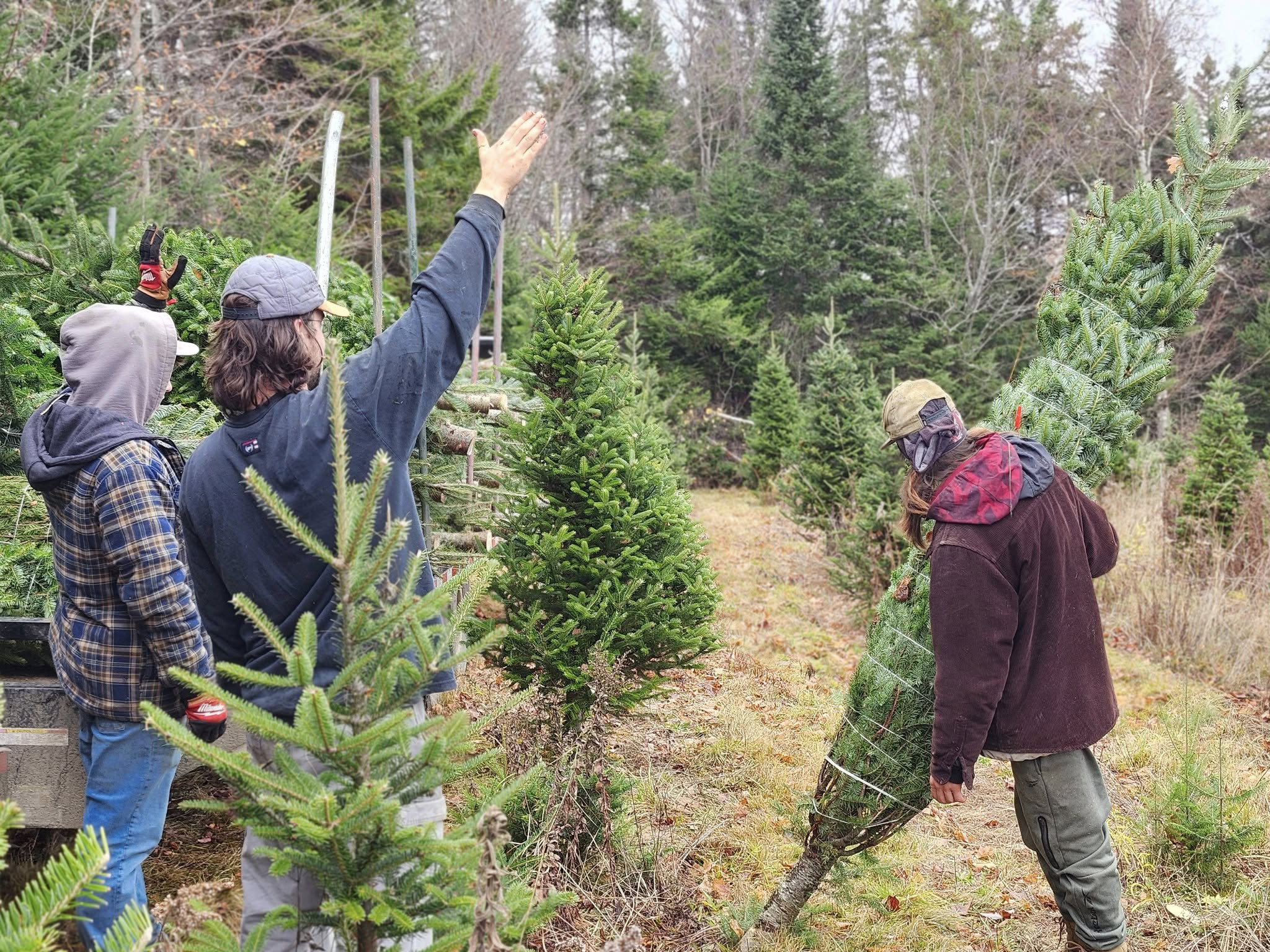
Workers assess their stock at North Pole Christmas Trees, a wholesale operation in Colebrook. (Courtesy photo)
Those tactics, designed to encourage the early purchase of artificial trees, clearly annoy New Hampshire tree farmers. Nigel Manley, who owns South Farm in Bethlehem with his wife, Judy Ratzel, says the very name of the ACTA is a marketing ploy designed to deceive.
“The website that they used to promote (artificial trees) is called the American Christmas Tree Association, and that’s done specifically by companies from China that are making plastic trees,” Manley says. “If you go on that (website), it makes you sound like it’s patriotic to get a plastic tree. And it’s not true.”
One of the largest artificial tree companies, Balsam Hill, acknowledges that their trees are produced in China, but also claim that those trees are “designed in California.” It’s the same tactic employed by cycling giant Specialized, which designs its bikes stateside but manufactures them overseas.
Conversely, the National Christmas Tree Association (NCTA) represents the nation’s tree farmers, combatting much of the misinformation that New Hampshire members say they’ve encountered.
Regionally, the New Hampshire-Vermont Christmas Tree Association (NHVCTA) is a 70-year-old organization representing more than 400 tree farms in the two states. In addition to being an informational clearinghouse for every aspect of a tree-farming operation — how to plant, maintain, grow and sell trees — the organization hosts several get-togethers every year that allow farmers to share concerns and advice.
“Christmas tree farmers aren’t like other businesses.
They share everything,” Ahern says. “There’s a Christmas tree farm in my town, and if they need something, whether it’s for a ball of twine or to talk about something if they experience something, everybody’s there for each other. And it’s nice to be in an industry like that.
Jim Turner, owner of Live Tree or Die Farm in Amherst, adds: “There is no better way to learn a business than to hang out with your ‘competitors.’ The farmers of NHVCTA are incredibly generous and are super inclusive to anyone that wants to learn how to play this game. It’s a beautiful collaboration.”
The overseas component raises another question: Which tree is more compatible with the environment? Artificial tree companies, Kessler says, “promote a false narrative of fake trees being better for the environment, where in fact everyone knows that plastic is bad for the world and real trees are a much better environmental choice.”
This fall, Balsam Fir introduced initiatives indicating that the industry is making strides in ensuring artificial trees have less impact on the planet. In a press release earlier this year, Balsam Hill was the first retailer to offer Christmas trees with True Needle tips made with plant-based polyethylene, derived from sugarcane instead of fossil fuels, and that the brand’s other True Needle trees will now incorporate 30% post-consumer GRS-certified recycled polyethylene made from tear-away water bottle caps.
“An important part of Balsam Hill’s mission is to offer even more sustainable Christmas trees that will be a centerpiece of our customers’ celebrations for many years,” says Mac Harman, founder and CEO of Balsam Hill. “While our trees have always been reusable, these advances are a game-changer for the Christmas tree industry.”
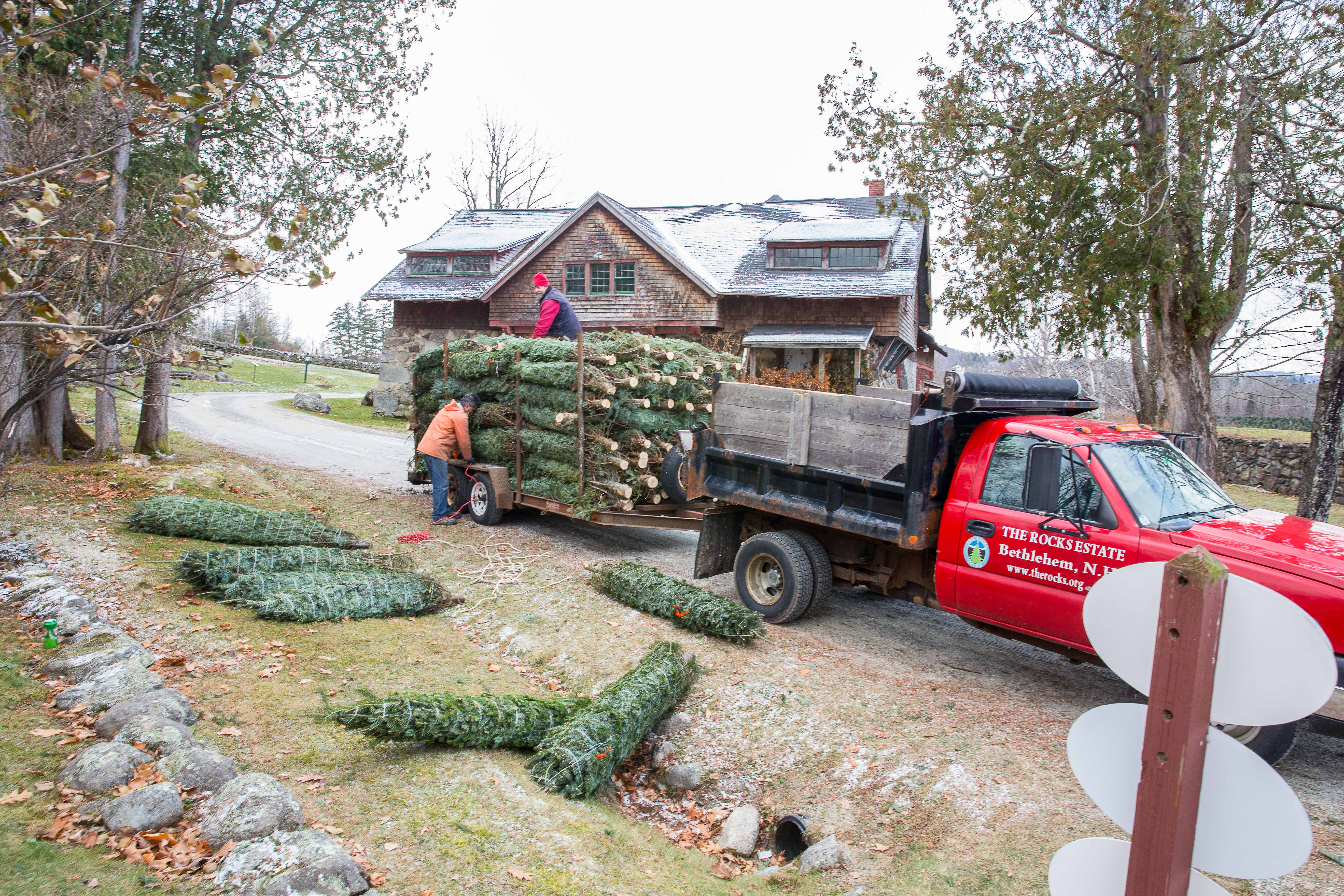
Workers gather Christmas trees at The Rocks in Bethlehem, an estate that encompasses 1,400 acres.
Turner is not impressed
“The growers believe that misleading statements like ‘True Needles’ and implications that artificial trees are ‘better for the environment,’ are completely bogus,” Turner says. “Contrast this to our trees that are typically sourced as seedlings or transplants from nurseries in Vermont, Quebec, Michigan, etc. And then think about how our trees are completely biodegradable.”
The NCTA also states the Balsam Hill claims don’t represent the artificial tree industry as a whole.
“Artificial trees are a petroleum-based product manufactured primarily in Chinese factories,” the organization states on its website. “The average family uses a fake tree for only six to nine years before throwing it away, where it will remain in a landfill indefinitely. That’s a pretty hefty, long-term environmental burden.”
“The polyvinyl chloride (PVC) used in most artificial trees has been boycotted by many environmental groups,” states the NCTA, “This issue is especially concerning due to China’s weak enforcement of environmental regulations.”
Tree growers also balk at the inference that growing trees is somehow a bad management practice that takes a toll on the land, in the same vein as deforestation.
“Some people think that cutting trees is wrong,” says Manley, the national representative for NHVCTA. “But it would be the same, farm-wise, as somebody growing carrots and then not wanting to dig them up and eat them. It’s a crop, like corn, carrots, potatoes.”
Again, the NCTA supports the claims of local tree farmers. “While they’re growing, real Christmas trees absorb carbon dioxide and other gases and emit fresh oxygen,” the organizations states. “Christmas tree farmers plant new seedlings every spring to replace those harvested. There are about 350 million conifer trees growing on Christmas tree farms in the U.S. alone. Christmas tree farms stabilize the soil, protect water supplies and support complex eco-systems.”
And, tree farmers point out, natural trees are, literally, a homegrown product. According to the NCTA, quoting U.S. Commerce Department figures, 85% of artificial trees sold in the United States are imported from China.
“The majority of these (artificial) trees are made overseas,” Ahern says. “They’re not made in this country. So, whether it’s slave labor or child labor or low-wage labor, you’re supporting another country. Whereas the trees we have, you know who is producing them.”
Even artificial tree producers acknowledge the on again/off again threat of tariffs on foreign trees may limit supply, or at the very least increase prices. Meanwhile, ongoing improvements in farming techniques and developments of hybrids to combat climate change ensure an abundance of real trees, say growers.
“The quality of real trees is better than ever,” Kessler says.
Further, the importance of buying local, say tree farmers, goes beyond supporting a local business. It also supports local and national charities, such as Trees for Troops distributed through the Christmas Spirit Foundation.
Many farmers, however, says they prefer to keep their comments positive, focusing on their product and highlighting how special the experience is of visiting a tree farm, and bringing home a natural tree, especially one you’ve cut yourself. In many ways, the Christmas tree, and local tree farms, are extensions of the holiday, and the positive traits the season stands for.
“We like to talk to people about our farm,” Ahern says.
“It’s been in the family for so long, people love to tell me about when they used to get their Christmas tree from my dad in the ‘80s,” says Ahern. “It’s not just a Christmas tree. It’s coming out here and being with their family, and doing something like cutting a tree that they may not get a chance to do at any other time of the kids’ lives.
“It’s a chance for parents and children to connect. It’s so powerful,” he says. “And I’m so excited that I get to be part of it.”
In many ways, the Christmas tree, and local tree farms, are extensions of the holiday, and the positive traits the season stands for.