Bow considers withdrawing from Community Power Coalition program
Bow could become the first town to withdraw from the Community Power Coalition of New Hampshire as residents confront high energy costs.
New England winters can get wicked cold. Last week, five of the region’s states launched a $450 million effort to warm more of the homes in the often-frigid region with energy-efficient, low-emission heat pumps instead of burning fossil fuels.
“It’s a big deal,” said Katie Dykes, commissioner of Connecticut’s Department of Energy and Environmental Protection. “It’s unprecedented to see five states aligning together on a transformational approach to deploying more-affordable clean-heat options.”
The New England Heat Pump Accelerator is a collaboration between Connecticut, Maine, Massachusetts, New Hampshire and Rhode Island. The initiative is funded by the federal Climate Pollution Reduction Grants program, which was created by President Joe Biden’s 2022 Inflation Reduction Act. The accelerator’s launch marks a rare milestone for a Biden-era climate initiative amid the Trump administration’s relentless attempts to scrap federal clean energy and environmental programs.
The goal: Get more heat pumps into more homes through a combination of financial incentives, educational outreach and workforce development.
New England is a rich target for such an effort because of its current dependence on fossil-fuel heating. Natural gas and propane are in wide use, and heating oil is still widespread throughout the region; more than half of Maine’s homes are heated by oil, and the other coalition states all use oil at rates much higher than the national average. The prevalence of oil in particular means there’s plenty of opportunity to grow heat-pump adoption, cut emissions and lower residents’ energy bills.
At the same time, heat pumps have faced barriers in the region, including the upfront cost of equipment, New England’s high price of electricity and misconceptions about heat pumps’ ability to work in cold weather.
“There’s not a full awareness that these cold-temperature heat pumps can handle our winters, and do it at a cost that is lower than many of our delivered fuels,” said Joseph DeNicola, deputy commissioner of Connecticut’s Department of Energy and Environmental Protection.
To some degree, the momentum is shifting. Maine has had notable success, hitting its aim of 100,000 new heat pump installations in 2023, two years ahead of its initial deadline. Massachusetts is on track to reach its 2025 target, but needs adoption rates to rise in order to make its 2030 goal.
The accelerator aims to speed up adoption by supporting the installation of some 580,000 residential heat pumps, which would reduce carbon emissions by 2.5 million metric tons by 2030 — the equivalent of taking more than 540,000 gas-powered passenger vehicles off the road.
The initiative is organized into three program areas, or “hubs,” as planners called them during a webinar kicking off the accelerator last week.
The largest portion of money, some $270 million, will go to the “market hub.” Distributors will receive incentives for selling heat pumps. They will keep a small percentage of the money for themselves and pass most of the savings on to the contractors buying the equipment. The contractors, in turn, will pass the lower price on to the customers. In addition to reducing upfront costs for consumers, this approach is designed to shift the market by encouraging distributors to keep the equipment in stock, therefore making it an easier choice for contractors and their customers.
These midstream incentives are expected to reduce the cost of cold-climate air-source heat pumps by $500 to $700 per unit and heat-pump water heaters by $200 to $300 per unit.
When contractors buy the appliances, the incentive will be applied automatically — no extra paperwork or claims process required.
“It should be very simple for contractors to access this funding,” said Ellen Pfeiffer, a senior manager with Energy Solutions, a clean energy consultancy that is helping implement the programming. “It should be almost seamless.”
Consumers will also remain eligible for any incentives available through state efficiency programs, such as rebates from Mass Save or Efficiency Maine, but will likely not be able to stack the accelerator benefits with federal incentives like the Home Efficiency Rebates and Home Electrification and Appliances Rebate programs.
Program planners expect to be finalizing the incentive levels through the end of the year, enrolling and training distributors in the early months of 2026, and making the first participating products available in February 2026, said New England Heat Pump Accelerator program manager Jennifer Gottlieb Elazhari.
The second program area is the innovation hub. Each state will receive $14.5 million to fund one or two pilot programs testing out new ways to overcome barriers to heat pump adoption by low- and moderate-income households and in disadvantaged communities.
The innovation hub will also include workforce development and training.
This story was originally published by Canary Media, and shared with New Hampshire Bulletin, an independent local newsroom that allows NH Business Review and other outlets to republish its reporting.
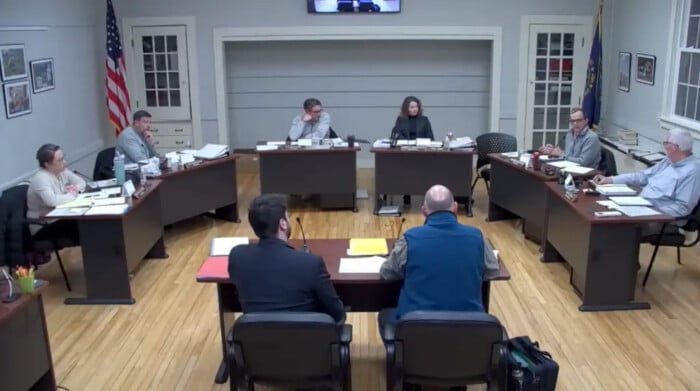
Bow could become the first town to withdraw from the Community Power Coalition of New Hampshire as residents confront high energy costs.
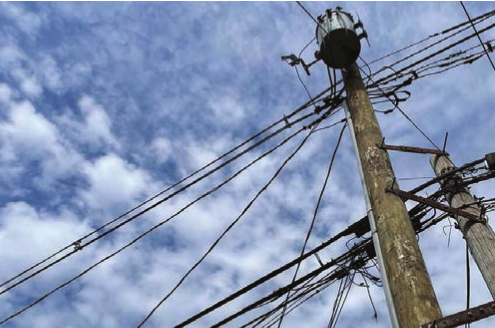
New Hampshire’s energy officials are asking the state’s Supreme Court to review a decision by utility regulators that raised rates for Eversource customers last summer.

Residents debated a proposed $2.66 million wastewater project during a town deliberative session at Pittsfield MidCadle High School, with discussion focusing on costs, long-term planning and who should pay.

Innovation is promising for builders, loggers and rural communities
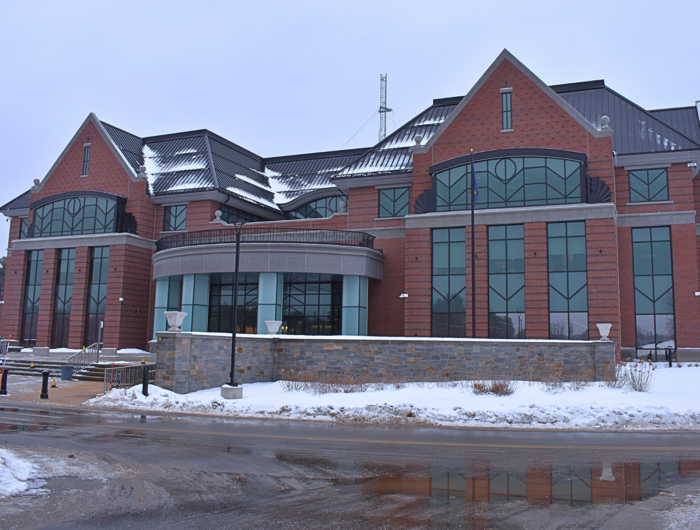
For the last several years, housing and commercial development have been under the spotlight in New Hampshire. Building professionals have had to be creative to address challenges in infrastructure, resilience in the face of a changing climate and a focus on sustainable design. Our expert weighs in on engineering innovations and trends.
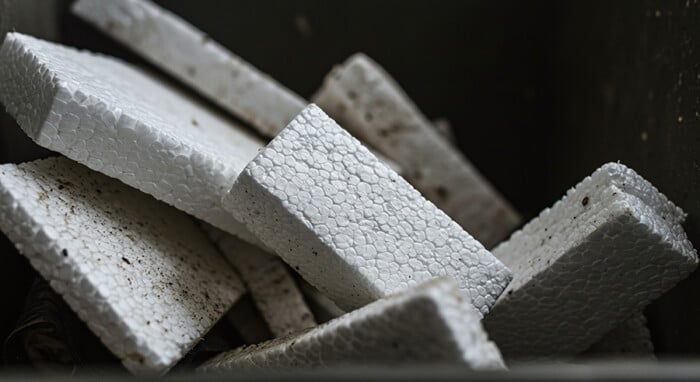
Dublin is considering whether to join 27 other New Hampshire towns in a statewide Styrofoam recycling program and will host a trial foam collection event on Saturday, Jan. 31, with a snow date of Feb. 7.
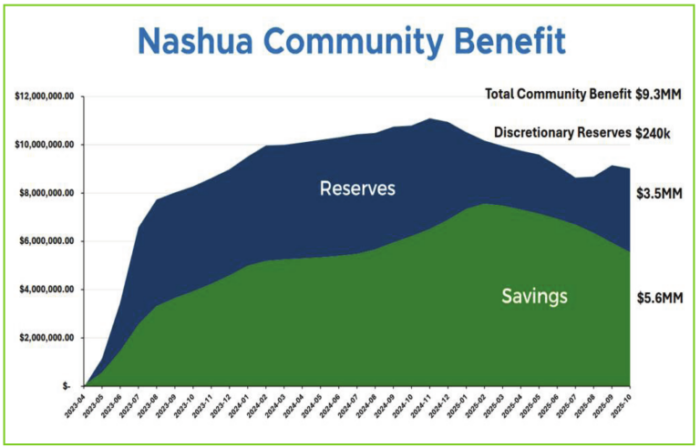
Following news of Nashua Community Power’s increased electricity rate for the next rate period, Community Power Coalition of New Hampshire (CPCNH) gave a presentation to the Board of Aldermen (BOA) during a special meeting to discuss the rate change and give an overview of Nashua Community Power.

Winter in New England can be unforgiving. Throughout the bitter cold mornings, seemingly constant snow and early sunsets, we hear the steady hum of heating systems reminding us they are working overtime to keep our homes warm.
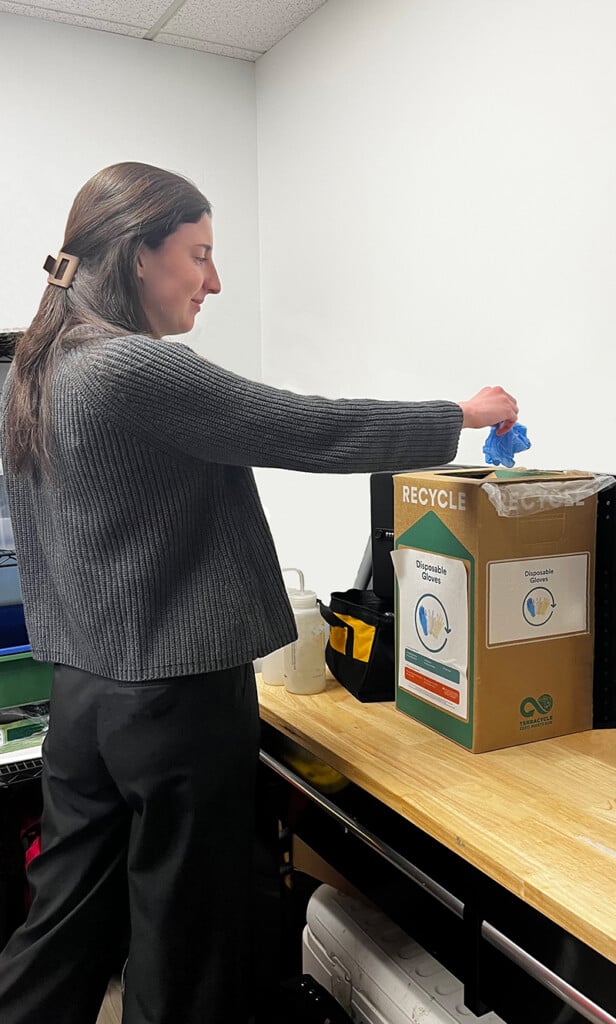
Sanborn Head’s ‘Go Green Team’ practices sustainability at the engineering firm