Manchester to end up on the Monopoly board
Efforts are underway in Manchester to fashion a version of the iconic board game "Monopoly" into a Who's Who and What's What of New Hampshire's largest city.
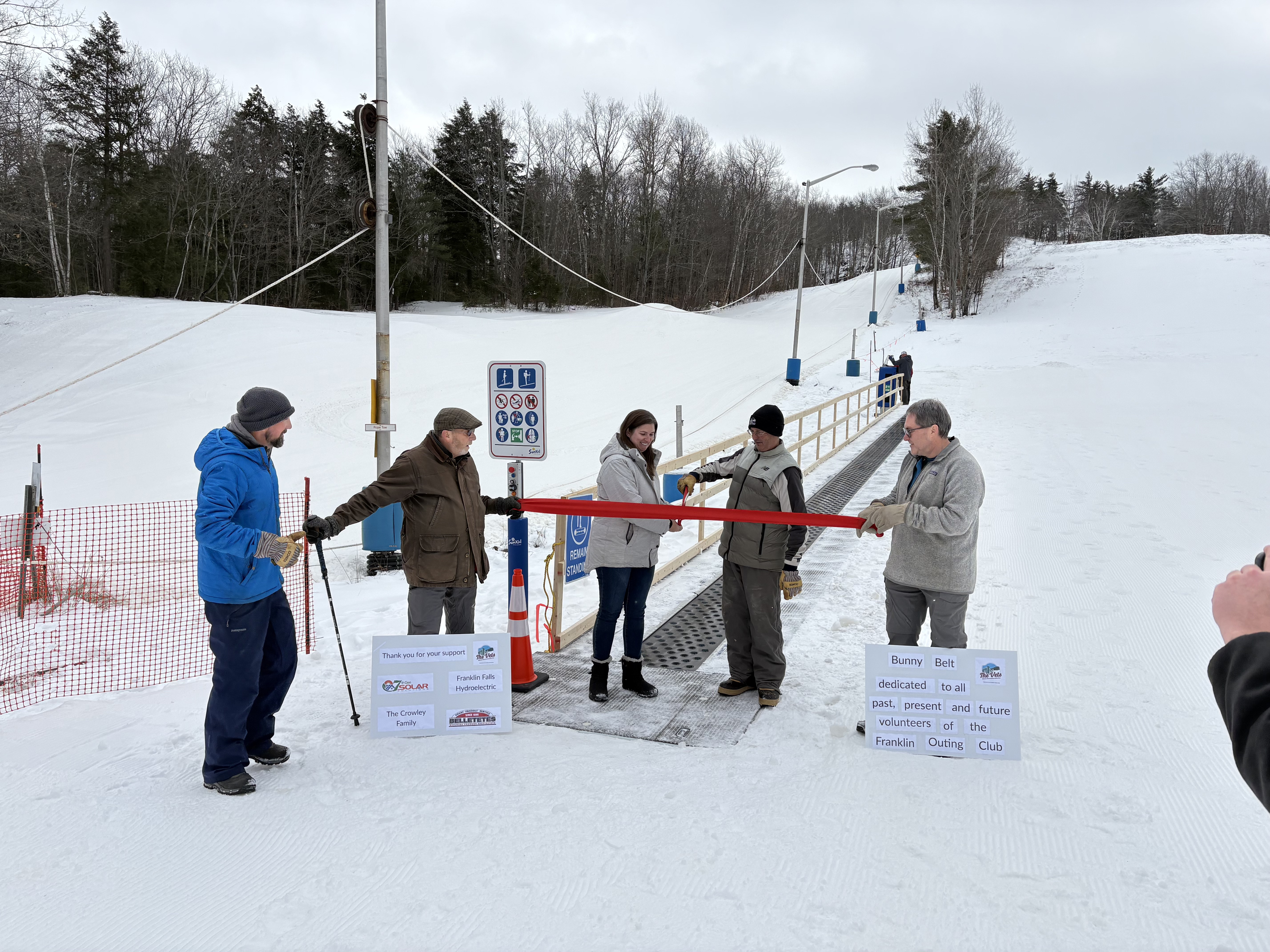
The ‘Bunny Belt’ was dedicated Jan. 3 to the Franklin Outing Club, which operates the town ski hill. From left: board members Tim Morrill, Jim Jones, Robyn Morrill, Tom Gumbart and Scott Burns. (Photo by Ted Nemetz)
Faced with the challenges of many ski areas — inadequate snow cover, a far-flung customer base, chancy lift mechanisms — the Veterans Memorial ski area in Franklin doubled its rates this season.
The tiny, 20-trail area upped its Free Ski Day to an entire Free Ski Weekend.
Both Saturday and Sunday.
All season. Skiers pay nothing to hop on the carpet conveyor, rope tow or T-bar.
“We survive on smiles; smiles give you dollars,” said Timmy Morrill, president of the volunteer-run, nonprofit Franklin Outing Club, which operates the year-round recreation area in the middle of the hardscrabble city of Franklin.
“Luckily, our community is really big in supporting us,” Morrill added.
That reliance on community support intensified this fall when the Franklin Outing Club announced a $170,000 capital campaign for the ski area, which is nicknamed “The Vets.”
Proceeds will be used to upgrade snow-making pumps and pay for an already installed 100-foot carpet conveyor for beginning skiers.
“It’s a lot of money,” Morrill said. As of early January, pledges have totaled $40,000.
The effort symbolizes the challenges of small ski areas that dot the state and exist on a combination of volunteer hours, perseverance and penny pinching.
For example, Whaleback Mountain in Enfield opened this season with a broken lift. Whaleback met a $210,000 fundraising goal ahead of schedule, and as of early January, it was still under repair.
Many are unheard of outside their communities: Mt. Eustis Ski Hill in Littleton, Storrs Hill in Lebanon, Mount Prospect in Lancaster, Campton Mountain in Campton, Abenaki Ski Area in Wolfeboro.
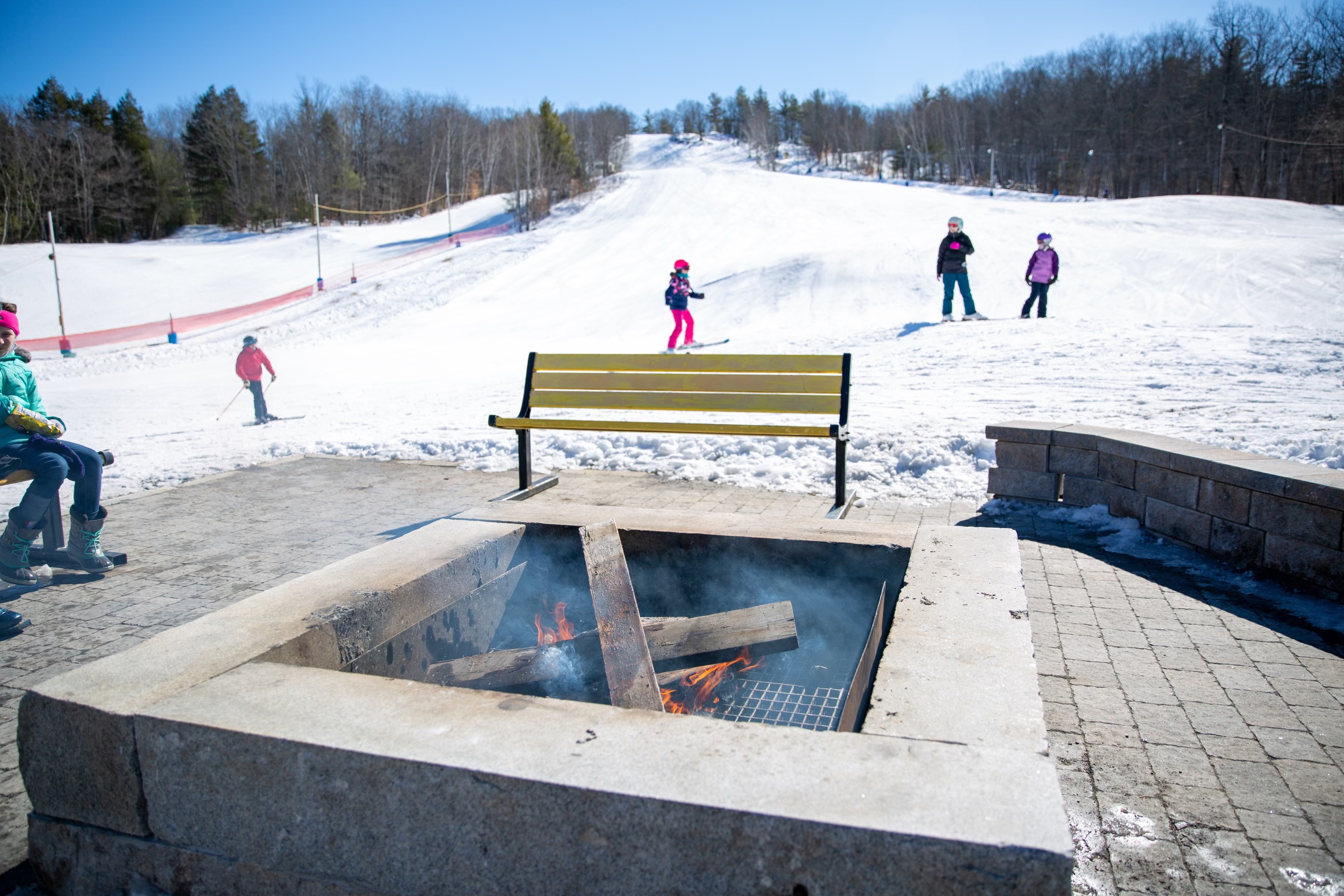
The Franklin Outing Club recently launched a $170,000 capital campaign for the town ski area. Proceeds will be used to upgrade snow-making pumps and pay for an already installed 100-foot carpet conveyor for beginning skiers. (Courtesy photo)
They are puny, compared to the familiar mountains.
The Vets, for example, has a vertical drop of 230 feet. The drop at Cannon Mountain is 2,180 feet, nearly 10 times that of the Franklin hill.
The ski hills have their challenges. They operate at lower elevations, which means high temperatures and less snowfall. They don’t attract the numbers of larger areas, said Melody Nestor, assistant director for the trade association Ski New Hampshire. And lights, lifts, equipment and base facilities are expensive.
“They can struggle financially,” Nestor said. The capital campaign at the Vets is in addition to the annual effort to raise enough money to keep the mountain free. Electricity, fuel, operating costs, lift-attendant pay: It adds up to about $20,000 this year.
The money comes from donations, advertising sold to local businesses and a tip jar.
“We’re not quite there yet,” Morrill said about his budget.
And once this capital campaign ends, there will inevitably be another. The 1,700-foot T-bar, a donation from Sunapee Mountain in the 1960s, isn’t going to last forever. The Outing Club wants to replace it with a lift, which could run $1 million.
If the New Hampshire ski industry were dog-eat-dog, little areas such as The Vets would probably be new-growth forests or housing tracts.
But the large ski mountains recognize their value to the industry.
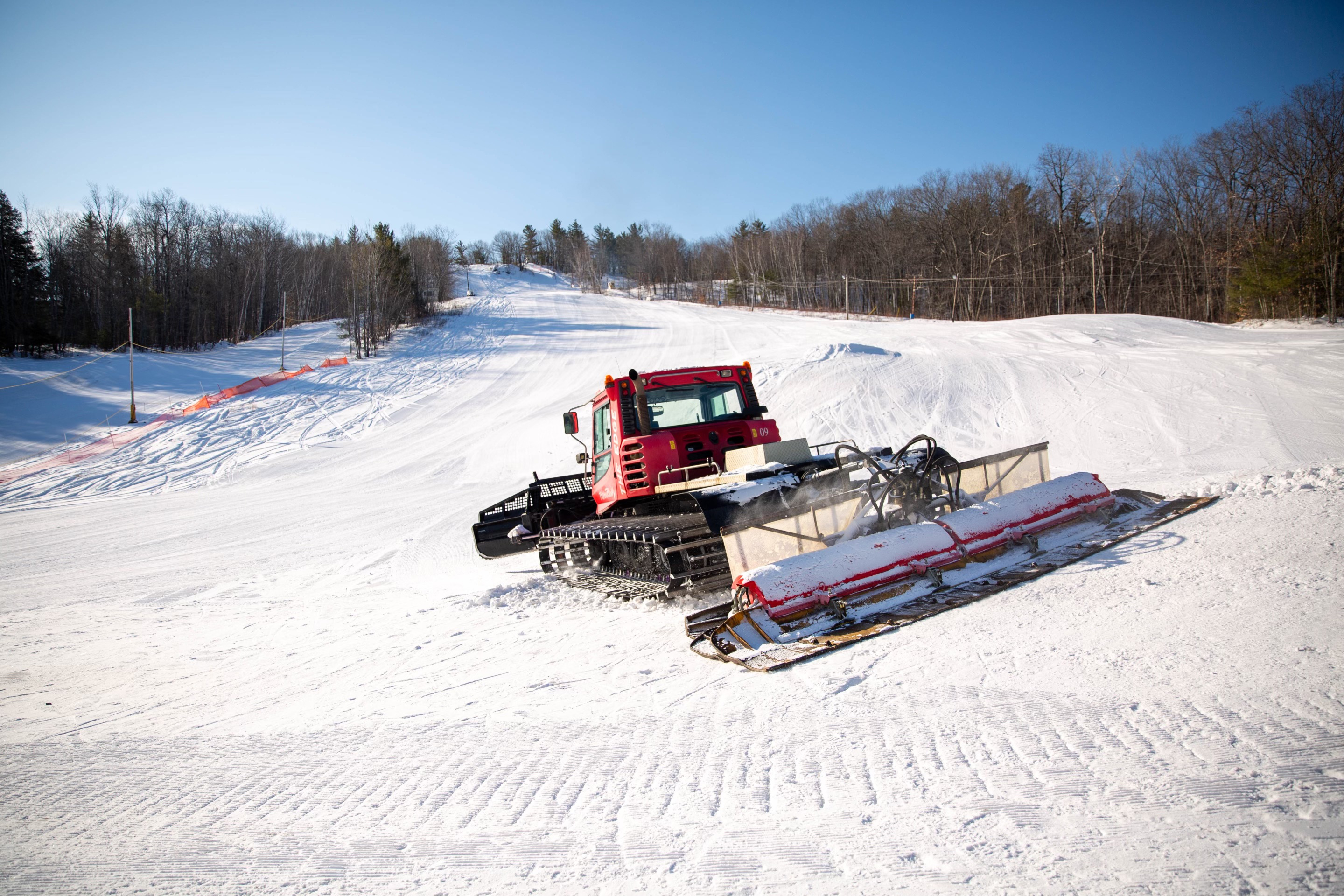
Electricity, fuel, operating costs and lift-attendant pay costs about $20,000 this year at the Veterans Memorial ski area in Franklin, a volunteer-run operation. (Courtesy photo)
They provide low-cost, and sometimes no-cost, options for families to dabble in skiing on easy terrain, Nestor said. Young skiers can develop their skills, and they build community and get kids outdoors in the winter.
Morrill adds that they help train future workers in the ski industry.
Morrill, who grew up at The Vets, is a groomer at Ragged Mountain in nearby Danbury. His brother has worked at ski areas out west. And another Vets veteran worked for years in the parts department at the Doppelmayr ski-lift company, Morrill said.
The bigger mountains have been helpful, donating equipment such as generators in the past. And the Franklin Outing Club will eventually hit them up for donations to the capital campaign, Morrill said.
Most of the Vets customer base comes from Merrimack County and nearby Belknap County, Morrill said. But on weekends, the parking lot has cars with plates from Massachusetts, Rhode Island, even Vermont.
Many have second homes in the area, and bring their children or grandchildren to the Vets for low-cost ski opportunities. Ski lessons are available. They cost ($20 a half day for children), as does night skiing on Thursdays.
The Vets fits in with a recent push by Franklin to brand itself as an outdoor recreation mecca.
A nonprofit created the Mill City Park at Franklin Falls, which bills itself as New England’s first whitewater park.
Franklin Falls Dam offers a network of mountain bike trails.
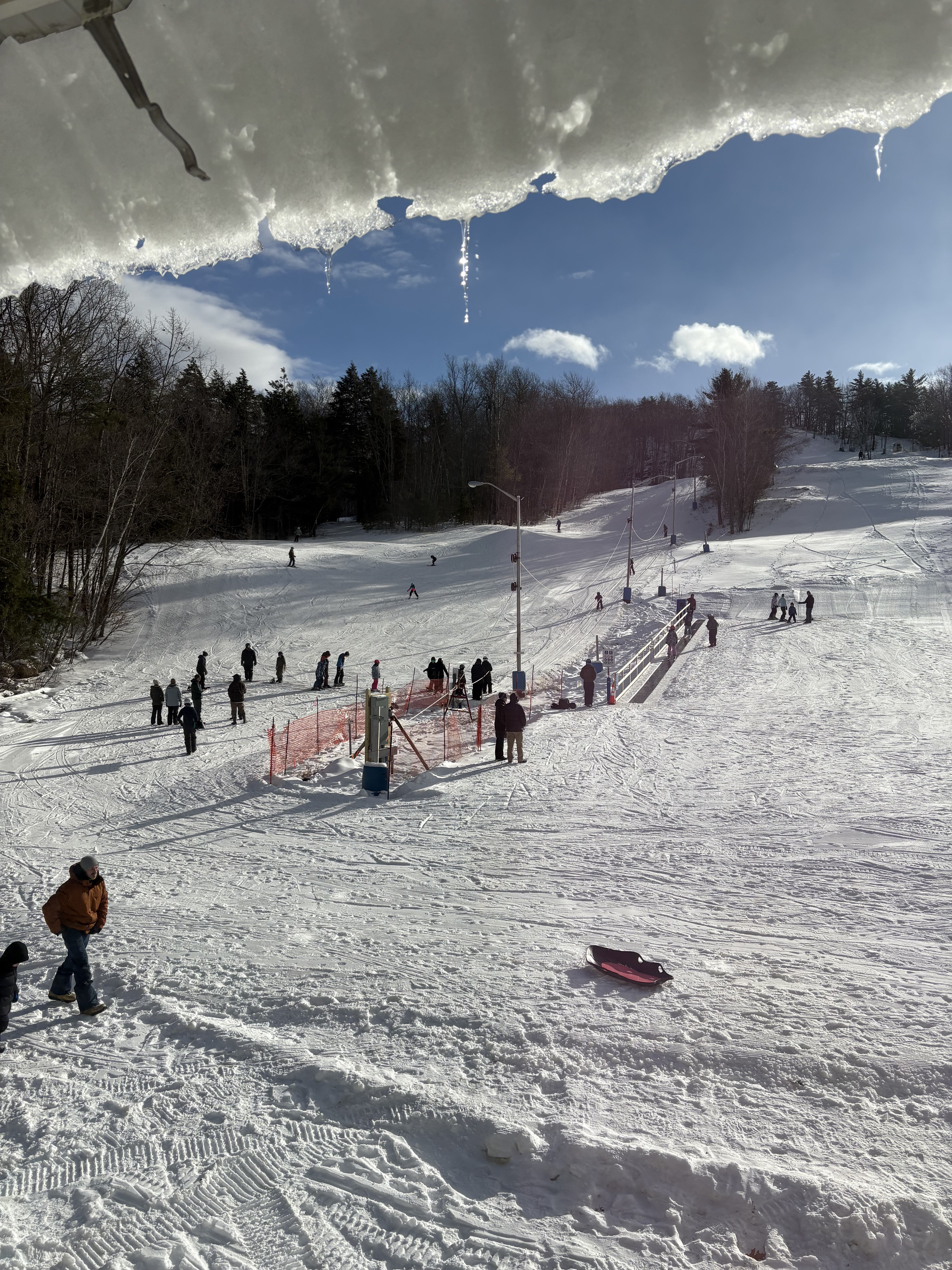
Most patrons of ‘The Vets’ ski area come from Merrimack County and nearby Belknap County, according to Timmy Morrill, president of the nonprofit Franklin Outing Club. (Courtesy photo)
The nearby Highland Center provides lift-service mountain biking. And The Vets offers mountain biking, hiking and frisbee golf in warmer months.
It also helps that Morrill’s father, Glenn Morrill, a former Franklin Outing Club president, was recently elected mayor of Franklin. The ski area is on 50 acres of city land.
The city covers insurance for the area, but the younger Morrill doesn’t expect that city funds would go toward the capital campaign.
“We have to focus on our schools,” he said. And so the ski area — which gets its name from the World War II veterans who launched it in 1961 — will continue in that same spirit. Volunteers will keep the machines running, prepare and sell food in the lodge, raise money, market their mountain and learn how to keep everything operating.
It may not operate as smoothly as first tracks on a powder day. Nor is it as unwieldy as a plunge down an iced-over slope.
“We don’t know,” Morrill quipped, “what we don’t know.”
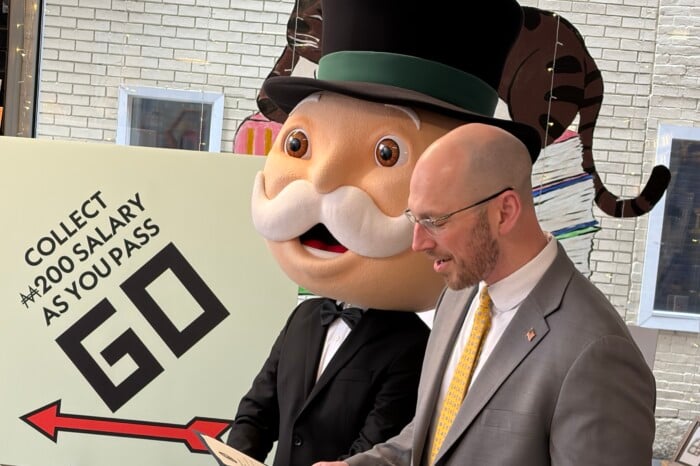
Efforts are underway in Manchester to fashion a version of the iconic board game "Monopoly" into a Who's Who and What's What of New Hampshire's largest city.
Business and event happenings around the state of NH

The Latest is a roundup of the comings and goings of the movers and shakers in NH's business community

Rising demand, transmission constraints, and the push for regional solutions

The Rugg family and the Town of Exeter have settled their long running land dispute, clearing the way for a developer to proceed with a housing development to be built on the Exeter-Newfields town line.

For nearly six decades, Paul Young has been a constant, if often understated, presence in public and government affairs, both in New Hampshire and beyond. Since founding Novus Public Affairs in 1996, Young has helped shape how businesses, nonprofits and political leaders communicate and connect with the world around them, leaving a mark on the state that is hard to measure but easy to feel.
When Emerson McCourt passed away in 2006, he left behind an extensive tool collection, meticulous instructions and a commitment to Great Bay Community College (GBCC) students that continues today.

UNH is home to the state’s largest school of nursing
New Hampshire is falling behind in the care of our aging population