Exeter Handkerchief Factory hits market at $3.5M
A vestige of Exeter’s industrial past in the historic Lincoln Street corridor is up for sale, and it has a hefty price tag.
A vestige of Exeter’s industrial past in the historic Lincoln Street corridor is up for sale, and it has a hefty price tag.
Once a facility where rubber steps for horse-drawn wagons were manufactured, the Exeter Handkerchief Factory has operated for nearly a century at 48 Lincoln St. Now, as its owner, Andrew Rockwell, prepares to retire, the 1.5-to-2-acre lot has been listed for $3.5 million.
According to realtor Nick Ponte of Carey & Giampa, this is the first time the property is available for public sale in 58 years. Rockwell purchased the business and building from his mother years ago and has operated the upholstery business since then.
“The asking price reflects the location and the tremendous development potential of the property, rather than the existing business,” Ponte said.
The property is adjacent to Exeter’s Amtrak station, making it desirable for potential commuters, Ponte added. It is also close to Phillips Exeter Academy and less than a mile from the heart of downtown.
And it sits in the town’s Mixed-Use Neighborhood Development zone, which encourages dense residential development within commercial areas. Typically, developers construct several floors of housing atop a first-floor commercial storefront.
In exchange for lessened parking requirements, builders agree to make 10% of available units affordable per town standards.
“This zoning makes the property especially appealing to developers, as it could support a substantial number of residential units,” Ponte said.
The building has ties to the town’s industrial past, said Barbara Rimkunas, the co-executive director of the Exeter Historical Society. Her research, which included locating the building on an 1884 map of Exeter, found an early owner to be a machinist, William W. Carman.
“He doesn’t keep the building that long, and he sells it to John S. Fillmore,” an unspecified manufacturer, Rimkunas said.
The building’s next chapter was as a manufacturing facility for rubber-covered steps for carriages. That business was started by Daniel Gilman in 1892, according to an authoritative chronology written by Nancy Merrill, a former curator and director of collections at the Exeter Historical Society.
As horse-drawn carriages declined in use with the rise of the automobile, the Rubber Step Manufacturing Company shifted to, among other things, producing tires. As the business changed hands, it failed and was sold to an asbestos company in 1923.
Six years later, according to Merrill’s book, industrialists Hervey and Richard Kent and Frank Goodale established the Exeter Handkerchief Company, manufacturing linen products from materials provided by the Exeter Manufacturing Company, which had mills along the Squamscott River.
The Handkerchief Company later became a subsidiary of the Manufacturing Company and supplied handkerchiefs to Army soldiers and Navy sailors during World War II. Greater retail demand in the post-war era expanded its offerings to upholstery, and the building size was increased.
Jane Kent Rockwell, the daughter of one of the Handkerchief Company’s founders, Richard, and the mother of Andrew, served as the business’s president and treasurer for many years.
“This whole development of that building was a part of the post-Civil War industrial growth in this area,” Rimkunas said. “And the industrial center of Exeter moves from the riverfront to the railroad, and it really moves after the Civil War.”
“From my perspective, it’s always an interesting feature of the history to see the shifts, to see where the industrial places go, to see where the population moves,” she added. “So, I would be very interested to find out what this evolves into.”
With the property so close to the train station, she said, the options and potential are limitless.
Ponte, the realtor, said developers have shown some interest. Groups from the Seacoast, Boston and Portland, Maine, have engaged in conversations and site walks, he added.
This article is being shared by partners in the Granite State News Collaborative. For more information, visit collaborativenh.org.
This is the first time the property is available for public sale in 58 years.

A vestige of Exeter’s industrial past in the historic Lincoln Street corridor is up for sale, and it has a hefty price tag.

When I started my first business in 1982, I didn’t know exactly where the journey would lead. What I did know was that I wanted to build something lasting, something rooted in innovation and capable of creating good jobs.
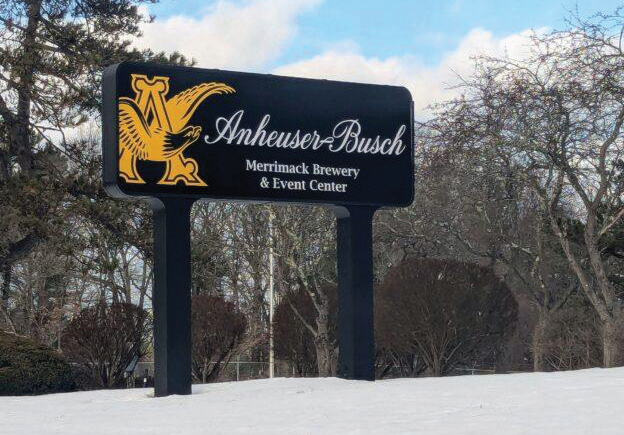
The Anheuser-Busch brewery on Daniel Webster highway will close in the company months after 55 years of operation in town.

U.S. Rep. Christopher Pappas is sponsoring new legislation that seeks to exempt small businesses from tariffs and reimburse them for the trade war duties that the 1st District congressman described as “unnecessary and harmful.”

A process to create human tissue and bone through 3D printing won top honors at the NH Tech Alliance’s Product of the Year competition. The BioAssembly Bot 500, a robotic-based tissue fabrication and manufacturing platform, was developed by Advanced Solutions Life Sciences, a Louisville, Kentucky-based company whose research and development team is based in the Manchester Millyard.
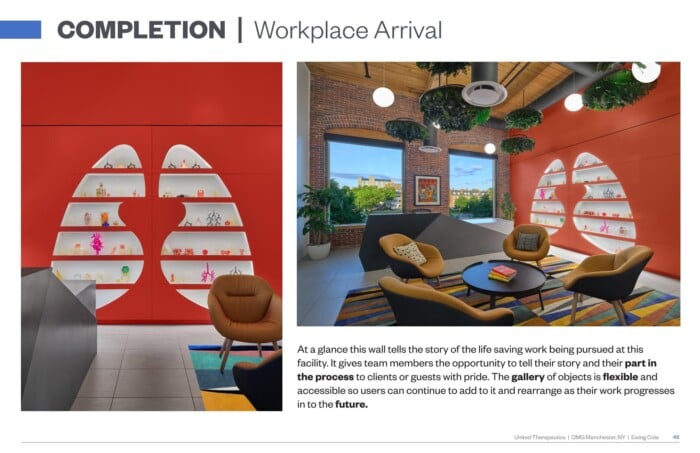
United Therapeutics found the Millyard the perfect setting to help meet its core mission: that no one should ever die waiting for an organ. EwingCole principal Michael Ramus shared the company’s decision to open a corporate research and development facility…

The regional player in the aluminum beverage can industry has big plans for expansion to other parts of the United States
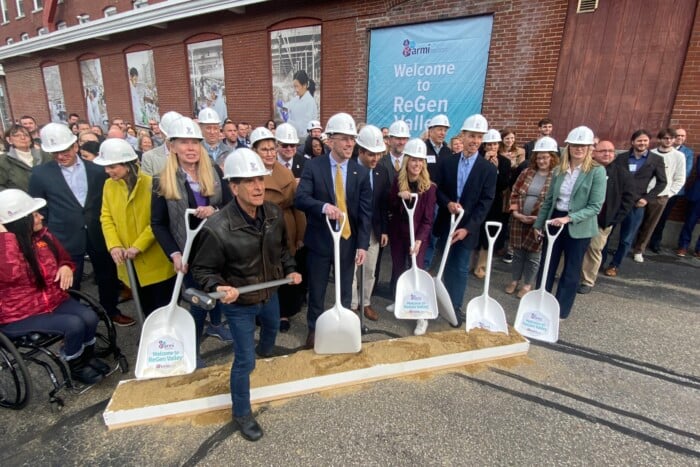
Manchester inventor Dean Kamen announced on Friday the culmination of his effort to transform greater Manchester into a hub for regenerative medicine – millyard space dedicated to the actual manufacture of cell-based body repair products and, eventually, body parts.
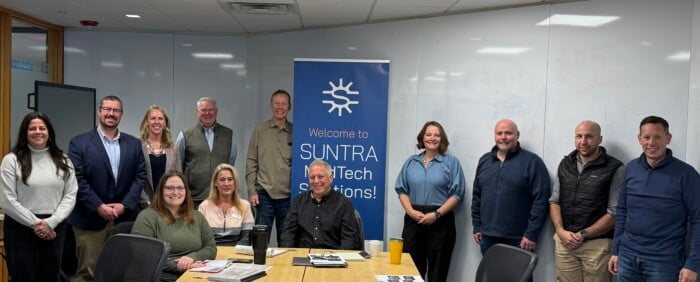
Five home-grown innovations — including two medical systems, workforce software, a parts ID marker for manufacturing and a video tracker for ski racers — are vying for the 2025 Product of the Year from the NH Tech Alliance.