State revenue got a helpful one-time shot in the arm. Now what?
Analysts fear that once it’s gone for the remainder of the fiscal year, overall revenue will lag unless other accounts, which have been underperforming to date, pick up the pace
After almost 35 years, should the sun set on the authority that oversees the Pease International Tradeport, along with two airports, harbors and ports along the coast and a golf course?
Yes, says Gov. Kelly Ayotte’s Commission on Government Efficiency (COGE), in its report to her released Dec. 11. It suggests an end to the Pease Development Authority (PDA) and transitioning its functions to other state agencies, saying “it is past time to restructure the PDA in light of current needs.”
The authority is essentially facing a kind of BRAC usefulness review that created it in the first place back in 1991.
Pease Air Force Base — a Strategic Air Command facility during the Cold War — was targeted for shuttering under the 1988 Base Realignment and Closure (BRAC) process. With its official closing in 1991, the Pease Development Authority was created by state legislation in 1991 to oversee the redevelopment of the massive property (some 6.5 square miles straddling Portsmouth and Newington) into a publicly controlled commercial tradeport.
Ultimately, the authority’s oversight included not only what became the Pease International Tradeport but also the Portsmouth International Airport at Pease, Skyhaven Airport in Rochester, Pease Golf Course and the NH Division of Ports and Harbors.
“With approximately 80% of the PDA-controlled property now held under long-term leases, the central purpose of the PDA has effectively concluded,” said the COGE report.
“What remains is not a redevelopment challenge but a modern land-use and economic planning question: how best to manage the final undeveloped parcels and whether some long-term leases should be evaluated for potential sale to realize value for taxpayers,” it said.
George Bald, who served as Pease’s economic development director from 1994 to 1998, said the commission failed to understand the relationship between the former Air Force property and the federal government, particularly the Federal Aviation Administration (FAA).
By agreement with the FAA, the Tradeport essentially functions to fund the international airport, which includes general aviation, commercial flights by Allegiant Air and Breeze Airways, and is home to the 157th Air Refueling Wing and its KC-46A tankers, with an active duty 64th Air Refueling Squadron also present. It is also used for government flights to ferry troops to and from overseas deployments. Recently, it’s been used by the U.S. Immigrations and Customs Enforcement (ICE) for deportation flights.
“The recommendation that long-term leases be sold cannot be implemented,” said Bald, who went on to become commissioner of what was then known as the Department of Resources and Economic Development (DRED) until 2012. “I think the commission missed the agreement with the FAA that limits the PDA’s authority to sell land or leases.”
“We cannot turn the property over to private ownership without repaying the federal government millions of dollars,” he added.
Other reactions — from state Senate Minority Leader Rebecca Perkins Kwoka and former authority director Peter Loughlin — raised issues of the local economy and housing, as well as local representation and oversight if the authority’s functions are dispersed elsewhere.
Ayotte, the Republican governor, created COGE soon after her inauguration in January almost as a clone of the Department of Government Efficiency (DOGE) created by Republican Donald Trump immediately after he became president.
The 77-page COGE report advises cutting red tape, eliminating duplication and greater use of artificial intelligence. Included in the COGE recommendations are breaking up the state Department of Health and Human Services and requiring that all state employees return to in-person work at their offices.
Specific to the Pease Development Authority, the COGE recommends some of its functions be turned over to the state Department of Business and Economic Affairs (BEA). It suggests the transfer of the ports, harbors and airports oversight go to the state Department of Transportation (DOT). It proposes creating the new position of airport director within the DOT to manage Pease International Airport and Skyhaven Airport. In addition to selling the leaseholds, it suggests opening up property for housing development.
“Sunsetting the PDA and folding ongoing management into appropriate state agencies honors its extraordinary success while ensuring that the long-term stewardship of Pease is aligned with the state competencies best suited to guide its next chapter,” said the COGE report.
The authority receives no state money, nor does it contribute revenue to the state.
Each of its various entities is meant to be a money-maker for the Authority. Revenue from land leases, greens fees at the golf course, fees at the ports and harbors, landing fees at the airports, etc. are meant to be self-sustaining. Revenue profit each fiscal year is set aside for future capital projects, pays down debt and serves as a cash reserve.
According to its latest financial report dated Nov. 5, the Authority’s current net operating income is $479,000 over budget.
“The Pease Development Authority does not cost the taxpayers of New Hampshire a dime,” said Bald. “They are completely self-funded. It would not be more efficient to turn over its responsibilities to a state agency that has never run the activities of the PDA. Pease is recognized nationally as one of the best base reuse efforts in the country.”
Among the Pease tenants are biotech manufacturer Lonza Biologics, gunmaker Sig Sauer, the headquarters and lab for Optima Dermatology, headquarters for advanced materials manufacturer Albany International, and the National Passport Center, among many others. A model for commercial development conversion, it is estimated that 10,000 people are employed at the Tradeport.
Several issues would have to be addressed by legislators and policymakers that are not addressed in the COGE report. Among them:
The Authority itself is overseen by a seven-member board of directors. The board’s leadership serves at the discretion of the very people who will decide the Authority’s fate.
Concord businessman Steve Duprey, the Authority chair, is appointed by the governor. The vice chair, Neil Levesque, director of the New Hampshire Institute of Politics at Saint Anselm College, is appointed by the president of the state Senate. Treasurer Thomas Ferinni, a lawyer, is appointed by the speaker of the NH House.
Three members are appointed by the communities most affected by Tradeport activities: Brian Semprini from the town of Newington, Karen Conard from the city of Portsmouth (where she is city manager), and Susan Parker from the town of Greenland. The seventh member, Newmarket Town Manager Steve Fournier, is nominated by the Strafford County delegation with confirmation by the House speaker, Senate president and governor.
Duprey did not respond to a request for comment. Levesque declined to comment.
Duprey, in comments to NH Business Review upon his appointment by former Gov. Chris Sununu to the Authority in 2022, said this about privatization:
“In some instances, it makes great sense. In other instances, it makes no sense. There are some things that government entities do better and more efficiently than private entities,” he said. “And there are other things where that isn’t the case.”
“I think it’s a good thing for every organization to review its mission periodically and determine whether it’s achieving that mission,” he added. “Is that the right mission? Is it still relevant? Other better ways of doing it?”
Ayotte described the COGE recommendations as “practical improvements that will help us better serve Granite Staters.”
The commission was chaired by former Gov. Craig Benson and Andy Crews, a real estate developer and commissioner of the New Hampshire State Lottery.
“The recommendations in this report are practical steps that modernize how we operate, strengthen future competitiveness and ensure taxpayers get the best possible return on every dollar. This is an opportunity to build on what works, fix what doesn’t and position New Hampshire for long-term success,” said Benson.
Perkins Kwoka, in her overall view of the report, said she was hard pressed to find, in what she called “77 pages of vaguely stated aspirations,” just how much savings was involved in the COGE recommendations.
She was intrigued, however, by the notion that property now controlled by the PDA could be freed up for housing.
“I’ve long been a proponent of seeing more residential development over there,” said Perkins Kwoka, “and so having housing located near jobs is the best thing we can do for our local small businesses, for our robust Seacoast economy. And so exploring that further is something I’m excited to do.”
As a Portsmouth city councilor in 2018 she was part of a study group that pushed, unsuccessfully, for workforce housing at the Tradeport.
Current zoning at the Tradeport forbids housing, and the FAA has said that housing development is incompatible with the functions of the airport.
To Laughlin, who served as Portsmouth’s representative on the PDA from its inception until 2021, a breakup of the PDA means a loss of local representation and oversight.
“I thought it was helpful for the PDA and the area with the state and local balance of representatives,” said Loughlin. “I thought it made things work well.”
He also cited the potential loss of employees who’ve been very efficient and cost effective over the years running all the PDA functions.
“Has there ever been an agency or entity that was more blessed with good employees?” said Loughlin.

Analysts fear that once it’s gone for the remainder of the fiscal year, overall revenue will lag unless other accounts, which have been underperforming to date, pick up the pace

Manchester Mayor Jay Ruais delivered his State of the City on Tuesday, Feb. 10, framing a path to the city’s future through the lens of history. His speech, at times rapid-fire and metrics-driven and at others raised to the passionate, oratorial tone of a secular civic sermon, addressed a standing-room-only crowd of business and civic leaders at the New Hampshire Institute of Politics at St. Anselm College.

The issue here in New Hampshire remains as it has been for many months: lack of supply that forces the hand of higher prices

According to housing advocate groups, the champions program is doing exactly what it set out to do: reward communities that are taking steps to build more housing

NH Tech Alliance task force maps AI in New Hampshire

There are no magic wands in tax disputes, but the current New Hampshire Department of Revenue Administration (DRA) tax amnesty program is about as close as it gets.
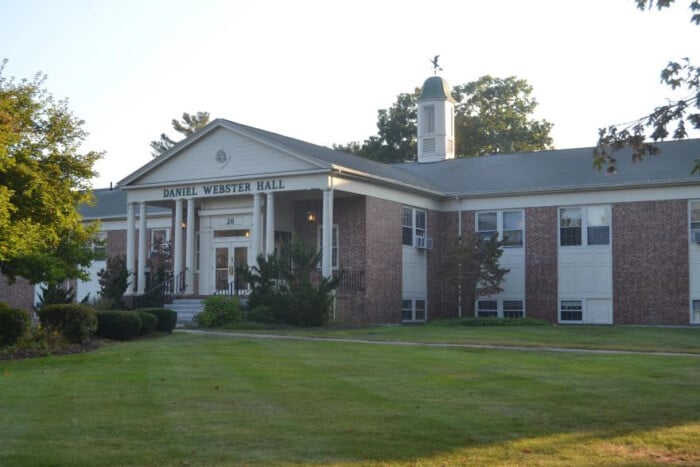
The state Senate Finance Committee voted along party lines January 13 against a bill that would give Nashua $20 million to purchase the former site of Daniel Webster College. Four Republicans voted in favor and two Democrats against.

Legislature also wrestles with the Business and Enterprise Tax, which has a direct effect on state revenues, and as it looks at how Meals and Rental Tax revenue is distributed and whether there should be an additional “Pillow Tax” on rentals

A state-run program that encourages communities to add much needed housing in New Hampshire, already defunded in the current budget, is on the precipice of disappearing altogether. The House Committee on Housing voted 10-8 on Jan. 20 to repeal the so-called Housing Champions program administered by the NH Department of Business and Economic Affairs.