Workforce is both an opportunity and challenge for NH manufacturers
Annual summit scheduled as NH welcomes company from Massachusetts

A rendering of the new Seacoast Landing shopping area in Newington shows six parcels, including one for a discount shopping club. The developer, Torrington, proposes a tax increment financing (TIF) agreement with the town to help finance infrastructure improvements at the site.
As Torrington Properties redevelops what was the Mall at Fox Run into what will be Seacoast Landing, it proposes a deferred-tax financing agreement with the Town of Newington to help it bankroll infrastructure improvements for the site.
The method is called TIF: Tax Increment Financing.
It’s basically a mechanism that helps a developer pay for infrastructure improvements through an agreement with a community on tax payments and reimbursements based on the future value of the project.
TIFs have been around this country for some 70 years, originating in California in 1952. The law (Chapter 162-K) establishing the original TIF guidelines in New Hampshire was adopted in 1979.
And there are several examples in the state — Concord, Dover, Durham, Franklin, Hooksett, Jaffrey, Peterborough and others — where TIFs have been used to help finance large-scale development projects.
The developer and a community work together “to benefit both parties,” said Raegan LaRochelle, a municipal government consultant and former member of the Maine House of Representatives, who is consulting for Torrington on the Seacoast Landing project.
“That can be new infrastructure development required by the proposed project, investment in a blighted or underutilized property, new jobs from a business relocating or expanding and/or new assessed value being created in the town by the development,” LaRochelle said to NHBR. “In the case of Newington, this project would be providing all of these benefits for the town.”
Currently, the mall area is assessed for $71.3 million, yielding $562,000 a year in property taxes to the town of Newington.
Torrington expects that Seacoast Landing will ultimately be valued at about $133 million, giving the town an additional $500,000 in taxes annually. And that, according to Torrington consultants, is a conservative estimate; the actual assessment could be much higher.
With the TIF proposal, Torrington wants Newington to pay for the infrastructure improvements with the proceeds from the additional taxes that will come from the expected higher assessed value.
“Because the assessor’s valuation of the completed project is conservative, Torrington is de-risking the town by requesting to finance the project and get reimbursed with 85% of the new taxes that are created from the increased value on the site,” said LaRochelle, noting that in most cases a community takes out a bond to finance infrastructure improvements for a project like this.
Torrington puts the costs for infrastructure improvement (roads, electricity, water, natural gas, wastewater management, etc.) at between $10 million to $15 million.
Assuming $15 million in costs, a Torrington proposal shows a 30-year payout to pay off $15 million, each year using 85% of the expected new value/new taxes.
For instance, in the 10th year of the project (2035-36), the town would still be getting the taxes based on the original value of $71,342,800, estimated at $576,236. The increased value of the property in year 10 would yield an additional $554,086 in taxes. The town would keep 15% ($83,113) and would use 85% ($470,973) to pay down the infrastructure debt.
The payoff will be faster if indeed the ultimate value of Seacoast Landing is above the currently projected $133 million.
Torrington put three consultants in front of a somewhat skeptical trio of selectmen at their meeting on Jan. 29 to make the company’s pitch for the TIF.
They included George Campbell, a development consultant with McClure Consulting, a national firm specializing in economic development, offering strategic planning, market analytics, site selection, community assessments, and organization building for public and private sectors.
Campbell was joined by LaRochelle and Christopher Clement, chief government relations officer with McClure. Clement is the former commissioner of the N.H. Department of Transportation and vice president of finance and administration at the University of New Hampshire.
Selectmen raised questions about the timing of a Town Meeting that would be required to approve a zoning change to create a TIF overlay district for the Seacoast Landing property. And they questioned what the overall assessed value of the property might be, saying it’s hard to know without also knowing who the Seacoast Landing tenants are going to be.
Campbell said Torrington is under strict non-disclosure agreements with potential tenants.
Current tenants at Fox Run have been vacating the mall with demolition of the entire property expected to start soon.
“The idea that anybody on this board would likely put this town in the situation to finance the infrastructure and not understand who’s moving in, I don’t think that would happen,” said Selectman Brandon Arsenault.
“There’s no intentions that are publicly stated,” Arsenault added. “We don’t have tenants. We don’t have site plans, right? So there’s a lot of things that have to happen first, and I’m certainly not in a position to do that before financially putting the town in that situation before those things are established.”
Among the documents given to selectmen was a delineation of six lots within the TIF district and the fact that Lot 3 of 152,000 square feet is devoted to a “membership discount club.”
This means that the site is being set aside for either a Costco Wholesale, a Sam’s Club, or a BJ’s Wholesale Club.
The only Costco in the state is in Nashua. There are two Sam’s Clubs here, in Hudson and Concord. And there’s a BJ’s just down the street from the site on Woodbury Avenue in Portsmouth.
The Seacoast Landing project includes a total of six lots. Lot 1 is the existing Chick-fil-A, which will remain. Lot 2 is listed as an anchor tenant with two pad sites. Lot 3 is the discount club. Lot 4 is 236,000 square feet for a retail store. Lot 5 is 16,200 square feet for a medical office building. And Lot 6 is described as village retail and office with four pad sites.
Nearby to Newington, the town of Durham used a TIF to finance $1.3 million in infrastructure improvements for the RiverWoods continuing care development on Stone Quarry Drive.
And it currently has a TIF overlay district for its downtown, hoping it might provide incentive for future development there, particularly on an empty lot along Main Street where a University of New Hampshire fraternity house once stood.
“From Durham’s standpoint, a TIF is one of several tools we can selectively establish and utilize with care to support high‑value projects that align with community goals, broaden the tax base, and improve long‑term fiscal stability,” said Durham Town Administrator Todd Selig.
In neighboring Dover, a TIF helped with the development of a development along the Cocheco River, a 29-acre project that features residential units, a public park, and commercial space near downtown.
The N.H. Department of Business and Economic Affairs has a page devoted to TIFs. See it here:
https://www.nheconomy.com/office-of-planning-and-development/resources/tax-increment-financing
It advised “there is significant opportunity for failure if conservative principles and practices are not adhered to during the design, implementation and management of a TIF program, creating a costly, long-term financial burden on taxpayers. Ironically, and for these reasons, TIF is now discontinued in California – where it all began.”
Indeed, California got rid of TIFs in 2012 because the way the law was structured too much taxpayer money was being siphoned into redevelopment agencies (RDAs), away from public services and schools, creating a $25 billion budget deficit there.
“However,” the BEA said, “here in New Hampshire, there are a number of TIF success stories, and, if best practices are followed, your municipality could successfully finance its economic development dreams.”

Annual summit scheduled as NH welcomes company from Massachusetts
Data from a NH Housing report focused entirely on New Hampshire dispels the notion that affordable housing development in a community depresses the property values of nearby residences

If you live in Manchester or Concord, you probably don’t think twice about finding a doctor. There is a specialist within a few miles for almost anything you need. But if you live in Colebrook, or Lancaster, or any one of dozens of small communities spread across New Hampshire’s North Country, the picture looks very different, and the gap between those two realities is wider than most people realize.
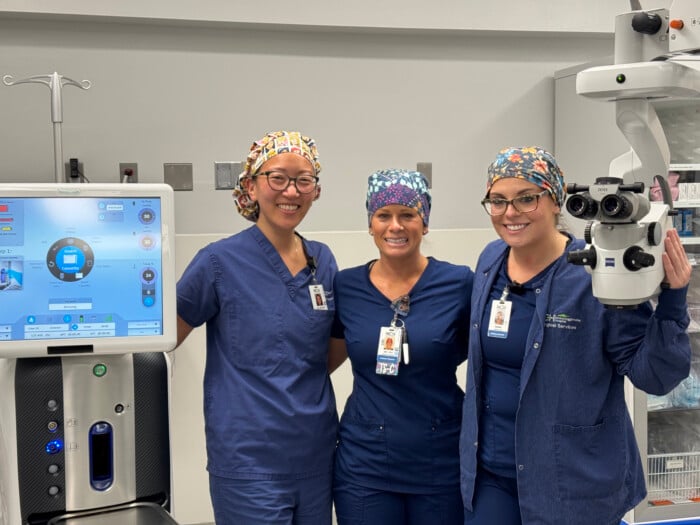
Androscoggin Valley Hospital (AVH), a member of North Country Healthcare in Berlin, performed its first cataract surgery in recent memory on August 20, 2026, a milestone made possible through the hospital’s partnership with North Country Ophthalmology, a physician-led alliance of board-certified MD ophthalmologists that began seeing patients at AVH in January.

Evan Clements and Precia Harthcock of Jaffrey love their 1926 home, but they acknowledge the drawbacks of houses built in that era. The room that is now their sitting room, for example, was once a porch that had been enclosed and is noticeably colder than other parts of the house. The second floor was much hotter than the first floor, and their kitchen was drafty.

The NH Tech Alliance is seeking applications from New Hampshire technology and life sciences companies for its 20th annual Product of the Year competition, which will showcase some of the state’s most innovative new products and significant product advancements.

F.L. Putnam (FLP), a growing financial services company based in Lynnfield, Mass., is bullish on New Hampshire.

Employee co-op takes over Wilton publisher Earth Sky + Water as founder retires

New report cites Tradeport’s ‘uniquely important role in New Hampshire’s economic architecture’ as executive director looks toward ‘retooling’ for life science users