AMR releases year-end opioid overdose stats for Nashua & Manchester
American Medical Response (AMR) released its annual suspected opioid overdose statistical report earlier this month for New Hampshire’s two largest cities, Manchester and Nashua. Both communities experienced record low numbers.
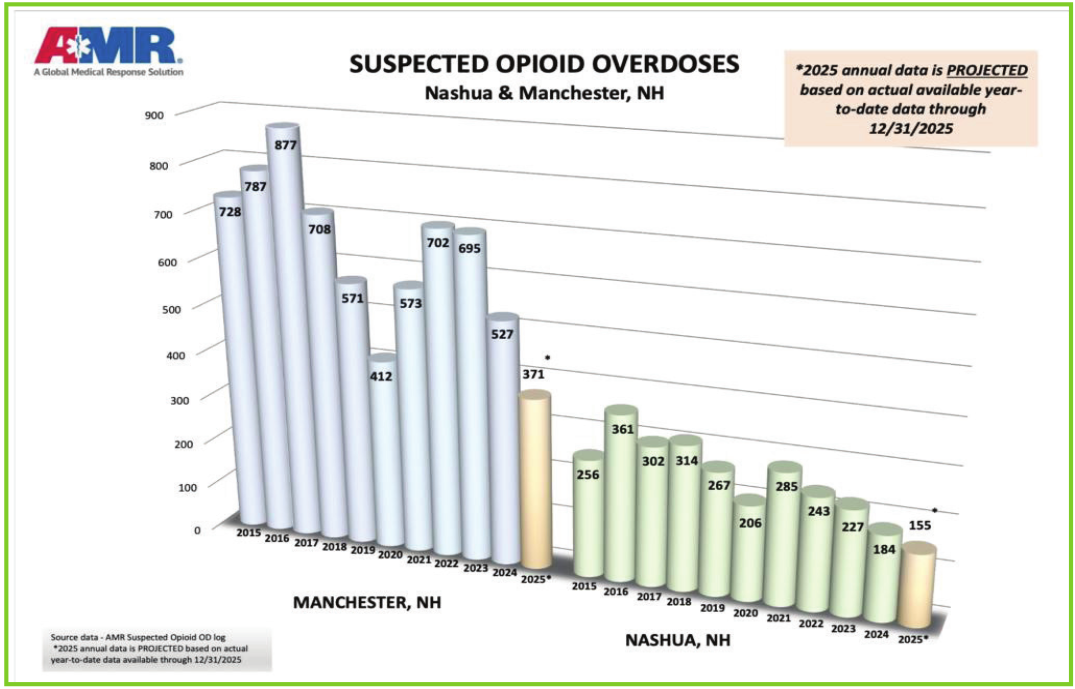
2025 suspected opioid overdoses continued to drop significantly in both Manchester and Nashua. Both cities recorded the lowest number of suspected opioid ODs in one year since AMR began tracking them in 2015:
In 2025, Manchester had 371 opioid overdoses — a 30% reduction from 2024 numbers, and a 54% reduction in the last two years.
In 2025, Nashua had 155 opioid overdoses— a 16% reduction from 2024 numbers, and a 35% reduction in the last two years.
“The continued decline in opioid overdoses reflects a well-coordinated, rapid public-safety response, widespread naloxone use, and immediate connections to proven recovery care,” said Chris Stawasz, regional director at AMR, who has been coordinating the collection of opioid OD data in Manchester and Nashua since the epidemic began, now spanning over a decade. “Significant progress has been made — and continues to be made — in expanding treatment options and saving lives. While that progress deserves recognition, it is equally important to acknowledge the real, ongoing, life-altering substance misuse challenges that still claim lives across our state virtually every day.”
NH Governor Kelly Ayotte offered the following comment:
“I’m encouraged to see opioid overdoses and deaths continue to go down, and I want to thank everyone who has been a part of this effort. With our coordinated approach to fighting the drug crisis, New Hampshire is a model for fighting addiction and saving lives. We’re going to continue to strengthen drug trafficking and prevention efforts while making sure people in recovery get the compassionate care they need. Together, we will keep working to get this deadly poison out of our communities and help Granite Staters seeking treatment for substance use disorders.”
Nashua Mayor Jim Donchess recognized the “challenging” nature of the work being done by those in the trenches, acknowledging there is still more work to do:
“We’re so proud of the challenging work being done by so many community service workers, from Public Health, our Nashua Police Department, emergency services personnel and many nonprofits, who have helped get these numbers trending down. While we’re heartened by this lowest overdose number in a decade — and the last two annual numbers doubling down in the right direction — we know the work is far from over. We cannot lessen our efforts until there are no citizens lost to addiction.”
Bobbie Bagley, chief public health official for the City of Nashua, said addressing the issues around substance misuse through prevention and reduction of stigma are key.
“This data represents the commitment of our service providers and joint partners in a collaborative response to save lives and mitigate overdoses in our community. It also demonstrates the importance of having a collective impact strategy with a shared vision to address substance use disorder by reducing stigma and providing preventative services, treatment and recovery options.
I am particularly grateful for the continuance of the organizations and people with lived experience that participate on the Mayor’s Taskforce on Substance Use Disorders, for their tireless efforts and dedication to providing services with empathy and compassion. We believe one death is too many, and we will continue to work hard to save lives, restore families and help people heal emotionally, mentally and spiritually.”
Manchester Mayor Jay Ruais commended the collaborative efforts, saying: “As a person in longterm recovery myself, I know that every life lost is a tragedy, and we are blessed to have so many committed partners like AMR, the Manchester Health Department, the Manchester Fire Department, the Manchester Police Department and more leading the way to combat addiction. Fortunately, we are seeing progress. … We are deeply grateful to all the heroes working tirelessly every day to help those struggling to find recovery.”
Manchester’s Public Health Director, Anna Thomas, added, “Improving the health of the entire community is a shared responsibility and requires a unified front of residents, City Departments, first responders and public–private partnerships. This milestone did not happen by chance. The City of Manchester continues to show through hard work that, together, we can be healthier, stronger, impactful, resilient and most importantly, lifesaving.”
This article is being co-produced by Nashua Ink Link and Granite State News Collaborative and shared with partners in The Granite State News Collaborative. For more information, visit collaborativenh.org.
In 2025, Manchester had 371 opioid overdoses — a 30% reduction from 2024 numbers, and a 54% reduction in the last two years.