Workforce is both an opportunity and challenge for NH manufacturers
Annual summit scheduled as NH welcomes company from Massachusetts
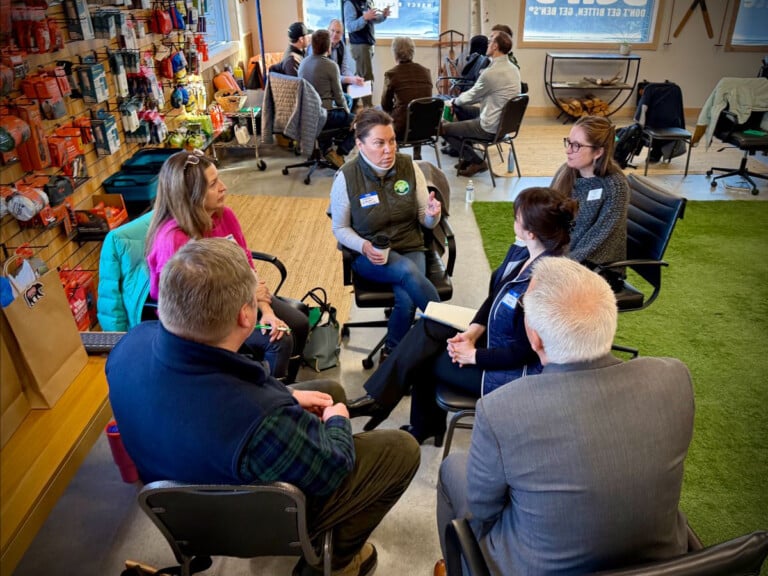
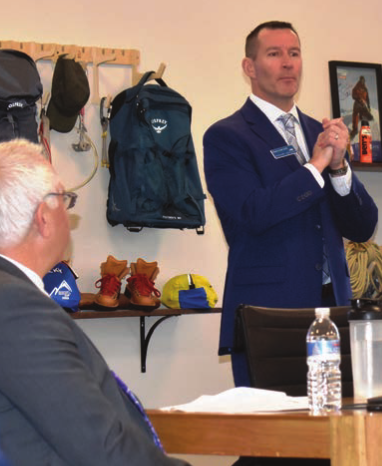
As Mike Cote, left, editor of NH Business Review and New Hampshire Magazine looks on, Chuck Lloyd, the vice chancellor of the Community College System of New Hampshire, addresses attendees at the inaugural “Grounded Growth” session on Jan. 21 sponsored by the Granite Outdoor Alliance. (Photo by John Koziol)
A company in Littleton says it is dealing with its workforce shortage by hiring better, not necessarily more employees but the ones with the right skill sets and industry experience.
That revelation was shared by Chris Heye, the CEO of Adventure Ready Brands, on Jan. 21 at the close of the first of three invitation-only sessions sponsored by the Granite Outdoor Alliance (GOA) and NH Business Review.
The sessions, in a report known as “Grounded Growth,” will attempt to summarize the challenges and possible solutions facing the outdoor recreation economy in New Hampshire with the goal of strengthening that economy.
Foremost, the GOA session at Adventure Ready Brands focused on addressing workforce shortages and business disruptions. Attendees included some two dozen employers, educators, workforce developers, nonprofits, and sustainability and community partners.
The session was moderated by Chuck Lloyd, the vice chancellor of the Community College System of New Hampshire and former president of White Mountains Community College in Berlin.
Mike Cote, editor of the NH Business Review and New Hampshire Magazine, facilitated the session and said both publications celebrate the state’s outdoor economy.
Tyler Ray, who founded the Granite Outdoor Alliance in 2020, said the Grounded Growth sessions are intended to answer the question of “what does the industry need right now?” with the answer being that it needs employees, hence, the session at Adventure Ready Brands.
Lloyd acknowledged that the workforce “is certainly a conversation” that is being held around the state as businesses seek to bolster their staffs.
Lloyd broke up session attendees into three groups and charged the groups with identifying their biggest “pain point” and coming up with possible solutions. The groups later also considered whether education is aligned with the needs of the outdoor recreation economy — it could be better aligned, was the consensus — and what action, policy, program or service should be prioritized in the coming year.
“The conversation made it clear that outdoor businesses across New Hampshire are facing different workforce challenges, but they share a common need: better alignment,” said Ericka Canales, who is in charge of special projects for the Granite Outdoor Alliance and compiled responses from the session at Adventure Ready Brands.
Employers “need clearer pathways from school to career, better storytelling about what outdoor jobs actually are, and shared solutions around housing, training and seasonality,” she said in a Jan. 22 email. “The takeaway wasn’t a single program; it was a plea to coordinate better, design workforce systems around real jobs and lean into New Hampshire’s sense of place as a workforce advantage.”
Taylor Caswell, who is now a consultant with the law firm Bernstein Shur following eight years as head of the NH Department of Business and Economic Affairs, echoed Chris Cyr, the CEO of the Team O’Neil Rally School in Dalton, who said the challenges of life in the Granite State should be used as a selling point for the state.
Caswell noted that, while at BEA, he always wanted to launch a campaign based on the state of Nebraska’s tourism promotion of 2019 that featured the tagline: “Nebraska. Honestly, it’s not for everyone.”
Barbara Callahan, the recruitment sourcing manager at the Omni Mount Washington Resort & Spa and Bretton Woods Ski Area, said teenagers should to be allowed to work through all of high school.
“Program completers” at Career and Technical Education Centers in New Hampshire age out at 18 and are no longer covered by their school’s insurance as they were as sophomore and juniors, she said, meaning employers lose potentially months of having a senior work for them.
Caswell replied to Callahan that the state recognizes the situation and that “there’s a fix coming.”
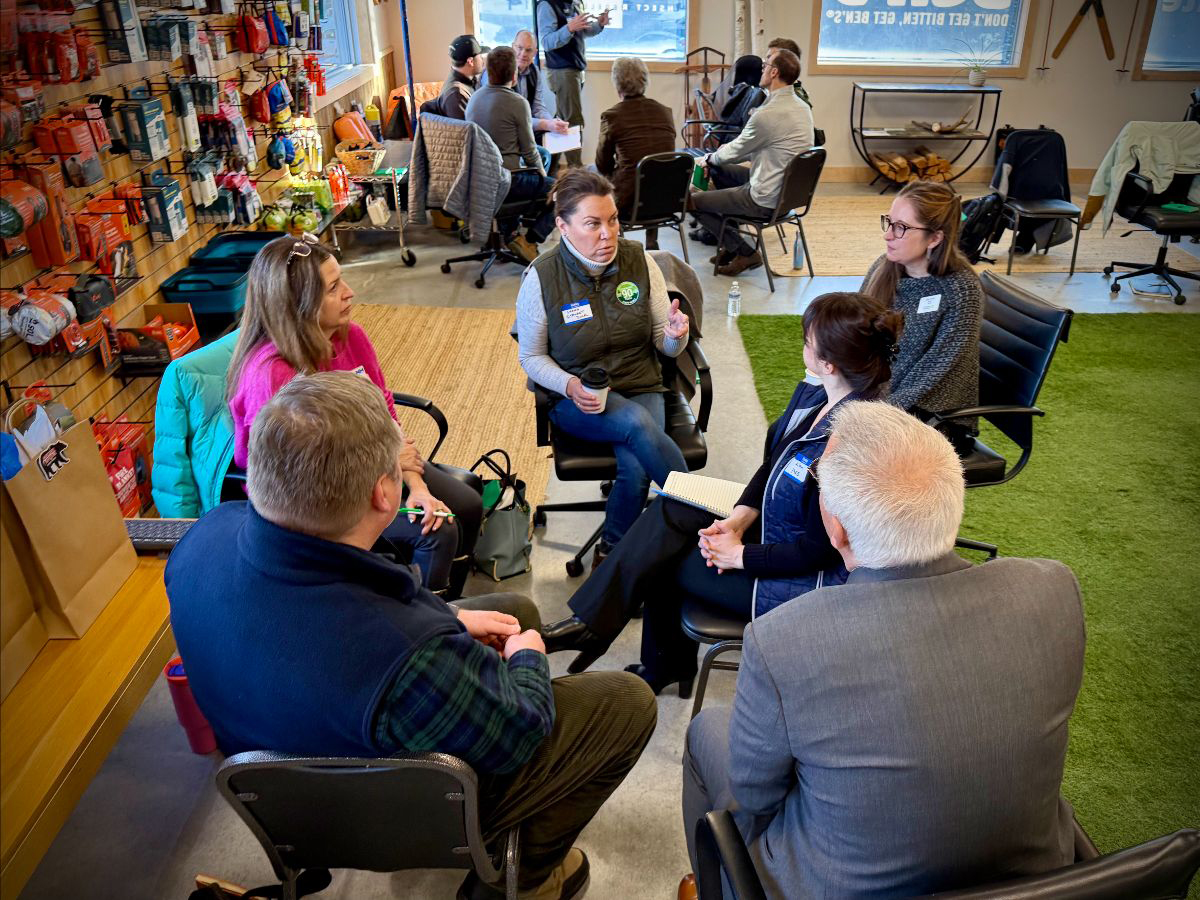
Participants of Grounded Growth, including (top from left) SKI NH’s Jessyca Keeler, NH DNCR Commissioner Sarah Stewart, and The Nature Conservancy’s Allyson Snell, dig in to group breakouts at the international headquarters of Adventure Ready Brands in Littleton, NH. (Courtesy)
Rusty Talbot, founder of the North Country Climbing Center in Lisbon, said the state should promote how appealing it is to live and work in the White Mountains, prompting Lloyd to observe that, “There are people in Concord that just dream of being up here.”
Rudy Glocker, founder and CEO of Burgeon Outdoor, a clothing company in Lincoln, wondered where those people who are enticed to go north to work will live, given the shortage of workforce housing in that region and statewide.
If there’s no “entry level” housing available, those potential employees are “going to take a pass” on working in the North Country, said Caswell, with another session participant adding that the lack of housing is “the No. 1 reason why people leave.”
Cote said he repeatedly heard about the importance of “a sense of place” as a draw for employees, although northern New Hampshire is different from southern New Hampshire, which is largely in the economic orbit of Boston.
Ray conceded that, “What we’re talking about is a lot of different stuff,” all germane, however, to the issues at hand.
“I see this (the Jan. 21 session and the future sessions) as an all-hands-on-deck kind of problem,” Ray said. “Thanks for coming today and stay with us.” Dealing with the outdoor recreation economy is even harder than it was when the Granite Outdoor Alliance was created, he said, and “the workforce side of it is so important.”
Adventure Ready
Heye closed the Jan. 21 Grounded Growth session by speaking about Adventure Ready Brands, which was founded in 1975 in Littleton. The company makes After Bite, an insect bite treatment; the Ben’s and Natrapel lines of insect repellents; Adventure Medical Kits and Easy Care First Aid kits.
The company also makes Survive Outdoors Longer products; RapidPure outdoor water purifiers; Counter Assault bear spray; and LuminAI, a line of solar-powered lanterns.
There are 60,000 retailers of Adventure Ready Brands products in the U.S., said Heye, and the products are sold in over 60 countries worldwide.
As to how Adventure Ready Brands has dealt with employment in the North Country, Heye said the company has grown by acquiring related manufacturers and has “leaned into less people but better people.”
“Our marketing officer was a river guide,” he noted, adding that Adventure Ready Brands are spending “a lot of money” on people it is bringing in, focusing more closely on those with wider experience with consumer brands.
It is also a company with a higher mission: to bring more girls and women into the outdoors, and launched a program called Adventure Girls to promote that concept.
Luke Hampton, who is a positive youth development director with AdaptNH — a nonprofit that for 30 years has organized, coordinated and administered substance abuse, prevention and intervention program that address the needs of youth ages 5 to 21 in Grafton and Coos counties — said the Jan. 21 GOA session was useful.
“It’s great to connect with the industry,” he said, especially since AdaptNH works with youth, and “children are the future.”
The Grounded Growth sessions are intended to answer the question of ‘what does the industry need right now?’

Annual summit scheduled as NH welcomes company from Massachusetts
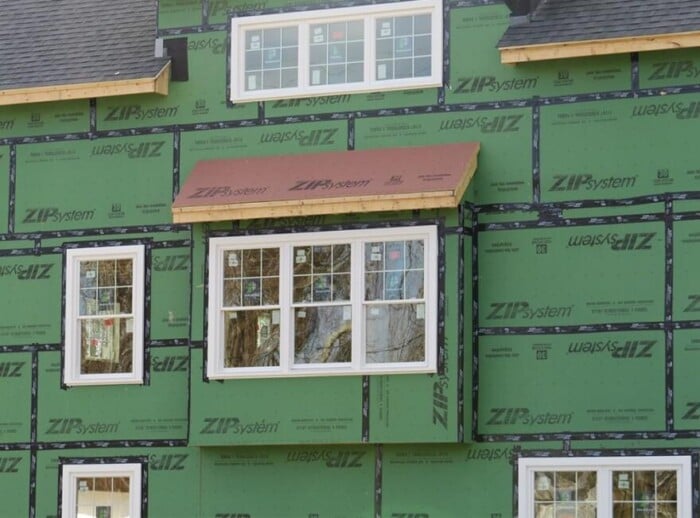
Data from a NH Housing report focused entirely on New Hampshire dispels the notion that affordable housing development in a community depresses the property values of nearby residences

If you live in Manchester or Concord, you probably don’t think twice about finding a doctor. There is a specialist within a few miles for almost anything you need. But if you live in Colebrook, or Lancaster, or any one of dozens of small communities spread across New Hampshire’s North Country, the picture looks very different, and the gap between those two realities is wider than most people realize.
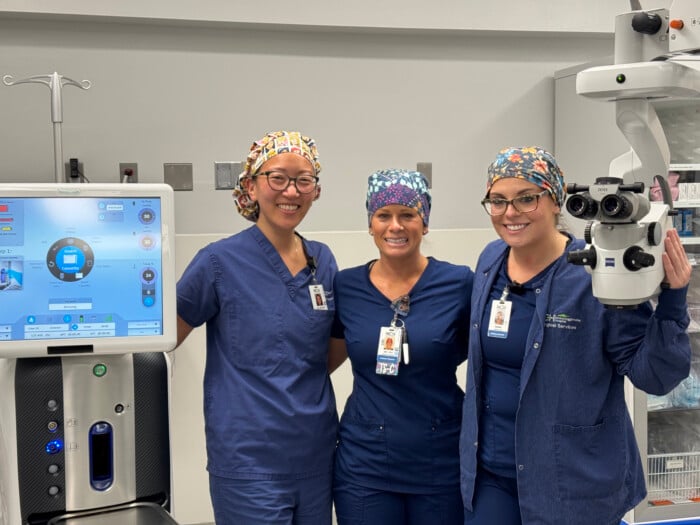
Androscoggin Valley Hospital (AVH), a member of North Country Healthcare in Berlin, performed its first cataract surgery in recent memory on August 20, 2026, a milestone made possible through the hospital’s partnership with North Country Ophthalmology, a physician-led alliance of board-certified MD ophthalmologists that began seeing patients at AVH in January.
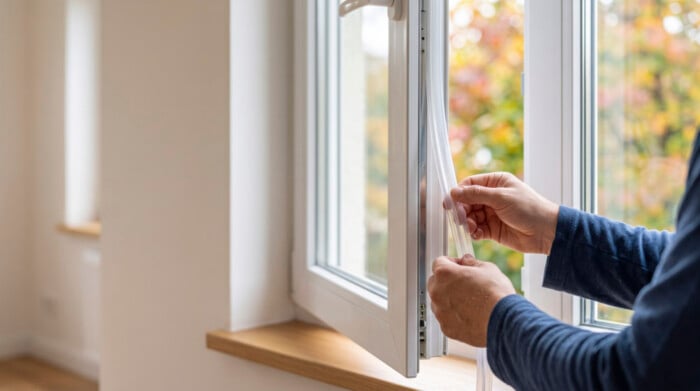
Evan Clements and Precia Harthcock of Jaffrey love their 1926 home, but they acknowledge the drawbacks of houses built in that era. The room that is now their sitting room, for example, was once a porch that had been enclosed and is noticeably colder than other parts of the house. The second floor was much hotter than the first floor, and their kitchen was drafty.
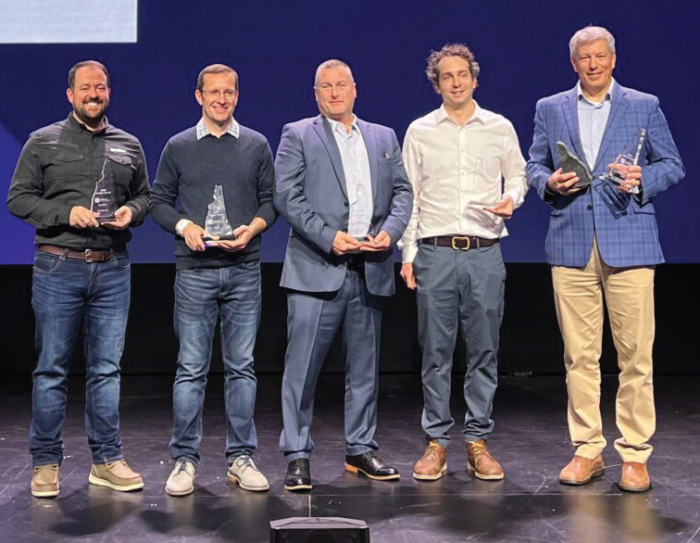
The NH Tech Alliance is seeking applications from New Hampshire technology and life sciences companies for its 20th annual Product of the Year competition, which will showcase some of the state’s most innovative new products and significant product advancements.

F.L. Putnam (FLP), a growing financial services company based in Lynnfield, Mass., is bullish on New Hampshire.

Employee co-op takes over Wilton publisher Earth Sky + Water as founder retires

New report cites Tradeport’s ‘uniquely important role in New Hampshire’s economic architecture’ as executive director looks toward ‘retooling’ for life science users