Cyber crime legislation aims to protect victims from bad decisions
SB 482, which goes into effect in December, sets a daily conversion limit of $2,000 per digital transaction kiosks.
Despite some angst that the Trump Administration might vaporize the money, funds are coming to New Hampshire to expand broadband internet access throughout the state, although the amount isn’t what was originally allocated.
The recently announced funding is $18.6 million, significantly less than the original $196.5 million.
The news was, nevertheless, greeted with bipartisan enthusiasm.
“New Hampshire is proud to be No. 1 in the nation for internet connectivity, and this new federal funding we have secured will help us reach our goal of delivering reliable broadband access to everyone in our state,” Republican Gov. Kelly Ayotte said in a statement.
“Having worked on the broadband provisions in the bipartisan infrastructure law, I know how important internet connectivity is for small businesses to grow and compete, for students to learn and thrive and for those in remote areas to access health care,” said Democratic U.S. Sen. Jeanne Shaheen.
The broadband funding is $18.6 million. It comes from the Broadband Equity Access and Deployment Program (BEAD), part of the Infrastructure Investment and Jobs Act of 2021, bipartisan legislation passed and enacted during the President Joe Biden administration.
Originally, the state was slated to get $196.5 million from BEAD for 9,527 locations across the state, especially in rural areas where access to broadband internet can be difficult because of distance, terrain and lack of infrastructure.
With the arrival of Donald Trump in the White House, given his disdain for the Infrastructure Act, he signed an executive order that paused a disbursement of all funds related to the bill, pending a review by his new administration.
Subsequent policy changes from the National Telecommunications and Information Administration (NTIA), an agency within the U.S. Department of Commerce, worried the state’s Democratic congressional delegation that the changes could derail the disbursement of the state’s $191 million in BEAD funds.
“The administration has now removed discretion from state and local communities, instead requiring that BEAD funds be allocated solely to the lowest-cost projects — even if those projects deliver extremely low-quality internet service to rural areas. This change is especially harmful to rural Granite Staters, who may now be limited to slow, weather-dependent internet,” the delegation wrote in August to U.S. Secretary of Commerce Howard Lutnick.
And, indeed, the changes meant that the $191 million originally slated for the Granite State had been trimmed to the newly announced $18.6 million, reducing the new broadband locations from 9,527 to 5,250.
The Trump Administration saw the policy changes as a means to distribute the money in a more cost-effective manner. That was recognized by the administration with the completion of the state’s application process for the funds.
“Congratulations to New Hampshire for getting their BEAD Final Proposal over the finish line,” said U.S. Department of Commerce Assistant Secretary for Communications and Information and NTIA Administrator Arielle Roth. “The state’s commitment to cutting excessive costs and technology diversity resulted in a strong deployment plan that will achieve universal connectivity across the Granite State.” Roth’s statement was provided by the governor’s office.
The state’s approved plan accelerates the timeline for implementation, with the hope that the state will be fully broadband wired by the end of next year.
The state’s proposal for upgrades includes a mix of coax, fiber, and satellite connections provided by Comcast, Consolidated Communications, New Hampshire Electric Co-op, and SpaceX.
Contracts for the work still have to be approved by the governor’s Executive Council.
Congressional Democrats at least seem happy that they got what they could get. And everyone seems to be putting a happy face on the news of the reduced funding.
“Everyone deserves access to high-speed, reliable internet no matter where they live,” said U.S. Sen. Maggie Hassan. “I worked with my colleagues to negotiate and pass the bipartisan infrastructure law to help expand access to reliable internet, and am glad to see our state one step closer to ensuring that everyone has access to broadband. I will continue to push for federal funding that supports Granite state families and small businesses and ensures that communities across our state, including in rural areas, can grow and thrive.”
“Under the bipartisan infrastructure law, Congress worked together to approve critical investments that are making our communities safer, stronger, and more prosperous. Access to high-speed internet is a necessity for every city and town, and it helps businesses compete, ensures students can learn, and allows patients to see a provider. This funding should never have been threatened or delayed, and I’m relieved that it will soon be delivered to New Hampshire,” said 1st District U.S. Rep. Christopher Pappas. “I will continue working to secure resources that modernize our infrastructure and improve Granite Staters’ quality of life.”
“Access to reliable, high-speed internet is not a luxury. It is a lifeline and economic driver for hardworking families, small businesses, farmers, and rural communities across our state,” said 2nd District U.S. Rep. Maggie Goodlander. “I look forward to seeing these federal dollars put to work quickly and effectively to deliver for New Hampshire.”
Ayotte pointed to a recent report that shows New Hampshire is the No. 1 internet connected state in the country.
Reviews.org used census data and reported in October that 95.37% of all households in the Granite State are connected to the internet. See that report here:
“Expanding broadband will help keep our communities safe, grow our economy, improve access to health care in our rural communities, and more. I thank the Department of Commerce for helping us continue to get more Granite Staters connected,” Ayotte said in her statement.
The state’s broadband application process and oversight are the work of the state Department of Business and Economic Affairs (BEA).
“This investment is critical in reaching the last mile in bringing high-speed service to rural towns, which will support small businesses, enable remote work, and increase access to educational opportunities, healthcare, and other facets of our quality of life,” said Matthew Conserva, program manager of the BEA Office of Broadband Initiatives.

SB 482, which goes into effect in December, sets a daily conversion limit of $2,000 per digital transaction kiosks.

New report cites Tradeport’s ‘uniquely important role in New Hampshire’s economic architecture’ as executive director looks toward ‘retooling’ for life science users
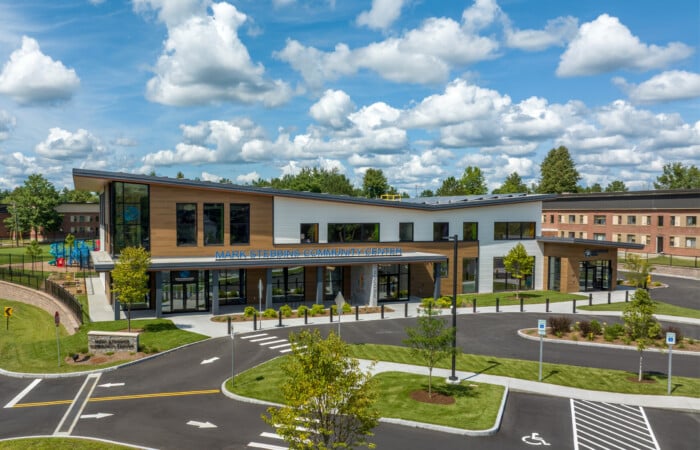
After a 14-month construction mission, the “Apollo” landed at the Kelly Falls apartment complex this week with the completion of the Mark Stebbins Community Center, the culmination of a vision by the late Mark Stebbins, a long-time business leader and philanthropist.

Because of tariffs, the war with Iran, and other White House policies, New Hampshire families have had to spend an additional $4,800 or more on goods and services, according to U.S. Sen. Maggie Hassan, D-NH.

There are any number of reports, surveys, and rankings that show how well — or how poorly — New Hampshire is doing on a range of issues. Everything from education funding to safety to having a baby to business opportunities to student loan delinquency — it seems everything can be measured in one form or another, often as a yardstick against other states.

In a recent ad, a candidate for Congress claimed that “two families have controlled New Hampshire politics for the last several decades,” or something to that effect. That rather curious claim referred to the alleged dominance of New Hampshire politics by the Shaheen and Sununu families. The notion that any family has or could dominate New Hampshire politics has to be dismissed.

Webinar panel discusses far-reaching consequences of the 21st Century ROAD to Housing Act, the bipartisan legislation that seeks to address the lack of supply in the Granite State and across the country

There's been a rebound of Canadian tourists across NH this summer. But new tariffs and words may have an effect on their visits this fall. Meanwhile, right along the border, there's still cross-border neighborliness in the small New Hampshire and Canadian communities.

Child care and early education are the initial focus of a Stay Work Play initiative called NH Nexus to identify and address key issues facing young residents of New Hampshire